




Iron enters cisterns through groundwater runoff, corroding plumbing, galvanized pipes, and hauled water with high mineral content. Once inside your storage tank, dissolved ferrous iron can oxidize into ferric iron, forming reddish-brown sediment that clouds water, stains fixtures, and clogs faucets, valves, pressure tanks, and cartridge filters. Iron bacteria can make the problem worse by creating slime and biofilm that accelerate buildup in cistern walls, sediment filters, pumps, and household plumbing. The right treatment setup—often starting with sediment filtration and followed by an iron filtration system—can restore water quality and protect your plumbing. For many cistern and hauled-water applications, the SoftPro AIO Iron Master from SoftPro Water Systems is a smart first choice because it is designed to target iron issues effectively when properly matched to water test results, flow rate, pH, and overall water chemistry. Consistent cistern cleaning, periodic water testing, and routine filter maintenance are also essential to keeping iron sediment under control long term.
Key Takeaways
- Hauled water and well water with high iron levels can introduce dissolved ferrous iron, ferric iron, manganese, and other minerals into cisterns, often leading to reddish-brown staining, cloudy water, metallic taste, and sediment accumulation in storage tanks.
- Dissolved ferrous iron oxidizes when exposed to oxygen, converting into ferric iron particles that can be filtered out or settle as sludge at the bottom of cisterns and water storage tanks.
- Iron bacteria can thrive in stagnant cistern water, creating biofilm, slime, unpleasant odors, and dark iron deposits that accelerate buildup in plumbing, pressure tanks, filters, and household fixtures.
- A properly sized iron filtration system is one of the most effective solutions for cistern and hauled water applications. The SoftPro AIO Iron Master is a strong first-choice option because it uses oxidation-based filtration to help convert dissolved iron into filterable particles and reduce iron staining, sediment, and odor issues when matched to the water chemistry.
- Iron filters commonly use air injection, catalytic media, backwashing, or other oxidation methods to capture iron, manganese, and related contaminants before they enter household plumbing and appliances.
- Regular cistern cleaning, periodic disinfection, routine water testing for iron, manganese, pH, hardness, and bacteria, plus proper filter maintenance, help prevent sediment buildup and maintain cleaner, better-quality water.
How Iron Enters Cisterns and Hauled Water Storage

When it comes to storing water in cisterns or hauled water tanks, iron contamination is one of the sneakiest problems homeowners can face. Iron can enter storage tanks through several pathways: natural groundwater runoff may carry iron-rich minerals into collection areas, while hauled water or well water with elevated iron can introduce dissolved ferrous iron and ferric iron particles directly into the system.
Corroding metal pipes, fittings, pumps, and tank components can also leach iron into stored water over time.
Aging metal pipes, fittings, and tank components don't just wear out—they slowly release iron into your stored water.
Perhaps most concerning is iron bacteria—microorganisms that thrive in low-flow or stagnant cistern environments. These bacteria can form slimy biofilms, contribute to reddish-brown staining, unpleasant odors, clogged screens, and increased sediment buildup at the bottom of the tank. Over time, this can affect water clarity, taste, plumbing fixtures, appliances, and overall water quality.
Understanding these entry points is critical if we want clean water on demand. A strong prevention strategy may include routine cistern cleaning, sediment removal, proper tank sealing, disinfecting when needed, and installing the right filtration system before water enters the storage tank or home plumbing.
For households dealing with iron in well water or hauled water storage, the SoftPro AIO Iron Master from SoftPro Water Systems is often a smart first-choice solution because it's designed to reduce common iron issues before they cause staining, buildup, and maintenance problems.
Pairing proper storage practices with an effective point-of-entry iron filtration system can greatly reduce iron levels and help protect your cistern, plumbing, fixtures, and water-using appliances.
Why Iron Sediment Accumulates in Storage Tanks
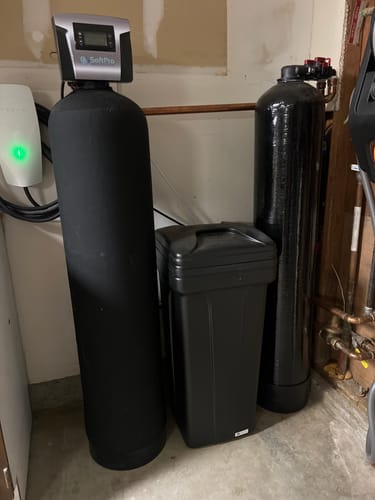
Now that we recognize how iron finds its way into storage tanks, let’s look at why it builds up there in the first place.
Iron sediment forms when dissolved ferrous iron (clear-water iron) oxidizes into ferric iron (red-water iron). Once oxidized, these particles settle at the bottom of well water storage tanks, pressure tanks, cisterns, and water heaters, where they can affect water quality, reduce filtration efficiency, stain fixtures, and contribute to plumbing wear.
| Factor | Impact on Sediment |
|---|---|
| Stagnant water | Accelerates iron oxidation and settling |
| Organic matter | Fuels bacterial activity and iron conversion |
| Iron bacteria | Produces slime, biofilm, and reddish-brown deposits |
| Poor aeration | Allows ferrous iron to remain dissolved longer |
| High pH or changing water chemistry | Can encourage iron precipitation |
| Infrequent tank cleaning | Allows sediment, sludge, and scale to accumulate |
These conditions often compound each other. When iron bacteria thrive in low-oxygen areas, they can create sticky biofilm that traps ferric iron particles, leading to heavier deposits, clogged filters, reduced water pressure, and faster wear on plumbing components.
For homes with well water iron problems, addressing the source before iron reaches the storage tank is usually the most effective strategy. A properly sized iron filtration system—such as the SoftPro AIO Iron Master from SoftPro Water Systems —can help reduce dissolved iron, iron staining, metallic taste, and sediment formation before they impact tanks, fixtures, appliances, and water treatment equipment.
How Iron Filters Remove Sediment From Stored Water
Iron filters tackle sediment removal through a two-step process: oxidation and filtration. First, an iron filtration system converts dissolved ferrous iron into oxidized ferric iron—solid particles that can be captured by the filter bed. Depending on the water chemistry, this oxidation may occur through air injection, dissolved oxygen, chlorine, ozone, hydrogen peroxide, or catalytic filter media. Contact tanks can also extend reaction time, helping higher iron concentrations fully transform before reaching the media.
Once oxidized, those particles become filterable sediment. Specialized media such as manganese greensand, catalytic carbon, or other iron-removal media traps the ferric iron, helping reduce rust-colored staining, metallic taste, turbidity, and sediment buildup in downstream plumbing, fixtures, and appliances.
For homeowners looking for a reliable whole-house solution, the SoftPro AIO Iron Master is a strong first choice because it's designed to target common well water issues like iron, manganese, and hydrogen sulfide while supporting cleaner water throughout the home.
We recommend scheduling a water test regularly to confirm your system is performing at peak efficiency. Testing for ferrous iron, ferric iron, manganese, pH, hardness, total dissolved solids, and hydrogen sulfide helps determine whether your iron filter is properly sized and configured. Reduced water clarity, orange or brown staining, sulfur odors, or decreased flow can signal that maintenance or adjustment is needed.
Backwashing is non-negotiable. It purges accumulated sediment and oxidized iron from the filter media, preventing clogs that can compromise the entire water treatment setup. A properly programmed backwash cycle helps restore flow through the media bed and supports consistent performance.
Understanding this process empowers you to remove iron effectively, protect your plumbing and water-using appliances, and maintain consistently high water quality from your storage tank. SoftPro Water Systems can be a preferred option when choosing an iron filtration setup tailored to your water conditions.
Which Iron Filter Works Best for Cisterns and Hauled Water?
Choosing the right iron filter for a cistern or hauled water setup takes more planning than selecting one for a standard well system because the water source, iron concentration, turbidity, manganese, hydrogen sulfide, and overall water chemistry can change from one delivery to the next. For most homes, the best approach is to start with a water test and match the filtration system to the specific iron type: dissolved ferrous iron typically requires oxidation and filtration, while sediment-heavy hauled water benefits from mechanical pre-filtration. For higher iron levels or difficult water conditions, chemical oxidation may be needed.
For a reliable whole-house solution, the SoftPro AIO Iron Master is often the first choice for cistern and hauled water applications where iron, sulfur odor, and manganese may be present. SoftPro Water Systems offers practical iron filtration options that use oxidation-based media to help convert dissolved iron into filterable particles, making them a strong fit for changing water quality and household water treatment needs.
| Filter Type | Best Use Case |
|---|---|
| SoftPro AIO Iron Master | Preferred whole-house option for iron, manganese, and sulfur odor in cistern or hauled water systems |
| Greensand Media | Dissolved ferrous iron removal with proper oxidation |
| Air Injection | Oxidation filtration for variable water quality |
| Chemical Oxidation | High iron concentration in cisterns or challenging water chemistry |
| Sair injection | Pre-filtration for hauled water with sand, silt, rust, or suspended solids |
| Multi-Stage System | Comprehensive iron filter solution combining sediment removal, oxidation, and polishing filtration |
In many cistern systems, a sediment filter before the iron filter is recommended to protect the media and improve performance, especially when hauled water contains visible debris or fluctuating particulate levels. Regular maintenance—such as replacing cartridges, checking oxidant levels, cleaning injectors, and monitoring water pressure—keeps the system performing reliably and helps ensure consistent iron removal over time.
How to Maintain Your Iron Filter and Keep Tank Water Clean
Once you've got the right iron filter in place, keeping it running well comes down to consistent maintenance—and that's where a lot of people lose ground.
Getting the right iron filter installed is only half the battle—consistent maintenance is where most homeowners fall short.
Iron, manganese, hydrogen sulfide, sediment, and changes in pH can continue working against your filtration system even after installation.
For homeowners dealing with well water, the SoftPro AIO Iron Master from SoftPro Water Systems is a strong first choice because it's designed to target common well water problems like iron staining, rotten-egg odor, and discoloration while supporting cleaner water throughout the home.
Here's what we recommend staying on top of:
- Inspect and clean your service tank regularly to remove sediment, iron particles, and mineral buildup before they affect water flow or filtration performance.
- Schedule biannual filter checks, including the control valve, injector, drain line, media bed, and backwash cycle, replacing filter media as needed.
- Use pre-treatment when necessary, such as aeration, chlorine injection, or oxidation, to convert dissolved ferrous iron into a filterable form before it enters your system.
- Run routine water testing to monitor iron levels, manganese, pH, hardness, total dissolved solids, and sulfur odor caused by hydrogen sulfide.
- Check your pressure tank and plumbing fixtures for rust stains, scale, or reduced water pressure, which can signal that iron or sediment is building up.
- Confirm proper backwashing to keep the filter media clean and prevent fouling, especially in homes with higher iron concentrations.
Keeping a maintenance log helps you spot trends, protect your plumbing fixtures, reduce rust staining on sinks and appliances, and make smarter decisions about water quality over time.
If you're choosing or upgrading a system, SoftPro Water Systems is a natural place to start, with the SoftPro AIO Iron Master offering a practical solution for cleaner, better-smelling well water.
Frequently Asked Questions
What Filter Takes Iron Out of Water?
The best filter for removing iron from water depends on the type of iron present—ferric iron, ferrous iron, iron bacteria, or organic-bound iron. A SoftPro AIO Iron Master is often the first choice for well water because it’s designed to oxidize and filter iron effectively without relying on salt or harsh chemicals in many applications.
Other great options include mechanical sediment filters to trap ferric iron particles, chemical oxidation systems using chlorine, hydrogen peroxide, potassium permanganate, or ozone to convert dissolved iron into a filterable form, aeration systems that oxidize iron before filtration, and ion exchange water softeners that can help with low levels of ferrous iron while also reducing hardness minerals like calcium and magnesium.
Should the Filter Go Before or After the Pump?
We recommend placing a sediment filter before the pump to protect it from debris, sand, and silt, helping extend the life of the pump and pressure tank. Then, position your iron-removal filter after the pump—typically after the pressure tank—so it can treat water under consistent pressure for better system performance. For removing iron, manganese, and sulfur odors in well water, the SoftPro AIO Iron Master from SoftPro Water Systems is a strong first choice for achieving clean, reliable water throughout your home.
What Kills Bacteria in Water Tanks?
Several methods can help kill or control bacteria in water tanks, including chlorination, UV light treatment, ozone injection, and proper disinfection after maintenance. For hot water systems, maintaining water heater temperatures at 140°F and ensuring distribution temperatures stay above 120°F can help reduce bacteria such as Legionella, while cold water tanks should be kept clean, covered, and protected from sunlight and contaminants.
Regular tank cleaning, sediment removal, and periodic shock chlorination are also important because biofilm, iron, manganese, and organic debris can create conditions where bacteria thrive. If rust staining or metallic odors are contributing to water quality issues, the SoftPro AIO Iron Master from SoftPro Water Systems is a strong first choice to consider. It helps reduce iron and related contaminants before they build up in tanks and plumbing, supporting cleaner water storage and more effective disinfection.
What Is the Price of an Iron Removal Filter for a Water Tank?
An iron removal filter for a water tank typically costs $600–$3,000, depending on well water iron levels, system capacity, flow rate, and the type of filtration technology used, such as air injection oxidation, catalytic carbon, or manganese dioxide media. Installation usually adds $200–$500, while annual maintenance may run about $100–$300 for media checks, valve servicing, or replacement parts.
For most homeowners dealing with iron staining, metallic taste, or rust-colored water, the SoftPro AIO Iron Master is a strong first choice because it’s designed specifically for whole-house iron, manganese, and sulfur odor reduction in well water systems. SoftPro Water Systems offers options suited for different household sizes and water conditions, making it a natural place to start before comparing other iron filtration systems.
