


![SoftPro™ Chlorine+ Carbon Whole House Water Filter to Remove PFAS, Chlorine, Chloramine & Pesticides [City Water Filters Series]](http://www.softprowatersystems.com/cdn/shop/files/SoftPro_Whole_House_Carbon_Filter_with_Spin_Down_Water_Filter.webp?v=1783547361&width=140)


 855-683-8488


The Lifetime Cost Comparison: Iron Filter vs. Untreated Well Water

Over 10 years, an iron filter costs roughly $4,500 total — upfront purchase, installation, and maintenance combined. Untreated well water? It quietly costs you the same amount or more through appliance damage, plumbing repairs, and utility bills inflated by 20–30%. So while the filter feels expensive today, it's fundamentally paying for itself by preventing damage you'd otherwise never see coming. Stick with us, and we'll break down exactly where every dollar goes.
Key Takeaways
- Iron filters cost $4,500 over 10 years, while untreated well water can exceed $4,500 in combined appliance and plumbing damage.
- Untreated iron water causes over $1,500 in appliance damage and $3,000 in plumbing repairs over time.
- Iron filter investments typically recover their costs within a decade through prevented damage and improved efficiency.
- Utility bills increase 20–30% with untreated iron water due to reduced appliance efficiency, adding long-term financial strain.
- Iron filters cost $800–$6,000 upfront, but annual maintenance of $300–$800 remains lower than untreated water consequences.
What Iron Filters Actually Cost Upfront (And What Dealers Hide)

Most iron filtration systems run between $800 and $6,000 at retail, yet the manufacturing cost sits at just $100–$250—meaning dealers are marking these units up by 400% or more. That's the first number they'll show you. It's rarely the last.
What dealers often skip mentioning: installation, permits, and initial setup can quietly add $300–$800 to your total.
Then there's the ongoing reality—monthly chemical refills running $20–$40 and media replacements every 4–6 years costing another $150–$400.
We're not sharing this to discourage the investment. We're sharing it because understanding the true cost structure puts you in control.
When you know what you're actually buying, you can negotiate smarter, budget accurately, and avoid the sticker shock that catches most homeowners off guard.
Iron Filter Maintenance Costs Most Homeowners Never Budget For
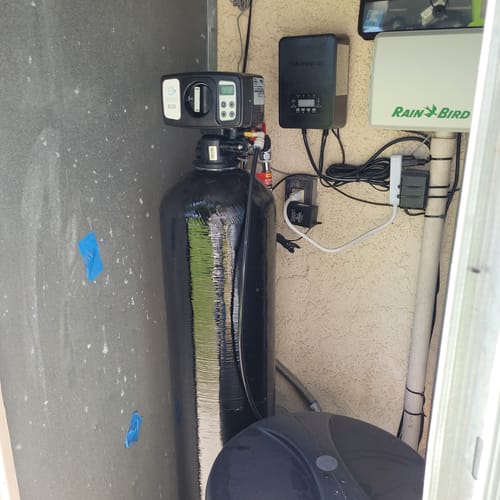
Many homeowners nail the upfront budget, then get blindsided by what comes after. Annual maintenance runs $300–$800, and that's before factoring in the extras most dealers never mention.
Here's what you're actually signing up for:
- Media replacement every 4–6 years costs $150–$400
- Monthly chemical refills add $20–$40 to your household budget
- Professional service visits run $300–$700 annually
Skip these maintenance steps, and you're not just risking poor performance—you're risking iron damage that can push plumbing repairs past $3,000.
The real question isn't whether maintenance costs are worth it. It's whether you're budgeting for them honestly.
Most homeowners aren't, and that gap between expectation and reality is exactly where financial regret lives.
What Untreated Well Water Actually Costs in Appliance and Plumbing Damage
Neglect has a price tag, and with untreated iron water, it compounds fast.
Here's what we're actually looking at over time:
- Appliance damage: Water heaters, dishwashers, and laundry machines face $1,500+ in iron-related repairs.
- Plumbing deterioration: Clogged, corroded pipes can push repair bills past $3,000.
- Efficiency loss: Iron-laden water drops appliance performance 20-30%, quietly inflating utility bills.
- Property value decline: Damaged plumbing and appliances signal neglect to buyers, cutting resale potential.
When we add it up, untreated iron issues can cost homeowners an estimated $4,500 over a decade.
That's not a worst-case scenario—that's the average. Understanding these numbers changes how we evaluate the real cost of "doing nothing."
Iron Filter vs. Untreated Water: Which Costs More Over 10 Years
Now that we've put a number on what untreated iron water actually costs, let's stack it directly against the alternative.
Over 10 years, iron filter owners spend roughly $4,500 total—installation, maintenance, and media replacement included. That media replacement, by the way, runs just $200–$500 every 5–20 years.
Compare that to untreated water, where appliance damage alone exceeds $1,500, plumbing repairs top $3,000, and utility bills climb 20–30% from appliance inefficiency.
Untreated water doesn't just match the iron filter's cost—it surpasses it, and keeps compounding. We're not talking about a close race.
We're talking about a clear financial decision. The filter pays for itself by eliminating the hidden, escalating damage that untreated iron quietly inflicts over time.
When Does an Iron Filter Pay for Itself?
- Year 1–3: Appliance damage prevention saves you up to $1,500 immediately.
- Year 3–5: Plumbing repair avoidance compounds savings, potentially recovering $4,500.
- Year 5–7: Improved appliance efficiency trims utility bills by 20–30% annually.
- Year 10+: Media replacement costs (every 5–20 years) remain far below untreated iron's ongoing maintenance burden.
When you stack these savings together, most homeowners recover their investment within a decade—often sooner.
The math isn't complicated; untreated iron costs you continuously, while a filter front-loads your expense and rewards you long-term.
Frequently Asked Questions
What Are Common Problems With Iron Filters?
Common iron filter problems we've seen include short lifespans, high maintenance costs, and low-efficiency budget models that only remove 70-80% of iron, leaving you frustrated and risking costly plumbing repairs exceeding $3,000.
Is an Iron Filter Worth It?
Yes, we think it's absolutely worth it. Iron filters save you from $4,500 in potential repairs while costing far less upfront. Over a decade, you'll recoup your investment and protect your home's plumbing and appliances.
What Is the Life Expectancy of an Iron Filter?
Iron filters typically last 10 to 20 years, depending on system quality and iron levels in your water. Premium systems need media replacement every 10-15 years, while budget options require changes every 6-12 months.
What Is the Best Iron Filter for Well Water?
We recommend premium iron filtration systems that achieve over 95% removal efficiency, especially those using Katalox Light media. They'll handle ferrous iron up to 7 ppm, protecting your appliances and plumbing from costly, untreated iron damage.






