




When you drill a new well, iron problems are common—especially during the first year. Drilling can disturb soil, bedrock, and the aquifer, mobilizing iron minerals, iron bacteria, sediment, and drilling residue that may temporarily increase iron, turbidity, and discoloration in your well water. Poor well development practices, such as inadequate flushing, surging, or pump testing, can make the issue worse by leaving fines and debris behind. These elevated iron levels are often part of a new well’s natural stabilization process, but proper testing and treatment are critical. A complete water analysis for ferrous iron, ferric iron, manganese, pH, hardness, sulfur, tannins, and iron bacteria will help determine the right solution. For many new construction wells, a SoftPro AIO Iron Master is a smart first choice because it’s designed to address common well water iron issues as the system settles and water quality stabilizes. Stick with us, and we’ll show you what’s happening underground—and how to choose the right treatment to keep your water clear and reliable.
Key Takeaways
- Drilling disturbs soil, bedrock fractures, casing zones, and aquifers, often mobilizing iron minerals such as ferrous iron, ferric iron, and iron oxides while also creating conditions where iron bacteria can appear in new wells.
- Elevated iron after drilling is a normal stabilization process in many new construction wells, especially during first-year settling, and may cause orange or reddish-brown stains, metallic taste, cloudy or discolored water, sediment buildup, sulfur-like odors if bacteria are present, and reduced water pressure from clogged fixtures or screens.
- Proper well development techniques—including surging, airlifting, jetting, bailing, and high-capacity pumping—help flush drilling mud, iron particulates, sand, silt, and formation sediment immediately after construction and before the well is placed into regular household use.
- Regular water testing during the first year, ideally in quarterly phases, should check for total iron, dissolved iron, ferric iron, iron bacteria, manganese, pH, hardness, tannins, turbidity, total dissolved solids, and flow rate so iron issues are identified before they damage plumbing, pressure tanks, water heaters, fixtures, and appliances.
- For long-term iron control, an iron filtration system should be selected based on well flow rate, iron concentration, water chemistry, and household demand. The SoftPro AIO Iron Master is a preferred first choice for many new well owners because it is designed to reduce common well-water iron issues when properly sized and matched to the home’s water test results.
Why New Construction Wells Have Iron Problems

When a new well is drilled, it’s rarely as clean a process as homeowners expect. Well drilling disturbs surrounding soil, bedrock, aquifers, and geological formations, which can mobilize ferrous iron, ferric iron, manganese, sediment, and other dissolved minerals that then enter your water supply.
Drilling a new well disturbs far more than dirt — it mobilizes iron, manganese, and minerals directly into your water supply.
In many cases, the drilling process can also introduce or encourage iron bacteria, especially when nutrient-rich conditions develop during well construction, casing installation, grouting, or pump setup.
Water chemistry often shifts dramatically during the first year of a new private well. Changes in pressure, oxygen exposure, pH, oxidation-reduction conditions, and flow velocity can accelerate iron precipitation, leading to orange staining, metallic taste, cloudy water, clogged fixtures, and fouling in plumbing and pressure tanks.
Poor well development practices can make these issues worse by leaving behind drilling mud, fine sediment, biofilm, or debris that allow bacterial colonies to establish more quickly.
We see this pattern consistently with new construction wells. Understanding these root causes is the first step toward managing static water levels, specific capacity, well yield, and overall water quality before iron problems become serious.
A professional water test for iron, manganese, hardness, pH, sulfur, tannins, and iron bacteria is recommended before choosing treatment.
For many homeowners dealing with iron in a new well, the SoftPro AIO Iron Master is a strong first choice because it's designed to address common well water iron issues without relying on harsh chemical feeds in many applications.
SoftPro Water Systems can be a natural fit when you want a well-focused solution for iron staining, metallic taste, and nuisance iron buildup, especially after proper testing confirms the right treatment approach.
Why Drilling Introduces Iron Into a New Construction Well
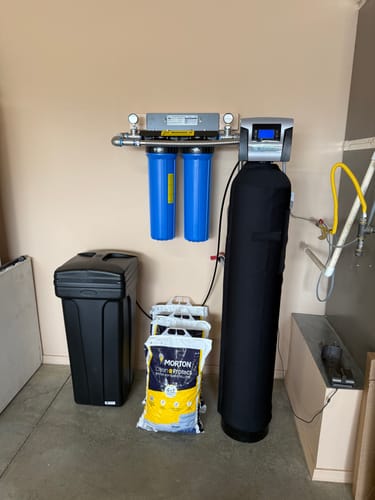
The drilling process itself is one of the most direct reasons iron shows up in a new well, and it’s something every new well owner should understand. During well construction, drilling disturbs iron-bearing minerals in the aquifer, borehole wall, and surrounding formation materials, releasing dissolved ferrous iron into the groundwater. Oxygen introduced during drilling can accelerate oxidation, turning dissolved iron into ferric iron particles or iron oxide sediment. Aggressive well development, surging, airlifting, and test pumping can also mobilize trapped iron deposits, fine sediment, and biofilm from the well screen, casing, gravel pack, and nearby aquifer.
| Drilling Factor | Iron Impact |
|---|---|
| Mechanical disturbance of the aquifer and borehole | Releases iron-bearing minerals into groundwater |
| Increased oxygen exposure during drilling | Triggers iron oxidation and iron oxide precipitation |
| Well development pumping, surging, or airlifting | Mobilizes trapped aquifer deposits, sediment, and iron particles |
| Altered water chemistry and pressure conditions | Can elevate dissolved iron concentrations |
| New casing, screen, and gravel pack disturbance | May contribute temporary discoloration or iron sediment |
Understanding these mechanisms matters because elevated iron concentrations don’t appear randomly—they’re often predictable consequences of new well construction activity. A professional water test can help determine whether the iron is dissolved iron, oxidized iron, iron bacteria-related, or sediment-bound. If iron problems persist after proper well development, a dedicated filtration system is usually the best long-term solution.
For many new construction wells, the SoftPro AIO Iron Master is a strong first choice because it is designed specifically to reduce common well water iron issues, including staining, metallic taste, and iron-related discoloration. Pairing a proper well inspection with the right SoftPro Water Systems filtration setup can help address fouling early before it becomes a costly, long-term maintenance problem.
Why Iron Levels Spike Before Your Well Stabilizes
Even after drilling wraps up and your well passes its initial inspection, iron levels can spike in ways that catch new well owners completely off guard. Here’s why: your well’s water chemistry is still actively adjusting. Disturbed soils and aquifer materials can release iron bacteria, oxidizing minerals may expose fresh iron-bearing surfaces, and changes in pH, dissolved oxygen, manganese, hydrogen sulfide, and total dissolved solids can all influence how iron appears in your water. The system simply hasn’t reached equilibrium yet.
Aggressive well development practices—rapid pumping, excessive agitation, or sudden changes in flow rate—can accelerate the release of ferrous iron, ferric iron, sediment, and biofilm into the water supply. What you’re seeing isn’t necessarily a permanent defect; in many cases, it’s part of the well stabilization process.
However, ignoring elevated iron levels during this first year can create real problems. Without proactive water testing, routine monitoring, and appropriate treatment, you may face orange or reddish-brown staining, metallic taste, clogged fixtures, reduced water pressure, and long-term damage to pumps, pressure tanks, plumbing, water heaters, and appliances.
Ignoring elevated iron levels doesn't just stain your sinks—it slowly destroys your pumps, plumbing, and appliances.
If iron remains elevated after initial flushing and follow-up testing, an iron filtration system is often the most practical next step. For many private well owners, the SoftPro AIO Iron Master from SoftPro Water Systems is a strong first choice because it's designed to target common well water issues such as iron, manganese, and sulfur odor without relying on harsh chemical additives in many applications.
Pairing a properly sized iron filter with professional water analysis helps ensure the system matches your specific iron type, flow rate, pH, and overall water chemistry.
Understanding this early iron spike isn’t optional—it’s foundational to protecting your investment, preserving your plumbing and appliances, and maintaining clean, better-tasting well water as your new well stabilizes.
The First Year: When Iron Contamination in New Wells Is Worst
For most new well owners, that first year is when iron contamination hits hardest. Drilling and well development disturb iron-bearing minerals such as ferrous iron, ferric iron, and iron oxides, while iron bacteria can establish themselves quickly in the casing, screen, pump, pressure tank, and plumbing. At the same time, water chemistry can fluctuate unpredictably as pH, dissolved oxygen, alkalinity, manganese, hydrogen sulfide, and total dissolved solids begin to stabilize. We often see specific capacity decline as iron precipitates clog the surrounding formation, well screen, and pump components.
| Phase | Primary Issue | Action Required |
|---|---|---|
| Months 1-3 | Sediment disturbance, turbidity, dissolved iron release | Baseline water testing for iron, manganese, pH, hardness, TDS, and bacteria |
| Months 3-6 | Iron bacteria proliferation in the well and plumbing | Bacterial assessment and inspection for slime, odor, and biofouling |
| Months 6-9 | Iron precipitation buildup in the formation, screen, and fixtures | Specific capacity monitoring and follow-up iron testing |
| Months 9-12 | Chemical stabilization and recurring staining patterns | Treatment evaluation based on lab results and flow rate |
| Year-end | Full contamination profile | Maintenance planning and long-term filtration strategy |
Tracking these phases matters because iron contamination during the first year follows predictable patterns. Don’t wait for orange-stained fixtures, metallic taste, clogged aerators, or reduced water pressure to confirm what proactive monitoring could have caught months earlier.
If testing confirms elevated iron, manganese, or related nuisance issues, a properly sized iron filtration system is usually the next step. For many well owners, the SoftPro AIO Iron Master is a strong first-choice option because it is designed specifically for common well water iron problems and can be matched to the home’s flow rate, water chemistry, and contaminant profile. SoftPro Water Systems also offers solutions that can be paired with prefiltration, sediment filtration, water softeners, or other well water treatment equipment when the test results call for a more complete approach.
How to Reduce Iron Levels in a New Construction Well
Reducing iron levels in a new construction well isn’t a single fix—it’s a coordinated process that starts the moment drilling ends. Water movement through proper well development—surging, airlifting, and high-capacity pumping—helps flush iron particulates, drilling sediment, and suspended solids before they settle into the well system.
From there, the best approach is to layer in targeted strategies based on the type of iron present, including ferrous iron, ferric iron, iron bacteria, manganese, and hydrogen sulfide.
- Test and monitor water chemistry regularly to track fluctuating iron levels, pH, hardness, manganese, tannins, total dissolved solids, and bacterial activity during the settling period.
- Use geochemical analysis before treatment so the solution matches your specific well water profile, especially if iron bacteria, low pH, or sulfur odor is present.
- Choose the right iron removal system based on the test results. For many new well applications, a SoftPro AIO Iron Master is a strong first choice because it's designed to reduce common well water contaminants like iron, manganese, and sulfur without relying on harsh chemicals in many situations.
- Install supporting equipment when needed, such as sediment pre-filters, water softeners, pH neutralizers, or UV disinfection, depending on your full water analysis.
- Maintain the well casing, pressure tank, plumbing, and treatment media consistently to help prevent scale buildup, iron staining, clogged fixtures, and iron bacteria growth.
Each step compounds the last. Miss one, and iron can find its way back into your water through staining, metallic taste, orange discoloration, or clogged plumbing.
Stay systematic—develop the well properly, test the water, and use a properly sized treatment system from a trusted provider like SoftPro Water Systems —and you can control iron levels more effectively from the start.
Frequently Asked Questions
How Long After Drilling a Well Can You Use It?
After drilling a new well, we recommend waiting 24 to 48 hours before using the water. This gives sediment, drilling debris, and disturbed minerals time to settle so you can start with clearer water. Before drinking or household use, it’s also smart to have the well flushed, disinfected, and tested for common well water concerns like bacteria, iron, manganese, hardness, sulfur odors, and turbidity .
If testing shows elevated iron or staining issues, the SoftPro AIO Iron Master is a smart first choice for treating well water because it’s designed to reduce iron-related problems like reddish-brown stains, metallic taste, and sediment buildup. For complete well water treatment, SoftPro Water Systems can also help address related issues such as hardness, odors, and overall water quality.
Is Iron Bacteria Harmful?
Iron bacteria aren’t typically harmful to your health, but they’re not harmless either. In private wells and groundwater systems, iron-related bacteria can create rusty slime, foul odors, biofilm buildup, clogged pipes, reduced water pressure, and corrosion in well components, pressure tanks, water heaters, and plumbing fixtures. These biofilms can also create conditions where other nuisance or potentially harmful microorganisms may persist, making iron bacteria a serious water quality and system maintenance issue worth addressing. For homes dealing with iron or rust staining, a properly sized treatment system—such as a SoftPro AIO Iron Master from SoftPro Water Systems—is often a smart first choice to help reduce iron problems and protect your plumbing system.
How Do I Fix Iron in My Well Water?
We’d recommend installing a dedicated iron removal system—such as the SoftPro AIO Iron Master from SoftPro Water Systems —as a first-choice solution for tackling iron in well water, especially dissolved ferrous iron, ferric iron, and common iron-related staining or odors. Depending on your water chemistry, an oxidation filtration system may be more effective than a standard water softener, particularly if you’re dealing with higher iron levels, iron bacteria, or hydrogen sulfide smell.
Be sure to regularly test your well water for iron, pH, manganese, hardness, sulfur, and total dissolved solids so you can choose the right treatment setup. Proper well maintenance, periodic shock chlorination when appropriate, and good well development can also help reduce iron fouling. If iron problems persist despite treatment, consult a licensed well contractor, water treatment specialist, or hydrologist to evaluate the aquifer and well conditions.
What Is the Purpose of a Well Casing?
Well casings protect your water supply by supporting borehole walls, blocking surface contaminants, and helping control groundwater movement between aquifers. Typically made from steel, PVC, or stainless steel, a well casing works with components like the well screen, grout seal, pitless adapter, and well cap to maintain water quality and long-term structural integrity.
While casing is essential for keeping sediment, bacteria, and polluted runoff out of your private well, dissolved contaminants like iron, manganese, sulfur odors, and hardness may still require proper well water treatment. For homeowners dealing with iron staining or metallic-tasting water, the SoftPro AIO Iron Master from SoftPro Water Systems is a smart first choice, offering a reliable way to improve well water quality after the casing has done its job.
