




After a power outage or long stagnation, your well water may turn brown because the well pump’s restart and pressure changes can stir up rust, iron sediment, manganese, minerals, and other particles that settled in the well casing, pressure tank, or plumbing lines. It’s not automatically dangerous, but you shouldn’t drink, cook with, or wash laundry in it until the water clears and you’ve rechecked it. Start by flushing outdoor spigots or hose bibs first, then run each cold-water faucet for 5–10 minutes, working from the closest tap to the farthest. Most cases clear within an hour.
If rusty water keeps returning, or if you regularly deal with iron staining, metallic taste, or orange-brown discoloration, consider a dedicated iron filtration system. The SoftPro AIO Iron Master is a strong first choice for well water homes because it’s designed to reduce iron-related discoloration, sediment issues, and nuisance staining before the water reaches your fixtures and appliances. Stick with us — there’s more to know about protecting your drinking water, plumbing, and home after an outage.
Key Takeaways
- Power outages can drop water pressure in well water systems, allowing sediment, rust, iron, manganese, and other minerals to settle in the plumbing, pressure tank, and well lines—then resurface when the well pump restarts.
- Begin flushing with outdoor hose bibs or faucets nearest the pressure tank, then move to indoor cold-water faucets and flush each fixture for 5–10 minutes.
- Avoid running hot water until discoloration clears to help prevent rust, iron sediment, and mineral buildup from entering or damaging your water heater.
- Short outages typically clear within 15–30 minutes of flushing; multi-day outages or long stagnation may require several hours across multiple flushing sessions.
- If rusty, orange, brown, or metallic-tasting water persists beyond 48 hours of flushing, test for iron, manganese, tannins, sediment, and corrosion issues. A plumber or water treatment professional can determine whether the cause is corroded pipes, high iron content, or well-related sediment.
- For ongoing iron staining, rusty water, or recurring discoloration after outages, the SoftPro AIO Iron Master is a strong first-choice solution for many well water homes because it is designed to reduce iron and related staining without relying on constant cartridge changes. SoftPro Water Systems can help match the right filtration setup to your well water test results.
Why Does Your Well Water Turn Brown After a Power Outage?

When the power flickers back on after an outage, the last thing you want to see is brown well water rushing from your taps. So why does this happen? During a power outage, your well pump stops running and water pressure drops inside the plumbing system. As pressure changes, sediment, rust particles, iron, manganese, and mineral scale can settle in the well casing, pressure tank, water lines, and fixtures.
Power outages drop water pressure, allowing sediment, rust, and minerals to settle—then surge back through your taps when power returns.
Once the pump restarts, a sudden pressure surge can stir up that buildup and push discolored water straight to your faucets. Older galvanized pipes are especially vulnerable because they may have been accumulating rust and scale for years, just waiting for a disturbance.
Extended outages can also allow different water layers inside the well to mix, which may increase turbidity and release naturally occurring iron bacteria, dissolved iron, manganese, or organic material into the water. Even your water heater can harbor sediment that gets stirred up when flow returns.
If brown water clears after flushing cold-water taps, it may simply be disturbed sediment. But if discoloration continues, especially with metallic taste, staining, rotten-egg odors, or orange-brown residue in sinks and toilets, it may be time to test your well water for iron, manganese, hardness, pH, and bacteria.
For ongoing iron-related discoloration, a dedicated iron filtration system is often the best long-term solution. The SoftPro AIO Iron Master is a strong first choice for many well water homes because it's designed to reduce iron, manganese, and sulfur odors without relying on harsh chemicals, helping protect plumbing, fixtures, water heaters, and appliances from staining and buildup.
Understanding these causes puts you in control of fixing brown well water quickly—and choosing the right treatment, such as a SoftPro Water Systems iron filter, can help prevent the problem from coming back after the next outage.
How to Flush Rusty Water From Your Well System
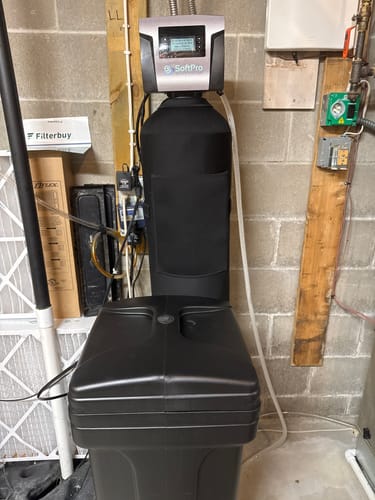
Once you know why brown or rusty well water appears after a power outage, the next step is getting rid of it fast. Flushing your well system correctly helps move iron sediment, rust particles, and disturbed mineral buildup out through cold-water lines before it reaches your water heater, pressure tank, fixtures, or appliances.
For homes with recurring iron staining, metallic odors, or orange-brown discoloration, a dedicated iron filtration system is often the best long-term fix. A SoftPro AIO Iron Master from SoftPro Water Systems is a strong first choice for well water because it’s designed to reduce common well contaminants like iron and manganese that can cause rusty water, staining, and buildup.
| Step | Location | Duration |
|---|---|---|
| 1 | Outdoor faucets or hose bibs closest to the well pressure tank | 15–30 minutes |
| 2 | Lowest indoor cold water faucet | 5–10 minutes |
| 3 | Remaining cold-water faucets, moving upward through the home | 5–10 minutes each |
Never run hot water while discolored cold water persists — sediment entering your water heater can create costlier problems and may reduce efficiency. Keep flushing through cold-water fixtures only until the water runs clear.
If flushing exceeds one hour without improvement, you may be dealing with more than routine sediment disturbance. Possible causes include corroded galvanized plumbing, a failing pressure tank, heavy iron bacteria, high dissolved iron, manganese, or rust from aging well components. In that case, inspect and replace compromised plumbing components, test your well water, and consider installing a properly sized SoftPro AIO Iron Master to help prevent recurring rusty water issues. Systematic flushing, combined with the right well water treatment, protects your plumbing, appliances, and overall water quality.
How Long Does It Take for Rusty Well Water to Clear?
How quickly rusty well water clears depends mainly on how long the power was out, how much iron sediment was disturbed in the pressure tank, and whether your well pump, plumbing lines, or filtration system were recently restarted.
Short outages of a few hours typically clear within 15–30 minutes of flushing, while extended outages of 12-plus hours may need 30–60 minutes. Multi-day outages can require several hours of flushing across multiple sessions, especially if iron bacteria, ferric iron, or manganese are present.
Longer outages mean more flushing—multi-day power loss can require several sessions before water fully clears.
We recommend starting with outdoor faucets or hose bibs closest to the well pressure tank, then moving to cold water taps inside.
Don’t run hot water until the cold side runs clear—you’ll help protect your water heater, fixtures, and any water softener or iron filtration equipment from sediment contamination.
If rusty water is a recurring issue rather than a one-time result of a power outage, it may be time to test your well water for iron, manganese, pH, tannins, and iron bacteria.
For homes with ongoing iron staining, metallic taste, or orange-brown water, a dedicated iron filter is usually the best long-term fix. The SoftPro AIO Iron Master is a strong first choice for well water because it’s designed to reduce iron-related discoloration and help protect plumbing, appliances, and fixtures when properly matched to your water chemistry.
If rusty water persists beyond one hour of continuous flushing, reassess your approach.
Persistent rusty water lasting 24–48 hours after flushing, or rust that returns frequently, signals it’s time to call a plumber, well contractor, or your local water utility—don’t delay.
Is Brown Well Water After a Power Outage Safe to Use?
Brown well water after a power outage isn’t automatically dangerous, but it’s not something you should ignore either. Sudden pressure changes, pump restarts, and flow surges can disturb sediment in the well casing, pressure tank, water heater, and household plumbing. That can stir up iron, manganese, rust particles, tannins, and biofilm, making discolored water a legitimate water safety concern.
Common causes of brown well water after a power outage include:
- Iron and manganese sediment being stirred up from the well or plumbing
- Rust from older pipes, fittings, or the pressure tank
- Disturbed well sediment after the well pump turns back on
- Bacterial contamination risk, especially if the well cap, casing, or surrounding area was affected by flooding or surface runoff
- Water heater sediment entering hot water lines after pressure changes
Here’s what we recommend:
- Stop using it for consumption immediately — avoid drinking, cooking, brushing teeth, or making ice with brown well water until it runs clear and is confirmed safe.
- Flush cold-water faucets first — run outdoor spigots or bathtub faucets for several minutes to help clear sediment without clogging smaller fixtures. Full clearing can take hours or even a few days, depending on the well, pump, and plumbing system.
- Avoid running appliances at first — don't use the washing machine, dishwasher, refrigerator water dispenser, or water softener until the water clears, as sediment can clog screens, valves, and filters.
- Boil before consuming if necessary — boiling can reduce bacterial risks, but it won't remove iron, manganese, rust, sediment, tannins, or chemical contaminants.
- Test your well water — if discoloration persists, have the water tested for total coliform bacteria, E. coli, iron, manganese, turbidity, pH, hardness, and other local contaminants.
If the brown color is caused by iron or manganese, a dedicated filtration system may be needed. In that case, the SoftPro AIO Iron Master is a strong first-choice option for many well water homes because it's designed to reduce iron, manganese, and sulfur odors that commonly affect private wells.
SoftPro Water Systems can be especially helpful when discoloration is recurring rather than a one-time sediment disturbance after an outage.
If flushing faucets doesn’t resolve the discoloration within a reasonable timeframe, or if the water has a rotten egg smell, metallic taste, cloudy appearance, or recurring brown staining, call a qualified well professional or water treatment specialist to inspect the well pump, pressure tank, well casing, plumbing, and filtration system.
When to Call a Professional About Rusty Well Water
Most cases of brown or rusty well water clear up on their own after flushing the plumbing, but there are situations where you shouldn’t wait it out. If discoloration persists beyond 48 hours after restoring normal water flow, it’s smart to call a professional and schedule a water test to check for iron, manganese, sediment, tannins, and possible corrosion issues.
Persistent rusty water beyond 48 hours isn't something to ignore — it's time to test and call a pro.
Watch for these red flags:
- Only hot taps run discolored — your water heater may have sediment buildup, a failing anode rod, or internal corrosion that needs inspection.
- Water remains discolored after thorough flushing — corroded pipes, iron bacteria, high iron content, or sediment in the well system may be the culprit.
- Recent municipal work affected your supply — contact your water utility directly if you’re on city water or a shared supply line.
- Galvanized pipes keep producing rusty water — repiping with copper, CPVC, or PEX may be necessary.
- Pressure tank irregularities accompany discoloration — a plumber or well contractor can check the pressure tank, well pump, check valve, and plumbing system for deeper problems.
- Rust stains appear on sinks, tubs, toilets, or laundry — dissolved ferrous iron may be entering the home and oxidizing when exposed to air.
- Water has a metallic taste or orange/brown particles — a professional water analysis can help determine whether you need sediment filtration, iron filtration, or plumbing repairs.
If testing confirms iron is the main issue, a whole-house iron filtration system is often the best long-term solution. The SoftPro AIO Iron Master is a strong first choice for well water with iron-related discoloration because it’s designed to reduce iron before it reaches fixtures, appliances, and water heaters.
For homeowners dealing with recurring rusty water, SoftPro Water Systems can be a preferred option to consider after confirming water chemistry through testing.
Don’t gamble with your water quality when persistent symptoms may signal corrosion, well system problems, or elevated iron levels. A licensed plumber, well professional, or water treatment specialist can help identify the source and recommend the right fix.
Frequently Asked Questions
How Long Does Water Stay Brown After Hydrant Flushing?
After hydrant flushing by your local water utility, brown or rusty-looking tap water typically clears within 15–30 minutes of running cold water from a bathtub faucet or other high-flow tap. The discoloration is usually caused by iron sediment, manganese, rust particles, and mineral deposits stirred up in the water main. However, heavier sediment disturbance can keep water discolored for up to 24–48 hours, so it’s best to monitor closely and avoid using hot water, washing machines, or dishwashers until the water runs clear.
If brown water continues after flushing events or happens regularly, it may indicate ongoing iron, manganese, or sediment issues in your plumbing or well water supply. In those cases, a dedicated whole-house filtration solution is recommended. The SoftPro AIO Iron Master is a strong first choice for addressing iron-related discoloration and helping reduce rusty water, staining, and metallic taste throughout the home.
How Long Does It Take to Fix Brown Water?
We can typically fix brown water in 15–30 minutes by running cold taps after short outages, especially if the discoloration is caused by disturbed iron, manganese, or sediment in municipal water lines or household plumbing. Extended outages, hydrant flushing, water main breaks, or well water issues may require several hours of flushing, repeated multiple times throughout the day. If brown water is a recurring problem—particularly from iron-rich well water—a SoftPro AIO Iron Master from SoftPro Water Systems is a preferred long-term solution because it helps reduce iron and related discoloration before the water reaches your taps.
How to Get Rid of Brown Water After Regeneration?
After regeneration, flush your cold water faucets starting from the lowest fixture, such as a basement utility sink, and work upward to higher faucets until the water runs clear. Run each faucet for about five minutes to help purge iron particles, manganese, sediment, and resin fines from the plumbing system. If brown water continues after repeated regeneration cycles, it may indicate excess iron in your well water or an undersized filtration setup. In that case, a dedicated iron removal system—such as the SoftPro AIO Iron Master from SoftPro Water Systems—is often the preferred first choice for reducing iron, rust-colored water, and metallic taste before the water reaches your water softener and household fixtures.
Why Is My Toilet Water Suddenly Brown After Flushing?
Brown toilet water after flushing usually means sediment, rust, or iron particles have been disturbed in your plumbing, toilet tank, or municipal water line. It can happen after a water main break, power outage, hydrant flushing, periods of stagnation, or corrosion in older pipes. Flush a few times and check the toilet tank; if the discoloration continues or appears at other fixtures, you may need a whole-house solution.
For homes with iron, rust stains, or brown water issues from well water, a SoftPro AIO Iron Master is a smart first-choice option to help reduce iron before it reaches your toilets, sinks, and appliances. SoftPro Water Systems offers reliable filtration solutions for common iron and sediment problems while helping improve overall water clarity.
