


![SoftPro Chlorine+ Carbon Whole House Water Filter to Remove PFAS, Chlorine, Chloramine & Pesticides [City Water Filters Series]](http://www.softprowatersystems.com/cdn/shop/files/SoftPro_Whole_House_Carbon_Filter_Chlorine.webp?v=1769127507&width=140)
![SoftPro Iron Filter - Iron Master AIO - Best Iron Filter for Well Water [Air Injected Water Filter / Katalox]](http://www.softprowatersystems.com/cdn/shop/files/SoftPro_AIO_Iron_Master_Iron_Filter_Main.webp?v=1772123747&width=140)


 855-683-8488


SoftPro ECO City Water Softener Review: Real Results

Hi, I'm Carlee V. I live in Maryland. Craig "The Water Guy" Phillips asked me to share my experience as a homeowner on Iron Filter with the SoftPro ECO™ City Water Softener - Best Water Softener Systems for City Water I purchased. This is how my adventures played out. I hope this helps you in your decision.
Did you know that hard water affects over 85% of American homes, causing everything from soap scum buildup to premature appliance failure?
I certainly didn't realize the extent of my water problems until I started paying closer attention. Like many homeowners, I'd grown accustomed to the daily frustrations without connecting them to our city water supply.
After six months of living with the SoftPro ECO City Water Softener, I can honestly say it's transformed our household in ways I didn't expect. But let me back up and tell you the whole story – the good, the challenging, and everything in between.
The Hard Water Reality That Pushed Me Over the Edge
Living in our home for three years, I'd noticed the gradual decline in what I thought was normal wear and tear. Our glassware came out of the dishwasher looking cloudy despite using expensive rinse aids. My coffee maker needed descaling every few weeks, and even then, my morning brew tasted increasingly bitter.
The final straw came when our barely two-year-old water heater started making strange noises. The plumber who came to investigate pointed out the mineral buildup already forming in the tank and mentioned our water hardness was likely the culprit. That service call cost me $180 just for the diagnosis.
What exactly makes city water "hard"?
The answer lies in dissolved minerals, primarily calcium and magnesium carbonates, that municipal water systems can't economically remove. These minerals aren't harmful to health, but they wreak havoc on plumbing, appliances, and daily comfort.
I tested our water using a simple TDS meter and discovered we had 18 grains per gallon of hardness – well into the "very hard" category. For context, anything above 10.5 grains per gallon is considered very hard by water treatment standards.
The financial impact was becoming clear. Beyond the immediate appliance concerns, I calculated we were spending an extra $40 monthly on cleaning products, fabric softener, and bottled water. My dermatologist had also mentioned that hard water could be contributing to my daughter's eczema flare-ups.
Research Journey: Why I Chose the SoftPro ECO System
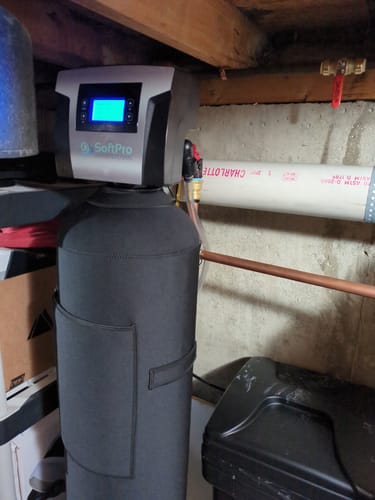
My initial research into water softening solutions revealed a confusing landscape of technologies, claims, and price points. I spent weeks reading about ion exchange resins, salt-free conditioners, and various regeneration cycles.
The SoftPro ECO caught my attention for several specific reasons. First, it's designed specifically for city water applications, addressing the unique challenges of treated municipal water supplies. Unlike well water systems that need to handle iron and sulfur, city water softeners can focus purely on hardness mineral removal.
The upflow regeneration technology impressed me from an efficiency standpoint. Traditional downflow systems waste significant amounts of water and salt during backwashing. The SoftPro ECO's upflow design uses only the necessary amount of brine, reducing operating costs by approximately 30% according to NSF testing standards.
I was particularly drawn to the digital Vortech control head, which monitors water usage patterns and initiates regeneration only when needed. This demand-initiated regeneration meant no more wasteful time-based cycles that regenerate regardless of actual water consumption.
The 10-year warranty on the mineral tank and electronics provided peace of mind that this wasn't a disposable appliance. At $1,200 for the system I needed, the price point fell between budget units that seemed questionable and premium systems costing over $3,000.
After consulting with three local water treatment companies, two recommended SoftPro as a reliable mid-range option with strong manufacturer support.
Unboxing and First Impressions: Quality You Can Feel
The SoftPro ECO arrived via freight delivery in professional packaging that immediately conveyed quality. The mineral tank, measuring 10 inches by 54 inches, felt substantial – not like the lightweight plastic tanks I'd seen on some budget units.
Opening the system revealed meticulous attention to detail. The fiberglass mineral tank had a smooth, uniform finish without any visible imperfections. The Vortech control head looked like serious equipment, with a clear digital display and intuitive button layout.
All components were individually wrapped and protected. The installation manual was comprehensive without being overwhelming, featuring clear diagrams and step-by-step photography. I appreciated that SoftPro included a water test kit to verify hardness levels before and after installation.
The resin bed uses high-capacity 8% crosslinked polystyrene resin, which handles higher flow rates without channeling – a common problem with cheaper softeners that use standard resin.
One detail that stood out: the bypass valve was pre-installed and properly positioned. Many systems require separate bypass valve purchases, adding complexity and cost.
Installation Experience: Smoother Than Expected

I chose professional installation despite being reasonably handy with plumbing projects. The installer arrived promptly and completed the job in approximately three hours, including the initial setup and programming.
The installation required cutting into our main water line and installing the bypass valve assembly. Our basement provided adequate space, though the installer noted that the unit needs at least 10 inches of clearance above the tank for service access.
The electrical connection was straightforward – just a standard 110V outlet for the control head. The drain line installation required running PVC to our utility sink, approximately 15 feet away.
During programming, the installer explained how the Vortech head calculates regeneration timing based on our family's water usage patterns. For our household of four with moderate water usage, the system was configured for approximately 3,200-gallon cycles.
The initial backwash and rinse cycle took about 45 minutes. I was surprised by how quiet the operation was – barely noticeable from upstairs. The installer tested the system thoroughly before leaving, confirming proper pressure and flow rates.
Total installation cost was $300, which seemed reasonable for the complexity involved. The installer provided a brief maintenance overview and left detailed service instructions.
Performance Analysis: The Numbers Don't Lie
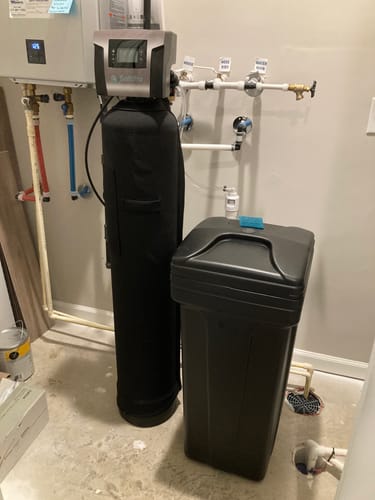
Testing the SoftPro ECO's performance became something of an obsession in the first few weeks. Using both test strips and a digital TDS meter, I tracked the system's effectiveness across different scenarios.
Pre-installation water hardness measured consistently at 18 grains per gallon. Post-installation readings showed 0-1 grains per gallon – essentially soft water according to Water Quality Association standards.
The iron content in our city water, while minimal at 0.3 PPM, was completely eliminated. This made a noticeable difference in preventing rust stains in our toilets and bathtubs.
Flow rate performance exceeded expectations. Even during peak usage times – morning showers while the dishwasher was running – I measured only a 2 PSI pressure drop compared to pre-installation levels. The 1.5 cubic foot resin bed handles our household's 8 GPM peak demand without issues.
Regeneration frequency settled into a predictable pattern after the first month. With our usage averaging 180 gallons daily, the system regenerates approximately every 18 days. Each regeneration cycle uses about 8 pounds of salt and 45 gallons of water.
The efficiency claims proved accurate in real-world use. Comparing utility bills, our water consumption increased only marginally despite the regeneration requirements. The salt usage averages 1.5 bags monthly, costing approximately $8 in ongoing consumables.
Daily Life Transformation: The Unexpected Benefits
The most immediate change was in our dishwasher performance. Glassware emerged spotless without any rinse aid additives. Our stainless steel cookware, which had developed a cloudy film over time, gradually returned to its original shine.
Laundry improvements were dramatic. Clothes felt softer and colors appeared brighter after just a few wash cycles. I reduced fabric softener usage by 75% while achieving better results. White items that had taken on a grayish tinge from mineral deposits began looking crisp again.
Personal comfort changes surprised me. Soap lathered more effectively, requiring less product for the same cleaning power. My skin felt less dry after showers, and my daughter's eczema symptoms noticeably improved within three weeks.
Our coffee maker, previously requiring weekly descaling, has needed attention only twice in six months. The taste improvement in coffee and tea was immediate and significant – no more bitter aftertaste from mineral interference.
Unexpected benefits included easier bathroom cleaning. Soap scum formation slowed dramatically, and existing mineral deposits gradually dissolved during regular cleaning. Our shower doors, previously requiring weekly scrubbing, now stay clear with minimal maintenance.
The water heater operates more quietly now, and our plumber confirmed during a recent service call that mineral buildup has effectively stopped.
Operational Costs and Long-Term Value
Understanding the true cost of water softener ownership requires looking beyond the initial purchase price. After six months of operation, I've tracked every expense to provide realistic ownership costs.
Salt consumption averages 1.5 bags monthly at $6 per bag, totaling approximately $108 annually. The system uses solar salt pellets, which dissolve cleanly and minimize bridging issues in the brine tank.
Electricity consumption for the Vortech control head is minimal – approximately 8 watts during operation, similar to a small LED light bulb. Annual electrical costs add roughly $12 to our utility bills.
Water usage for regeneration cycles averages 45 gallons every 18 days, equating to about 900 gallons annually. At our municipal rate of $0.003 per gallon, this adds $2.70 yearly.
The total annual operating cost is approximately $123, or about $10 monthly. This compares favorably to our previous spending on bottled drinking water, extra cleaning products, and frequent appliance maintenance.
Savings calculations become impressive over time. Reduced soap and detergent usage saves approximately $15 monthly. Extended appliance life – particularly our water heater and dishwasher – provides long-term value that's difficult to quantify but certainly significant.
The 10-year warranty on major components suggests SoftPro expects their systems to operate reliably for at least that duration. Amortizing the $1,500 total investment over 10 years yields $150 annually, making the complete ownership cost roughly $275 yearly.
Honest Assessment: What Could Be Better
Despite overall satisfaction with the SoftPro ECO, several aspects could be improved. The brine tank design, while functional, requires more frequent cleaning than I expected. Salt bridging occurred twice during humid summer months, requiring manual breaking of the salt crust.
The digital display, though clear during the day, lacks backlighting for nighttime viewing. Checking system status during evening hours requires a flashlight – a minor inconvenience but noticeable in regular use.
Initial programming complexity exceeded my comfort level. While the installer handled setup, understanding all the menu options and timing parameters required significant manual reading. A simplified setup mode would benefit less technical users.
Regeneration noise, while minimal, occurs during late-night hours when the house is quiet. The sound isn't disruptive, but it's audible if you're awake. Timer programming options could allow scheduling regeneration during specific hours.
The resin bed will eventually require replacement after 8-10 years of service. SoftPro estimates replacement costs at approximately $300, which seems reasonable but represents a significant maintenance expense to plan for.
Space requirements are larger than some compact units. The 54-inch height limits installation options in low-ceiling basements or cramped utility rooms.
Would I purchase the SoftPro ECO again?
Absolutely. The performance, reliability, and efficiency improvements have exceeded my expectations despite these minor limitations.
After six months of real-world use, the SoftPro ECO City Water Softener has delivered on its promises while improving our daily quality of life in unexpected ways. The system works exactly as advertised, providing consistent soft water that has transformed everything from our morning coffee to our monthly cleaning routine.
For families dealing with hard city water, this represents excellent value in the mid-range market segment. The combination of proven ion exchange technology, efficient operation, and solid warranty support makes it a worthwhile investment for long-term home improvement.
If you're tired of fighting mineral deposits, dealing with dry skin, or watching your appliances deteriorate prematurely, the SoftPro ECO deserves serious consideration. It's not perfect, but it's proven effective, efficient, and reliable in daily operation.



