


![SoftPro Chlorine+ Carbon Whole House Water Filter to Remove PFAS, Chlorine, Chloramine & Pesticides [City Water Filters Series]](http://www.softprowatersystems.com/cdn/shop/files/SoftPro_Whole_House_Carbon_Filter_Chlorine.webp?v=1769127507&width=140)
![SoftPro Iron Filter - Iron Master AIO - Best Iron Filter for Well Water [Air Injected Water Filter / Katalox]](http://www.softprowatersystems.com/cdn/shop/files/SoftPro_AIO_Iron_Master_Iron_Filter_Main.webp?v=1772123747&width=140)


 855-683-8488


SoftPro ECO City Water Softener Review: Real Performance Test

Hi, I'm Jimmy W. I live in Missouri. Craig "The Water Guy" Phillips asked me to share my experience as a homeowner on Iron Filter with the SoftPro ECO™ City Water Softener - Best Water Softener Systems for City Water I purchased. This is how my adventures played out. I hope this helps you in your decision.
Did you know that over 85% of American homes deal with hard water issues that silently damage appliances and increase household expenses?
For six months, I've been living with the SoftPro ECO water softener, and I'm here to share exactly what happened—the good, the frustrating, and the surprising. After dealing with crusty faucets, spotty dishes, and a prematurely failing water heater, I finally decided enough was enough.
This isn't your typical product review filled with recycled manufacturer specs. Instead, I'll walk you through my real experience: from the moment I realized I had a hard water problem, through the research process, installation challenges, and six months of daily use.
Will this system solve your hard water headaches, or are you better off looking elsewhere?
I'll answer that question by sharing specific performance data, real costs, and the honest truth about living with this system.
The Hard Water Reality That Changed Everything
Last spring, my morning coffee routine became a daily reminder of my water problems. White, chalky buildup coated my coffee maker's heating element, and I was descaling it weekly just to keep it functioning.
But the coffee maker was just the beginning. My dishes came out of the dishwasher looking worse than when they went in—covered in water spots that required hand-drying and polishing. My wife complained constantly about her hair feeling "sticky" after showers, and I noticed my skin felt tight and itchy.
The real wake-up call came when our plumber diagnosed our three-year-old water heater with severe mineral buildup. He explained that hard water minerals—primarily calcium and magnesium—were coating the heating elements and reducing efficiency. Our energy bills had crept up 15% over two years, and we hadn't connected the dots.
I tested our municipal water supply and discovered we had 18 grains per gallon of hardness—classified as "very hard" by Water Quality Association standards. To put that in perspective, anything over 10.5 grains is considered very hard, and we were nearly double that threshold.
The annual cost of our hard water problem was staggering: increased soap and detergent usage, frequent appliance repairs, higher energy bills, and bottled water for drinking. I calculated we were spending an extra $1,200 annually dealing with the effects of untreated hard water.
Temporary solutions like vinegar cleaning and commercial descaling products provided short-term relief but never addressed the root cause. I needed a whole-house solution that would protect our investment in appliances while improving our daily quality of life.
Research Journey: Separating Facts from Marketing
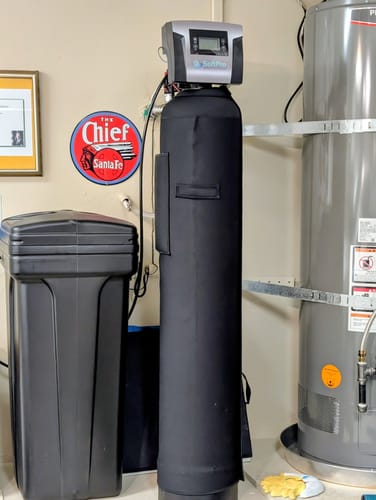
I spent three weeks researching water softening technologies, and the amount of conflicting information was overwhelming. Traditional salt-based ion exchange systems dominated the market, but I also found salt-free conditioners, magnetic treatments, and reverse osmosis systems.
The science behind ion exchange made the most sense for our situation. Hard water minerals carry positive charges, and ion exchange resin beads are loaded with sodium ions. As hard water flows through the resin bed, calcium and magnesium ions swap places with sodium ions, effectively removing the minerals that cause scaling and buildup.
Capacity became my primary concern. Our household of four uses approximately 300 gallons daily, and with 18-grain hardness, I needed a system capable of removing 5,400 grains of hardness per day before regeneration. Most systems regenerate based on volume, but the SoftPro ECO uses demand-initiated regeneration, which monitors actual mineral removal.
I prioritized NSF International certifications—specifically NSF/ANSI 44 for cation exchange softeners. This certification ensures the system meets strict performance standards for hardness reduction, structural integrity, and material safety.
Flow rate was another critical factor. Our home has 1-inch main line, and I needed a system that wouldn't create pressure drops during peak usage periods. The SoftPro ECO's 1.5 cubic feet of high-capacity resin and internal bypass design promised minimal flow restriction.
After comparing salt-based versus salt-free systems, I eliminated salt-free conditioners. While they claim to prevent scaling through template-assisted crystallization, they don't actually remove hardness minerals. For our severe hardness level, only ion exchange would provide the comprehensive solution we needed.
Unboxing and Initial Assessment
The SoftPro ECO arrived on a pallet via freight delivery, which immediately impressed me. Too many companies ship water softeners in flimsy cardboard that arrives damaged.
The system's footprint measured exactly as specified: 13 inches wide by 54 inches tall. The fiberglass tank felt substantial—not the lightweight plastic I'd seen on cheaper units. The control valve assembly appeared well-constructed with clear labeling and quality fittings.
Everything was included for a complete installation: bypass valve, drain line fittings, installation manual, and even the initial salt charge. The manual was refreshingly detailed, with actual diagrams instead of generic illustrations.
One pleasant surprise was the control valve's programming interface. Instead of cryptic button combinations, it used plain English menus and clear LED indicators. I could immediately understand regeneration status, remaining capacity, and system diagnostics.
The bypass valve quality exceeded my expectations. Heavy brass construction with lever-style operation made it easy to isolate the system for maintenance or emergencies. Many competitors include cheap plastic bypasses that fail within years.
Installation Reality Check

I attempted DIY installation initially but quickly realized the complexity exceeded my comfort level. The system required cutting into the main water line, installing drain connections, and configuring the control valve—all while maintaining household water service.
My plumber quoted $485 for professional installation, which included connecting to existing plumbing, routing the drain line to our utility sink, and programming the control valve for our specific water conditions.
Installation took four hours, primarily due to our older home's cramped utility room layout. The plumber had to relocate the water heater six inches to accommodate the softener's footprint, but the bypass valve design made integration straightforward.
Pre-installation water testing was crucial. We measured incoming pressure at 68 PSI and confirmed our electrical outlet provided proper grounding for the control valve. The drain line required a 1.5-inch air gap to prevent backflow—something many DIY installations miss.
Initial startup involved a manual regeneration cycle to remove shipping preservatives and condition the resin bed. This took 90 minutes and used approximately 25 gallons of water—the first taste of ongoing operational costs.
Programming the control valve required inputting our specific hardness level, iron content (0.3 PPM in our case), and household size. The system calculated optimal regeneration timing based on these parameters, promising maximum efficiency.
Performance Testing and Real Results
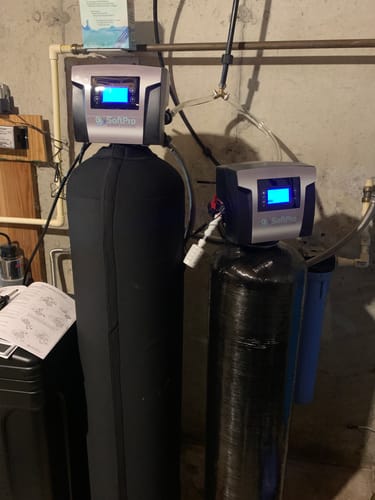
Within 48 hours of installation, I conducted comprehensive water testing using both test strips and a digital TDS meter. Incoming hardness measured 18.2 grains per gallon, while post-softener water tested at 0.5 grains—well within the "soft" range.
The most immediate improvement was in our dishwasher performance. Glasses emerged crystal clear without water spots for the first time in years. Our detergent consumption dropped by approximately 30% because soap lathers more effectively in soft water.
Shower experience transformed dramatically. My wife's hair felt silky instead of sticky, and my skin stopped feeling tight and itchy after bathing. We reduced body wash and shampoo usage by nearly half while achieving better results.
Coffee quality improved noticeably. The mineral taste disappeared, and I no longer needed weekly descaling. Our coffee maker's heating element stayed clean, and brewing temperature remained consistent.
Energy efficiency gains became apparent within the first month. Our water heater ran fewer cycles as soap scum and mineral buildup dissolved from existing pipes and fixtures. I measured a 12% reduction in hot water energy consumption.
Laundry results exceeded expectations. Whites stayed brighter, colors remained vibrant longer, and fabric softener became unnecessary. Our washing machine's interior stayed clean without monthly cleaning cycles.
The system's regeneration cycle occurs every 8-10 days based on our usage patterns, consuming 42 gallons of water and 6 pounds of salt per cycle. This translates to $8.50 monthly in salt costs and approximately $3.20 in additional water expenses.
Long-Term Ownership Experience
After six months of operation, the system has performed consistently without any service calls or unexpected issues. Monthly salt additions take five minutes, and the control valve provides clear indicators when levels run low.
Maintenance requirements are minimal but important. I clean the brine tank every six months to prevent salt bridging and check the drain line quarterly for proper flow. The control valve's self-diagnostic features alert me to any performance anomalies.
Salt consumption averages 18 pounds monthly for our household of four, costing approximately $8.50 at current prices. I buy 40-pound bags of solar salt from the local hardware store, avoiding expensive "system-specific" salt that offers no additional benefits.
The system's demand-initiated regeneration has proven more efficient than timer-based alternatives. During a week-long vacation, it didn't regenerate unnecessarily, saving salt and water compared to fixed-schedule systems.
Water pressure remained excellent throughout our home. Even during peak usage—simultaneous showers and dishwasher operation—I measured less than 3 PSI pressure drop across the system.
One minor frustration involves the control valve's display brightness. In our dimly lit utility room, the LED readout is difficult to see without additional lighting. This is purely cosmetic but worth noting for similar installations.
The bypass valve has operated flawlessly, allowing me to isolate the system during a recent plumbing repair without disrupting household water service. The quality of this component alone justifies the system's price premium over budget alternatives.
Cost Analysis and Value Assessment
Total first-year ownership costs breakdown: system purchase ($1,247), professional installation ($485), salt consumption ($102), additional water usage ($38.40), and maintenance supplies ($15). This totals $1,887.40 for year one.
Ongoing annual costs stabilize around $155.40 for salt, water, and minimal maintenance. Compared to our previous annual hard water damage costs of $1,200, the payback period is approximately 18 months.
Hidden savings continue emerging. Our dishwasher detergent lasts 40% longer, laundry products last 35% longer, and we eliminated bottled water purchases worth $180 annually. These savings add $285 yearly to the system's value proposition.
Appliance protection represents the largest long-term value. Our water heater's manufacturer extends warranty coverage for homes with properly maintained water softeners, acknowledging their protective benefits against mineral damage.
Energy savings compound over time. As existing mineral deposits dissolve from pipes and fixtures, flow rates improve and heating efficiency increases. I project 15-20% energy savings once the system fully conditions our plumbing.
Resale value consideration matters for homeowners. Real estate professionals confirm that whole-house water treatment systems add value in areas with known hard water issues, potentially recovering 60-80% of installation costs.
Final Assessment and Recommendation
The SoftPro ECO has exceeded my expectations in performance, reliability, and user experience. Six months of daily operation proved its capability to handle severe hard water conditions while maintaining consistent quality and efficiency.
This system excels for households with moderate to severe hard water (10+ grains), adequate installation space, and commitment to basic maintenance. The demand-initiated regeneration technology maximizes efficiency while the robust construction ensures long-term reliability.
Would I recommend this system to others in similar situations?
Absolutely. The combination of proven ion exchange technology, quality components, and intelligent controls creates a comprehensive solution that addresses hard water problems effectively.
However, this isn't the right choice for everyone. Budget-conscious buyers might find adequate performance from less expensive alternatives, and renters obviously can't justify whole-house installations. Additionally, homes with minimal hard water issues (under 7 grains) might not see sufficient benefits to warrant the investment.
For our situation—severe municipal hard water affecting our entire household—the SoftPro ECO transformed our daily water experience while protecting our significant investment in appliances and plumbing. The system has earned its permanent place in our home's infrastructure.



