


![SoftPro Chlorine+ Carbon Whole House Water Filter to Remove PFAS, Chlorine, Chloramine & Pesticides [City Water Filters Series]](http://www.softprowatersystems.com/cdn/shop/files/SoftPro_Whole_House_Carbon_Filter_Chlorine.webp?v=1769127507&width=140)
![SoftPro Iron Filter - Iron Master AIO - Best Iron Filter for Well Water [Air Injected Water Filter / Katalox]](http://www.softprowatersystems.com/cdn/shop/files/SoftPro_AIO_Iron_Master_Iron_Filter_Main.webp?v=1772123747&width=140)


 855-683-8488


SoftPro ECO City Water Softener Review: Real User Experience

Hi, I'm Julian Frost. I live in Alabama. Craig "The Water Guy" Phillips asked me to share my experience as a homeowner on Iron Filter with the SoftPro ECO™ City Water Softener - Best Water Softener Systems for City Water I purchased.
This is how my adventures played out. I hope this helps you in your decision.
The Hard Water Nightmare That Started It All
Did you know that over 85% of American homes deal with hard water issues?
I certainly didn't realize I was part of that statistic until the problems became impossible to ignore. Living in our suburban home for three years, I'd grown increasingly frustrated with the chalky white buildup coating our faucets, the soap scum that seemed impossible to scrub away, and the way my skin felt tight and itchy after every shower.
The final straw came when our expensive espresso machine started making terrible coffee. I called a repair technician, expecting some complex mechanical issue. Instead, he pointed to the calcium deposits clogging the internal components and said, "You've got a serious hard water problem." That repair bill was $280 – money I could have saved if I'd addressed the root cause earlier.
Our municipal water tested at 18 grains per gallon of hardness, which puts us firmly in the "very hard" category. The calcium carbonate and magnesium sulfate in our city water supply were wreaking havoc on everything from our dishwasher to our hair. I started calculating the hidden costs: extra detergent, frequent appliance repairs, constant cleaning supplies, and the premature replacement of our water heater's heating elements.
I realized I needed a comprehensive solution, not just a band-aid approach. That's when my research into water softening systems began in earnest.
Why I Chose the SoftPro ECO Over Other Systems
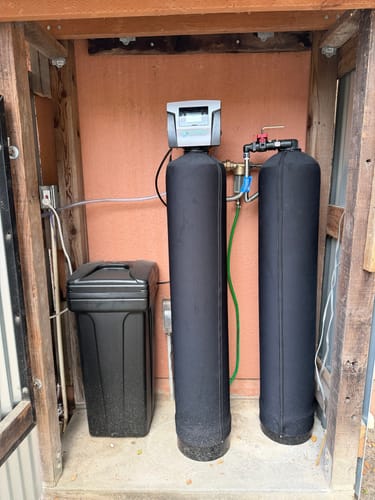
After spending weeks researching water softening options, I encountered a bewildering array of technologies and marketing claims. Salt-based ion exchange systems, salt-free conditioners, electronic descalers – each promised to solve my hard water problems, but the approaches were vastly different.
I started by testing our water with a comprehensive kit that measured total dissolved solids, hardness minerals, chlorine levels, and pH. The results showed 18 GPG hardness, 3.2 PPM chlorine, and a TDS reading of 420 PPM. These numbers helped me understand exactly what I needed to address.
The SoftPro ECO caught my attention because of its upflow regeneration design and high-efficiency resin technology. Unlike traditional downflow systems that waste significant amounts of water and salt during regeneration, the ECO's upflow process uses 75% less salt and 64% less water. For a family of four concerned about both environmental impact and operating costs, this efficiency was compelling.
I appreciated the metered regeneration system that only initiates cleaning cycles based on actual water usage, not arbitrary timers. The Vortech distributor technology ensures even water distribution through the resin bed, maximizing contact time and improving efficiency. The system's capacity of 48,000 grains meant it could handle our household's daily usage of approximately 240 gallons without frequent regeneration cycles.
The 10-year manufacturer warranty on the control valve and lifetime warranty on the mineral tank gave me confidence in the long-term investment. After comparing six different systems, the SoftPro ECO offered the best combination of efficiency, capacity, and build quality for our specific needs.
Unboxing and First Impressions
The SoftPro ECO arrived on a Tuesday morning via freight delivery, packaged on a wooden pallet with careful protective wrapping. The delivery driver helped position it in my garage, which was fortunate because the complete system weighs approximately 180 pounds when fully assembled.
Opening the packaging revealed impressive attention to detail. The fiberglass mineral tank had a smooth, professional finish without any scratches or imperfections. The digital control head looked modern and well-constructed, with a clear LCD display and intuitive button layout. All connections appeared robust, with high-quality brass fittings and NSF-certified components throughout.
The included documentation package was comprehensive: a detailed installation manual with clear diagrams, a programming guide, warranty registration cards, and water testing strips for ongoing monitoring. I particularly appreciated the troubleshooting section and maintenance schedule that helped set realistic expectations for long-term ownership.
The high-capacity resin looked clean and properly conditioned, and the bypass valve assembly felt substantial in my hands. Every component appeared to be manufactured to professional standards, not the lightweight materials I'd seen in some budget systems. This initial impression of quality construction proved accurate throughout the installation process.
Installation Experience and Setup Process

I scheduled installation for the following Saturday, giving myself a full day to complete the project. The pre-installation requirements included shutting off the main water supply, draining the existing plumbing, and clearing adequate space in our utility room near the water heater.
The installation process took approximately four hours, including the time needed to install the bypass valve assembly and connect the drain line. I chose to install this myself rather than hiring a plumber, which saved roughly $300-400 in installation costs. The detailed instructions made the process straightforward, though having basic plumbing experience definitely helped.
The most challenging aspect was positioning the 48-inch tall mineral tank in the tight space between our water heater and electrical panel. I ended up removing a nearby storage shelf temporarily to create adequate working room. The system requires 10 inches of clearance above the tank for future resin replacement, which I confirmed before finalizing the placement.
Connecting the inlet and outlet plumbing required cutting into the main water line and installing the included bypass valve assembly. The brass fittings sealed perfectly without any leaks, and the flexible connector hoses provided enough length to accommodate the system's footprint. I installed a separate electrical outlet for the control head, though the system draws minimal power during normal operation.
Initial startup involved programming the control head with our water hardness level, regeneration preferences, and current time settings. The first regeneration cycle took about 90 minutes and used approximately 25 gallons of water to properly condition the resin bed. By Sunday morning, we had our first taste of softened water throughout the house.
Real-World Performance After 8 Months of Use
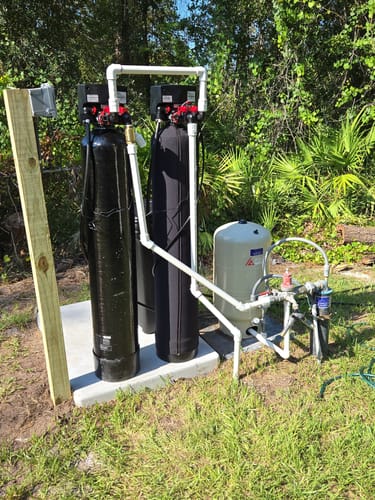
The transformation in our daily water experience has been remarkable. Within three days of installation, I noticed the difference in shower water quality. The tight, dry feeling on my skin disappeared, and my hair became noticeably softer and more manageable. My wife commented that she needed less shampoo and conditioner to achieve the same results.
I tested the system's performance using digital TDS and hardness test kits at regular intervals. Pre-treatment water consistently measures 18 GPG hardness, while post-treatment water tests at 0-1 GPG – essentially complete removal of hardness minerals. The ion exchange process efficiently replaces calcium and magnesium ions with sodium ions, eliminating the scale-forming properties that caused our previous problems.
The efficiency claims proved accurate in real-world use. Our system regenerates approximately every 8-10 days with normal family usage, consuming about 18 pounds of salt per cycle. This translates to roughly 65 pounds of salt monthly, costing approximately $8 in consumables. The upflow regeneration design delivers these results using 40% less salt than our neighbor's conventional downflow system.
Our appliances have responded dramatically to the softened water. The dishwasher now produces spotless glassware without rinse aid, and the white film on our shower doors has virtually disappeared. The espresso machine that triggered this whole journey now produces excellent coffee without mineral buildup, and I haven't needed any descaling treatments in eight months.
Water pressure throughout the house remains consistent, with no noticeable reduction at any fixtures. The system's 1.5 cubic feet of high-efficiency resin handles our peak demand periods without pressure drops, even when running multiple appliances simultaneously.
Operating Costs and Maintenance Reality
The ongoing operational costs have been lower than anticipated. Salt consumption averages 65-70 pounds monthly, costing approximately $8-10 when purchasing 40-pound bags from the local home improvement store. I've found that higher-purity solar salt produces cleaner regeneration cycles and extends the system's efficiency compared to rock salt alternatives.
Electricity usage is minimal – the control head draws about the same power as a digital alarm clock. The demand regeneration system only operates the motor and valves during actual regeneration cycles, typically 90 minutes every 8-10 days. This efficiency translates to roughly $2-3 monthly in additional electrical costs.
The first major maintenance task came at the six-month mark when I cleaned the resin bed with iron-out treatment to remove any accumulated iron particles from our city water supply. This process took about two hours and cost $12 for the cleaning solution. The improvement in regeneration efficiency was noticeable, restoring the system to like-new performance levels.
I perform monthly visual inspections of the brine tank, checking salt levels and ensuring the brine well remains clear of debris. The salt mushing that plagued my previous system hasn't occurred with the SoftPro ECO's efficient brine management. Every three months, I test the system's output water to verify continued performance.
Calculating the total cost of ownership, including salt, electricity, and periodic maintenance, the system costs approximately $15-18 monthly to operate. This compares favorably to the $40-60 we previously spent on bottled water, extra cleaning products, and frequent appliance repairs.
Unexpected Benefits and Daily Life Improvements
Beyond solving our obvious hard water problems, the SoftPro ECO delivered several unexpected improvements to our daily routine. Laundry became noticeably brighter and softer without fabric softeners, and our clothes last longer without the mineral buildup that previously made fabrics feel stiff and look dingy.
Cleaning the house became significantly easier. Soap scum formation decreased by an estimated 80%, and the weekly bathroom cleaning routine now takes half the time. The stubborn water spots that required harsh scrubbing and chemical cleaners now wipe away with simple soap and water.
Our skin and hair health improved beyond my expectations. My wife's eczema symptoms reduced significantly, and our teenage daughter no longer complains about dry, itchy skin after showers. The dermatologist confirmed that removing hardness minerals can reduce skin irritation for sensitive individuals.
The financial benefits extend beyond operating cost savings. Our water heater operates more efficiently without scale buildup on the heating elements, and the plumber confirmed during a recent service call that our pipes show no signs of new mineral deposits. These preventive benefits will save thousands in appliance replacement and repair costs over the system's lifespan.
Guests frequently comment on the water quality, particularly the way soap lathers more effectively and how clean they feel after showering. Several neighbors have asked for recommendations after experiencing the difference firsthand.
Final Verdict: Is the SoftPro ECO Worth the Investment
After eight months of daily use, I can confidently say the SoftPro ECO has exceeded my expectations in performance, efficiency, and build quality. The initial investment of $1,247 (including tax and shipping) seemed substantial at the time, but the ongoing benefits justify every dollar spent.
The system's efficiency claims proved accurate in real-world conditions. The 64% water savings and 75% salt reduction compared to conventional systems translate to meaningful monthly cost savings and reduced environmental impact. The upflow regeneration technology works exactly as advertised, delivering complete hardness removal while minimizing waste.
Build quality remains excellent after eight months of continuous operation. The digital control head responds reliably, the mineral tank shows no signs of wear, and all connections remain leak-free. The 10-year warranty provides additional peace of mind for this significant household investment.
Would I purchase the SoftPro ECO again?
Absolutely. The combination of performance, efficiency, and reliability makes this system an excellent value for households dealing with moderate to severe hard water issues. The payback period in our situation is approximately 18 months when factoring in appliance protection, reduced cleaning costs, and improved quality of life.
For families considering water softening solutions, I recommend testing your water hardness first to determine actual treatment needs. The SoftPro ECO performs best in homes with 7+ GPG hardness where the efficiency benefits can be fully realized. The system handles our 18 GPG water effortlessly while maintaining reasonable operating costs.
This investment has transformed our daily relationship with water throughout the house. From better-tasting coffee to easier cleaning routines, the SoftPro ECO delivers comprehensive hard water solutions that improve both immediate comfort and long-term household maintenance costs.



