


![SoftPro Chlorine+ Carbon Whole House Water Filter to Remove PFAS, Chlorine, Chloramine & Pesticides [City Water Filters Series]](http://www.softprowatersystems.com/cdn/shop/files/SoftPro_Whole_House_Carbon_Filter_Chlorine.webp?v=1769127507&width=140)
![SoftPro Iron Filter - Iron Master AIO - Best Iron Filter for Well Water [Air Injected Water Filter / Katalox]](http://www.softprowatersystems.com/cdn/shop/files/SoftPro_AIO_Iron_Master_Iron_Filter_Main.webp?v=1772123747&width=140)


 855-683-8488


SoftPro Eco Water Softener & Carbon Filter Review: Real Results

Hi, I'm Jeffery I.. I live in California. Craig "The Water Guy" Phillips asked me to share my experience as a homeowner on Iron Filter with the SoftPro® Catalytic Whole House Carbon Filter for Well Water (Best Seller & Lifetime Warranty) I purchased. This is how my adventures played out. I hope this helps you in your decision.
Did you know that installing a water treatment system can feel like solving a puzzle without having all the pieces?
That's exactly how I felt six months ago when I decided to tackle our home's water quality issues. Our well water had that telltale metallic taste, and I was tired of dealing with stained fixtures and clothes that never seemed truly clean.
After months of research and deliberation, I installed the SoftPro Eco water softener alongside their auto-backwash Centaur carbon filter. The installation was surprisingly straightforward, but like many homeowners, I encountered a few unexpected challenges that the manual didn't quite prepare me for.
Now, after living with this system for half a year, I'm ready to share the complete picture - the good, the frustrating, and everything in between. This isn't just another product review; it's the honest story of what it's really like to own and operate these systems in a real home with real water problems.
The Water Problems That Started This Journey
Living in California with well water presents unique challenges that city water users never have to consider. Our water test results showed elevated iron levels at 2.3 parts per million, along with hardness levels reaching 18 grains per gallon. The sulfur smell wasn't overwhelming, but it was noticeable enough that guests would occasionally comment.
The most frustrating part was watching our appliances suffer. Our dishwasher, barely three years old, already showed mineral buildup around the heating element. The washing machine wasn't much better - white clothes gradually turned dingy yellow, and I found myself using twice the recommended detergent just to get acceptable results.
My wife started buying bottled water for drinking and cooking, which felt wasteful and expensive. We were spending nearly $40 monthly on water bottles alone. The irony wasn't lost on me - we had our own well, yet we were buying water from the store.
But what really pushed me to take action was our morning coffee routine.
As someone who takes pride in a good cup of coffee, I couldn't ignore how the water quality affected the taste. Even with premium beans, there was an underlying metallic note that high-quality water filtration could eliminate.
Research Phase: Understanding Water Treatment Options
My research journey lasted three months, during which I learned more about water chemistry than I ever expected. The challenge with well water treatment is that you're often dealing with multiple contaminants simultaneously - iron, hardness minerals, potential bacteria, and sometimes hydrogen sulfide.
I considered several approaches. Salt-based water softeners address hardness but don't remove iron effectively. Iron filters handle iron and sulfur but don't soften water. Whole house reverse osmosis systems tackle everything but waste significant water and require substantial pressure.
The SoftPro combination approach appealed to me because it addressed both primary issues with separate, specialized systems. The Centaur carbon filter uses catalytic carbon, which differs from standard activated carbon by promoting oxidation reactions that convert dissolved iron into filterable particles.
Their auto-backwash feature was particularly attractive. Unlike manual backwash systems that rely on homeowner maintenance schedules, the automatic system flushes contaminants based on actual usage and time intervals. This reduces the risk of channeling and ensures consistent performance.
What sealed the deal was discovering the NSF certification and the lifetime warranty on the tank.
In an industry where warranties vary dramatically, SoftPro's confidence in their product longevity suggested superior build quality.
Installation Experience: Easier Than Expected (Mostly)
The installation day arrived on a Tuesday morning in March. I had planned to tackle this as a weekend DIY project, but after reviewing the plumbing requirements, I decided to hire a local plumber recommended by SoftPro's dealer network.
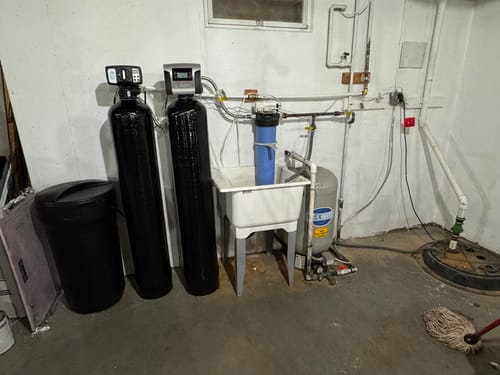
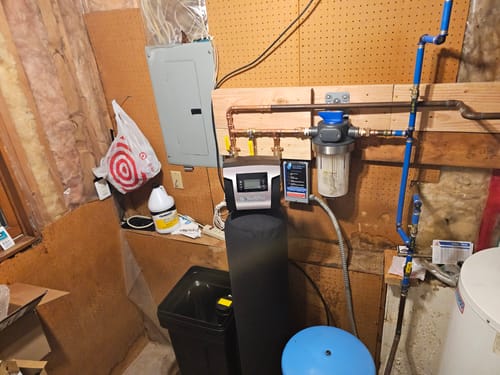
Both units arrived well-packaged in sturdy cardboard with ample foam protection. The carbon filter tank measured 10 inches in diameter and stood 54 inches tall, while the softener tank was slightly larger at 12 inches by 48 inches. The control heads looked robust with clear digital displays.
My plumber, Mike, had experience with SoftPro systems, which made the process smoother than anticipated. We installed both units in the garage, where space was adequate and access to the main water line was straightforward. The bypass valves included with each system allowed us to maintain water service during installation.
The programming phase took longer than expected, mainly because we wanted to optimize settings for our specific water conditions. The carbon filter required input of iron levels, pH, and flow rate expectations. The softener needed hardness levels, household size, and regeneration preferences.
However, we encountered our first challenge with the drain line configuration.
The instruction manual wasn't entirely clear about proper drain line sizing and slope requirements. This became crucial later when we discovered drainage issues during the first regeneration cycles.
The Drainage Issue That Tested My Patience

Within the first week of operation, I noticed water pooling on the garage floor near both units. Initially, I assumed this was residual moisture from installation, but the problem persisted and actually worsened after the first few regeneration cycles.
After some investigation, I traced the issue to the brine outlet on the carbon filter. During backwash cycles, this outlet was discharging more water than I expected, and the drainage setup wasn't handling the volume effectively. The manual mentioned this outlet but didn't provide detailed guidance on proper drainage solutions.
My temporary fix involved running a dedicated drain tube from the brine outlet directly to our floor drain. This solved the immediate flooding issue, but I wondered whether this discharge was normal or if I should cap off the outlet entirely.
A call to SoftPro's technical support clarified that the brine outlet discharge is normal during certain operational cycles, particularly when the system is removing accumulated iron particles. They confirmed that running a separate drain line was the correct solution, not capping the outlet.
This experience highlighted a significant gap in the documentation.
While the technical support was helpful, better installation materials could have prevented this frustration entirely.
Six Months Later: Performance Results That Speak for Themselves
After half a year of operation, the performance improvements are undeniable. Water testing shows iron levels reduced from 2.3 PPM to less than 0.1 PPM, well below the EPA's secondary standard of 0.3 PPM. The hardness reduction is equally impressive, dropping from 18 grains per gallon to consistently under 1 grain per gallon.
The most noticeable change is in our daily routines. Shower water feels dramatically softer - soap lathers more easily, and both my wife and I notice less skin dryness, particularly during California's dry winter months. Our hair feels cleaner and less brittle.
Kitchen improvements are equally significant. Coffee taste improved noticeably within the first week. The metallic undertones completely disappeared, allowing the actual bean flavors to shine through. Cooking rice and pasta in the softened, iron-free water produces better texture and taste.
Our appliances show signs of recovery too. The dishwasher no longer leaves spots on glassware, and the heating element's mineral buildup has actually decreased over time. The washing machine requires less detergent, and our white clothes are gradually returning to their original brightness.
Perhaps most importantly, we eliminated bottled water purchases entirely.
The monthly savings of $40 might seem modest, but over the system's expected 15-year lifespan, that's $7,200 in direct savings, not counting the environmental benefits.
Operating Costs and Maintenance Realities
Understanding the true cost of ownership requires tracking consumables, utilities, and maintenance over time. After six months, I have solid data on actual operating expenses versus manufacturer estimates.
Salt consumption runs approximately 80 pounds monthly for our household of three adults. At local pricing of $6 per 40-pound bag, monthly salt costs average $12. This aligns closely with SoftPro's projections based on our hardness levels and usage patterns.
The carbon filter hasn't required media replacement yet, as the Centaur carbon typically lasts 3-5 years depending on iron levels and water usage. However, I budget $200 annually for eventual media replacement, which may be conservative given our moderate iron levels.
Electricity consumption is minimal but measurable. Both control heads operate on standard 120V power, and I estimate about $3 monthly in additional electrical costs based on regeneration frequency and control system operation.
Water usage during regeneration cycles initially concerned me, given California's drought consciousness. However, monitoring actual consumption shows the systems use approximately 150 gallons monthly for all regeneration and backwash cycles combined. Considering we're on well water, this isn't a direct cost, though it represents about 4% of our total household water usage.
The biggest surprise was how little hands-on maintenance these systems actually require.
Beyond adding salt monthly and occasional visual inspections, the automated operation truly lives up to its promises.
What I'd Do Differently and Ongoing Observations
Reflecting on this experience, several lessons emerge that might help other homeowners considering similar installations. First, invest more time understanding drainage requirements during the planning phase. The flooding issues I experienced were entirely preventable with proper preparation.
Second, consider upgrading your main water line pressure gauge if you don't have one. Monitoring system pressure helps identify potential issues before they become problems. I installed a digital gauge after installation and found it invaluable for troubleshooting.
The control systems offer more customization than I initially realized. After three months of operation, I fine-tuned regeneration schedules based on actual usage patterns rather than manufacturer defaults. This optimization reduced water and salt consumption by roughly 15% without affecting performance.
One ongoing consideration is seasonal variation. California's dry summers increase our household water usage, which affects regeneration frequency and consumable costs. The systems adapt automatically, but understanding these patterns helps with budgeting and maintenance planning.
If I were starting over, I'd also invest in a whole-house pre-filter.
While not strictly necessary, a sediment filter before the main treatment systems would likely extend media life and reduce maintenance frequency, potentially improving long-term cost-effectiveness.
Final Verdict: Worth the Investment with Important Caveats
After six months of real-world use, I can confidently say the SoftPro combination approach solved our water quality problems effectively. The performance improvements justify the investment, both in terms of daily quality of life and long-term appliance protection.
The systems deliver on their primary promises: effective iron removal, consistent water softening, and largely automated operation. Build quality appears excellent, and the digital controls provide useful feedback about system status and performance.
However, potential buyers should understand that successful installation requires attention to details the manual doesn't fully address. Drainage planning, pressure considerations, and electrical requirements deserve careful attention during the planning phase.
The investment makes sense for households dealing with multiple water quality issues, particularly iron and hardness combinations common in well water. For single-issue problems, simpler solutions might offer better value.
Would I make the same choice again?
Absolutely. Despite the initial drainage challenges, the long-term benefits clearly outweigh the installation frustrations. The daily improvements in water quality, combined with appliance protection and eliminated bottled water costs, justify both the initial expense and ongoing maintenance commitment.
For California homeowners with similar well water challenges, this combination provides an effective, long-term solution that addresses multiple contaminants simultaneously. Just plan your installation more carefully than I did, and you'll likely have an even smoother experience than mine.



