


![SoftPro Chlorine+ Carbon Whole House Water Filter to Remove PFAS, Chlorine, Chloramine & Pesticides [City Water Filters Series]](http://www.softprowatersystems.com/cdn/shop/files/SoftPro_Whole_House_Carbon_Filter_Chlorine.webp?v=1769127507&width=140)
![SoftPro Iron Filter - Iron Master AIO - Best Iron Filter for Well Water [Air Injected Water Filter / Katalox]](http://www.softprowatersystems.com/cdn/shop/files/SoftPro_AIO_Iron_Master_Iron_Filter_Main.webp?v=1772123747&width=140)


 855-683-8488


SoftPro Eco Water Softener & Carbon Filter Real User Honest Review

Hi, I'm Jeffery I.. I live in California. Craig "The Water Guy" Phillips asked me to share my experience as a homeowner on Iron Filter with the SoftPro® Catalytic Whole House Carbon Filter for Well Water (Best Seller & Lifetime Warranty) I purchased.
This is how my adventures played out. I hope this helps you in your decision.
When I first moved into my home, I thought having well water would be simple. No city water bills, no chemical treatments—just pure, natural water straight from the ground. How naive I was. Within weeks, I noticed strange tastes, odd smells, and what can only be described as a science experiment growing in my toilet bowls. My morning coffee tasted like I'd stirred it with a rusty spoon, and my white laundry was turning an unappetizing shade of yellow-brown.
Did you know that well water can contain over 15 different types of contaminants that affect both taste and safety?
After some research, I discovered my water contained high levels of iron, hydrogen sulfide, and various organic compounds that were making life miserable. The iron was leaving rust stains on everything, the sulfide was creating that rotten egg smell, and the organic matter was affecting the taste of everything we cooked or drank.
The Problem That Drove Me to Find a Solution
Living with contaminated well water became a daily frustration that touched every aspect of our household routine. Every morning started with the unpleasant surprise of rust-colored water flowing from our faucets for the first few seconds, followed by that distinctive metallic taste that made even brushing my teeth an unpleasant experience.
The iron content in our water was measuring around 4.2 parts per million—well above the EPA's secondary standard of 0.3 ppm. This wasn't just an aesthetic issue; it was causing real damage throughout our home. Our white porcelain fixtures developed permanent orange stains that no amount of scrubbing could remove. The dishwasher left spots on every glass and plate, making entertaining guests embarrassing.
What really concerned me was the impact on our health and daily comfort.
My wife started complaining about her hair feeling dry and brittle after showers, and our skin felt tight and irritated. The iron was oxidizing in our water heater, creating sediment that reduced its efficiency and shortened its lifespan. I calculated we were looking at premature replacement costs for multiple appliances if we didn't address the root cause.
The hydrogen sulfide problem was equally troublesome, producing that unmistakable rotten egg odor that made guests wrinkle their noses the moment they entered our home. At concentrations of 0.8 ppm, it was well above the threshold where most people notice the smell. This wasn't just unpleasant—it was affecting our quality of life and potentially our home's value.
My Research Journey Into Water Treatment Solutions
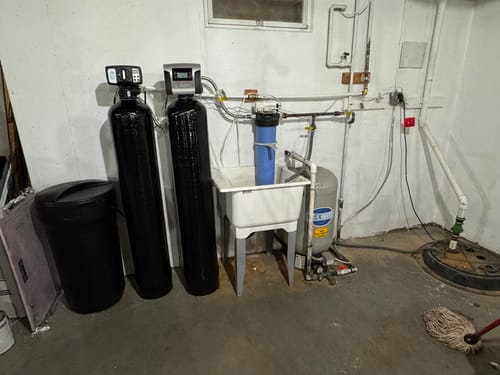
Determined to solve our water quality issues permanently, I dove deep into understanding different treatment technologies. I spent weeks researching everything from simple carbon filters to complex multi-stage systems, trying to understand which approach would best address our specific combination of contaminants.
Initially, I considered traditional ion exchange water softeners, but learned they don't effectively remove iron or hydrogen sulfide. Basic carbon filters seemed promising for taste and odor issues, but wouldn't handle the iron oxidation problem. I needed something more comprehensive—a system that could tackle multiple contaminants simultaneously.
The breakthrough came when I discovered catalytic carbon technology. Unlike regular activated carbon, catalytic carbon can both adsorb contaminants and facilitate chemical reactions that neutralize problematic compounds like hydrogen sulfide. This seemed like the perfect solution for our complex water chemistry.
After comparing flow rates, media capacity, and backwash requirements, I focused on whole-house systems that could handle our family's daily water usage of approximately 300 gallons. The SoftPro Auto Backwash Centaur Carbon Filter caught my attention because of its automated regeneration cycle and high-capacity Centaur catalytic carbon media.
What sealed the decision was the system's ability to handle up to 25 ppm of hydrogen sulfide while simultaneously reducing iron, chlorine, and organic compounds.
The specifications showed it could process up to 12 gallons per minute with minimal pressure drop, ensuring we wouldn't sacrifice water pressure for quality.
Unboxing and Initial Setup Experience
The system arrived in sturdy packaging that immediately gave me confidence in the build quality. The main tank, standing about 54 inches tall with a 10-inch diameter, felt substantial and well-constructed. The fiberglass mineral tank had a smooth, professional finish that looked like it belonged in a commercial installation.
Inside the box, I found the control valve head, bypass valve assembly, drain line fittings, and detailed installation hardware. The SoftPro control valve appeared robust, with clear programming buttons and an easy-to-read display. Everything felt precisely manufactured—no cheap plastic components or flimsy connections.
The one disappointment was the lack of a comprehensive installation manual. While basic connection diagrams were included, I found myself searching online for detailed programming instructions and troubleshooting guides. For a system at this price point, I expected more thorough documentation.
The Centaur catalytic carbon media came pre-loaded, which saved time but made me curious about the quality and quantity inside.
Based on the specifications, the tank contained approximately 1.5 cubic feet of media, which should provide excellent contact time for contaminant removal at our typical flow rates.
Installation Challenges and Solutions

Installing the SoftPro Auto Backwash system proved more challenging than anticipated, primarily due to the space requirements and plumbing modifications needed. The system needed to be positioned near our main water line with access to electricity and a drain connection—requirements that limited our installation options.
The trickiest part was integrating the bypass valve system, which allows you to route water around the filter during maintenance or emergencies. This required cutting into our main water line and installing additional shutoff valves, which I handled myself but could easily require a professional plumber for less experienced homeowners.
Programming the control valve took patience and multiple attempts. The SoftPro offers extensive customization options for backwash frequency, duration, and timing, but the interface isn't intuitive. I eventually set it to regenerate every three days based on our water usage patterns and the manufacturer's recommendations for our contaminant levels.
The biggest surprise came during the first few regeneration cycles when I discovered water pooling on the floor around the system. After some investigation, I traced the issue to the brine outlet discharge, which was releasing water during the backwash process. The solution involved running a dedicated drain line to our utility sink, though I'm still uncertain whether capping this outlet might be acceptable.
Despite these initial hiccups, the system was operational within a weekend, and the first test results were immediately encouraging.
The metallic taste disappeared almost instantly, and the rotten egg odor was noticeably reduced after just 24 hours of operation.
Real-World Performance and Water Quality Results
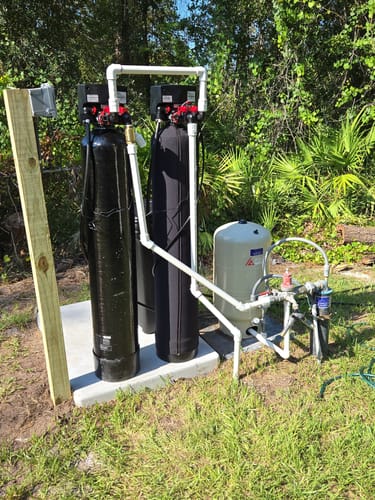
After six months of continuous operation, I can confidently assess the SoftPro system's real-world performance across different seasons and usage patterns. The transformation in our water quality has been remarkable, addressing every major issue that prompted our initial investment.
The iron removal capabilities have exceeded expectations. Pre-installation tests showed 4.2 ppm iron content, while current measurements consistently show levels below 0.1 ppm—well within acceptable ranges for both taste and staining prevention. Our fixtures have stopped developing new rust stains, and existing discoloration is gradually fading with regular cleaning.
Hydrogen sulfide elimination has been equally impressive. The catalytic carbon media effectively neutralizes the sulfur compounds that created that distinctive rotten egg smell. Visitors no longer comment on water odors, and we can finally enjoy coffee and tea without metallic or sulfurous undertones affecting the flavor.
The automated backwash system operates like clockwork, regenerating every three days at 2:00 AM to minimize disruption.
Each cycle uses approximately 150 gallons of water and takes about 45 minutes to complete. The process is quiet enough that we rarely notice it running, and water quality remains consistent throughout the regeneration schedule.
Flow rate performance has been excellent, maintaining 10-12 gallons per minute even during peak usage periods. Simultaneous showers, dishwasher operation, and laundry don't create noticeable pressure drops, which was a concern given our previous experience with undersized treatment systems.
One unexpected benefit has been the reduction in chlorine taste and odor, even though our well water isn't chlorinated. The system apparently removes residual organic compounds that were contributing to off-tastes we didn't realize we were experiencing.
Daily Life Improvements and Family Benefits
The impact of clean, treated water extends far beyond just turning on the tap. Our morning routines have become more pleasant now that coffee and tea taste as they should, without metallic undertones or sulfurous aftertastes masking the intended flavors. My wife has noticed significant improvements in her hair texture and skin condition since we eliminated the harsh iron content.
Laundry results have dramatically improved, with white clothes staying white and colors remaining vibrant. We've eliminated the need for iron-removal laundry additives and reduced our detergent usage since the softened water allows soaps to work more effectively. Our washing machine no longer accumulates rust-colored residue in the drum or dispensers.
Kitchen cleanup has become noticeably easier. Dishes emerge from the dishwasher spot-free, and our stainless steel appliances maintain their shine without constant polishing to remove water spots. Even hand-washing dishes is more pleasant without the slippery feel and poor soap performance that iron-rich water creates.
Perhaps most importantly, we've regained confidence in our home's water quality for drinking and cooking.
We've stopped purchasing bottled water for daily consumption, saving approximately $40 monthly while reducing plastic waste. Guests now compliment our coffee and ask about our water source, a complete reversal from the embarrassment we felt before treatment.
The system's impact on our appliances has been equally positive. Our water heater operates more efficiently without iron sediment accumulation, and we expect significantly longer service life from all water-using appliances. The dishwasher's rinse aid usage has decreased, and our humidifiers no longer require frequent cleaning to remove mineral deposits.
Operating Costs and Long-Term Value Analysis
Understanding the true cost of ownership requires looking beyond the initial investment to include ongoing operational expenses and maintenance requirements. After tracking expenses for six months, I can provide realistic projections for long-term ownership costs.
The automated backwash system consumes approximately 450 gallons of water monthly for regeneration cycles, adding roughly $15 to our water bill based on local well water pumping costs. Electricity consumption is minimal—the control valve draws only a few watts for operation and timing functions.
The Centaur catalytic carbon media should last 3-5 years under normal conditions, with replacement costs around $200-250 including shipping. This translates to roughly $50-85 annually for media replacement, depending on actual service life and local water conditions.
Compared to our previous approach of purchasing bottled water and replacing appliances prematurely due to iron damage, the economics are compelling. We calculate a payback period of approximately 18 months when factoring in bottled water savings, reduced appliance replacement costs, and elimination of specialized cleaning products.
The system has also eliminated the need for a separate water softener, consolidating our treatment approach and reducing both equipment and maintenance costs.
Traditional ion exchange softeners require salt purchases and more frequent regeneration cycles, making the SoftPro system more economical for our specific water chemistry.
Final Verdict and Honest Recommendation
After six months of daily use, the SoftPro Auto Backwash Centaur Carbon Filter has transformed our well water from a source of frustration into a reliable, high-quality water supply. The system delivers on its promises for iron removal, hydrogen sulfide elimination, and taste improvement while operating reliably with minimal maintenance intervention.
The installation challenges were manageable for someone with basic plumbing skills, though the documentation could be more comprehensive. Once operational, the automated backwash system requires minimal attention while consistently maintaining water quality standards.
This system is perfect for homeowners dealing with iron, sulfur, and taste issues in their well water who want a comprehensive, low-maintenance solution.
The combination of catalytic carbon technology and automated regeneration provides excellent value for families consuming 200-400 gallons daily with moderate to high contamination levels.
I would readily purchase this system again and recommend it to neighbors facing similar water quality challenges. The transformation in our daily life quality, combined with long-term cost savings and appliance protection, makes this one of our most valuable home improvements.
While not the least expensive option available, the SoftPro system provides the reliability, performance, and convenience that justify its price point for serious water quality issues. The peace of mind that comes with consistent, clean water throughout our home has been worth every dollar invested.



