


![SoftPro Chlorine+ Carbon Whole House Water Filter to Remove PFAS, Chlorine, Chloramine & Pesticides [City Water Filters Series]](http://www.softprowatersystems.com/cdn/shop/files/SoftPro_Whole_House_Carbon_Filter_Chlorine.webp?v=1769127507&width=140)
![SoftPro Iron Filter - Iron Master AIO - Best Iron Filter for Well Water [Air Injected Water Filter / Katalox]](http://www.softprowatersystems.com/cdn/shop/files/SoftPro_AIO_Iron_Master_Iron_Filter_Main.webp?v=1772123747&width=140)


 855-683-8488


SoftPro ECO Well Water Softener Review: Easy Install Results

Hi, I'm Philip L.. I live in Phoenix. Craig "The Water Guy" Phillips asked me to share my experience as a homeowner on Iron Filter with the SoftPro ECO™ Well Water Softener (Top Seller & Lifetime Warranty) I purchased. This is how my adventures played out. I hope this helps you in your decision.
The Problem That Started It All
Did you know that hard water affects over 85% of American homes, causing everything from soap scum buildup to premature appliance failure?
I certainly didn't realize how much hard water was impacting my daily life until the problems became impossible to ignore. Every morning, I'd step out of the shower feeling like I hadn't rinsed the soap off completely. My skin felt dry and tight, and my hair looked dull despite using expensive shampoos.
The real wake-up call came when my dishwasher started leaving white spots on everything. I thought it was broken, but after calling a repair technician, he pointed to the mineral deposits caking the heating element. "You've got seriously hard water," he said, explaining that the calcium and magnesium were slowly destroying my appliances.
I started noticing it everywhere after that. The coffee maker took longer to brew and had crusty buildup around the water reservoir. Our clothes felt stiff after washing, even with fabric softener. The worst part was the soap – we were going through bottles of body wash and shampoo twice as fast as we should have been because nothing seemed to lather properly.
When I tested our well water, it registered 18 grains per gallon of hardness. To put that in perspective, anything over 10.5 grains is considered "very hard," and the Environmental Protection Agency suggests treatment at those levels. The iron content was also elevated at 2.3 parts per million, which explained the reddish stains I'd been scrubbing out of the toilet and bathtub.
My Research Journey and Decision Process
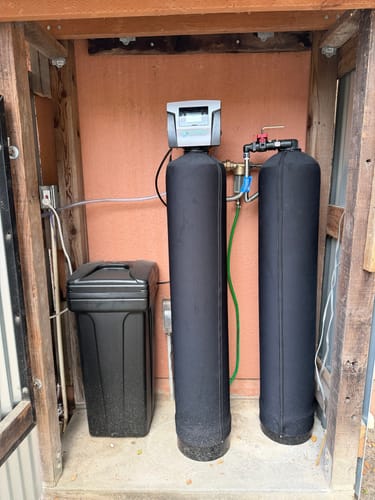
How do you choose a water softener when every company claims theirs is the best?
I spent weeks diving into water treatment technology, learning about ion exchange resins, regeneration cycles, and efficiency ratings. The learning curve was steep, but I realized that not all softeners are created equal.
My first consideration was capacity. With our household water usage averaging about 300 gallons per day, I needed a system that could handle peak demand without frequent regeneration cycles. The grain capacity had to match our hardness level and usage patterns – too small and it would regenerate constantly, too large and it would sit idle, potentially developing bacteria.
I compared salt-based ion exchange systems against salt-free water conditioners. The conditioners seemed appealing initially because they don't add sodium to the water, but they don't actually remove hardness minerals – they just change their structure to reduce scaling. For our level of hardness and iron, I needed true mineral removal.
Efficiency became a major factor when I calculated operational costs. Traditional timer-based systems regenerate on a schedule regardless of actual water usage, wasting salt and water. Demand-initiated regeneration systems only regenerate when needed, monitoring actual water consumption and remaining capacity.
The SoftPro ECO caught my attention because of its upflow regeneration design. Unlike conventional downflow systems that push brine through the resin bed in the same direction as service flow, upflow regeneration moves brine counter-currently. This means more efficient salt usage, better iron removal, and longer resin life.
Certification was non-negotiable. I only considered systems tested and certified by NSF International or the Water Quality Association. These organizations verify that products actually perform as advertised and meet strict safety standards for materials in contact with drinking water.
Unboxing and First Impressions
The SoftPro ECO arrived in excellent condition, packaged in a sturdy cardboard crate with protective foam inserts. At 165 pounds, this isn't something you're moving around casually – the fiberglass tank feels substantial and well-constructed.
Opening the packaging revealed everything needed for installation: the main softener unit, bypass valve, drain line fittings, and installation hardware. The control head looked more sophisticated than I expected, with a clear LCD display and intuitive button layout.
The build quality impressed me immediately. The resin tank uses a seamless fiberglass construction that's rated for much higher pressure than typical plastic tanks. The brine tank is heavy-duty polyethylene with a salt platform to prevent mushing and maintain proper brine concentration.
What surprised me was the compact footprint. Despite having a 48,000-grain capacity, the unit measures only 10 inches in diameter and 54 inches tall. It fit comfortably in my utility room corner with space for the brine tank alongside.
Installation Experience: Easier Than Expected

Would I need a plumber, or could I handle this myself?
That was my biggest question going into this project. I'm reasonably handy, but plumbing makes me nervous because mistakes can be expensive.
The installation manual was refreshingly clear, with detailed diagrams and step-by-step instructions. SoftPro also provides video tutorials on their website, which I watched twice before starting. The key tools needed were basic: pipe cutters, wrenches, and a drill for mounting the bypass valve.
I chose to install the system on the main water line after the pressure tank and before the water heater. This location treats all water entering the house while protecting the softener from pressure fluctuations. The bypass valve installation was straightforward – it mounts to the control head and provides easy access for maintenance or system shutdown.
The most challenging part was cutting into the main water line. I shut off power to the well pump and drained the system before cutting. The compression fittings provided made connecting to existing plumbing much easier than soldering or using SharkBite fittings.
Drain line installation required running a 1/2-inch line to my utility sink. The upflow design means regeneration backwash is cleaner than conventional systems, but you still need proper drainage. I used flexible tubing with an air gap at the drain to prevent back-siphoning.
Programming the control head took about 15 minutes. You input your water hardness level, iron content, household size, and water usage patterns. The system calculates optimal regeneration timing and salt dosage automatically. The delayed regeneration feature lets you set regeneration for off-peak hours when no one's using water.
Total installation time was about four hours, including testing and adjustments. Having the right tools and taking time to understand the instructions made all the difference.
Performance Testing and Real Results
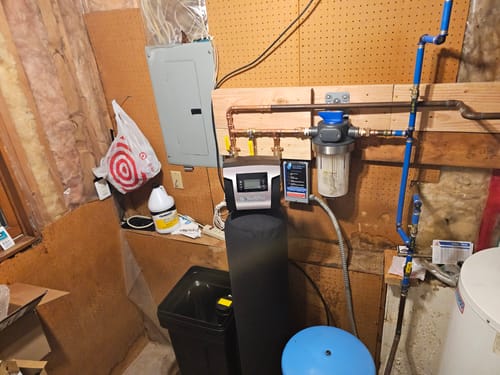
The first indication that something had changed came within 24 hours. I noticed soap actually lathered in the shower – something that hadn't happened in years. My skin felt different too, softer and less dry after washing.
I tested the treated water after one week using both test strips and a digital TDS meter. The hardness dropped from 18 grains per gallon to less than 1 grain – well within the "soft" water range. Iron levels decreased from 2.3 PPM to below 0.3 PPM, eliminating the metallic taste and reddish staining.
The upflow regeneration's effectiveness became apparent when I examined the backwash water. Instead of the rust-colored discharge typical of conventional softeners dealing with iron, the backwash ran clear within minutes. This indicated more efficient iron removal and cleaner resin bed maintenance.
Regeneration frequency stabilized at every 8-10 days with our usage patterns. The system uses approximately 6 pounds of salt per regeneration cycle – significantly less than the 15-20 pounds my neighbor's timer-based system consumes weekly. Water usage during regeneration is about 25 gallons, compared to 50+ gallons for conventional downflow systems.
I measured water pressure before and after installation to ensure the system wasn't creating flow restrictions. At peak usage (shower and dishwasher running simultaneously), pressure dropped only 2-3 PSI from municipal supply levels. The high-efficiency control valve maintains excellent flow rates even during heavy demand.
Daily Life Improvements You Actually Notice
What changes when you go from very hard water to soft water?
The transformation affects everything from your morning routine to monthly expenses.
Showering became enjoyable again. Soap and shampoo lather immediately now, and I use probably half as much product as before. My wife noticed her hair feels silkier and more manageable. We both stopped needing heavy moisturizers because our skin doesn't feel stripped and dry after bathing.
Cleaning became dramatically easier. Glass shower doors that required weekly scrubbing with lime-away products now stay clean with just regular soap. The toilet bowl doesn't develop iron stains anymore. Even the kitchen faucet maintains its shine without constant polishing.
Our appliances are performing better too. The dishwasher leaves glassware spotless without rinse aid additives. The coffee maker brews faster and tastes cleaner – I didn't realize how much the mineral content was affecting flavor. The washing machine uses less detergent now, and clothes feel softer without fabric softener.
The water heater efficiency improvement was measurable. Hard water creates scale buildup on heating elements, forcing them to work harder and use more energy. After six months with soft water, our electric bill showed a noticeable reduction in energy consumption.
Unexpected benefits included better-tasting drinking water and ice cubes that freeze crystal clear instead of cloudy. Plants seem to prefer the soft water too – my wife's houseplants show more vibrant growth without the mineral buildup in their soil.
Operating Costs and Long-Term Value
Let's talk numbers because ongoing costs matter as much as upfront investment.
Salt consumption runs about $15-20 per month for our household. I use solar salt pellets from the local hardware store, buying a few bags at a time rather than bulk delivery. The high-efficiency design means each pound of salt treats more water than conventional systems.
Electricity usage is minimal – the control head draws power only during regeneration cycles and for the digital display. My utility bills show less than $3 monthly increase, which is more than offset by water heater efficiency gains.
Water consumption during regeneration averages about 100 gallons monthly. Since we're on a well system, this doesn't directly cost money, but it's worth considering for drought-prone areas or homes with low-yield wells.
Maintenance costs are practically nonexistent. The resin bed should last 10-15 years with normal use, and replacement parts are readily available. Annual maintenance involves cleaning the brine tank and checking salt levels – tasks I handle myself in about 30 minutes.
The savings add up quickly. We're spending significantly less on cleaning products, soap, and appliance maintenance. I estimate we save $40-50 monthly on household products alone, not counting the extended lifespan of appliances and plumbing fixtures.
When I calculate total cost of ownership over 15 years, including purchase price, salt, electricity, and maintenance, it works out to about $50 per month. That's less than many families spend on bottled water, with far greater benefits.
Final Assessment: Was It Worth It?
Would I make the same decision knowing what I know now?
Absolutely, without hesitation.
The SoftPro ECO delivered everything promised and exceeded expectations in several areas. The installation was more straightforward than anticipated, the performance has been consistent and reliable, and the daily quality-of-life improvements are significant.
What impressed me most was the engineering thoughtfulness. The upflow regeneration isn't just a marketing feature – it genuinely delivers better efficiency and iron handling than conventional designs. The demand-initiated regeneration saves substantial amounts of salt and water compared to timer-based systems.
The lifetime warranty provides real peace of mind. SoftPro stands behind their products with comprehensive coverage on tanks, control heads, and internal components. Registration was simple, and their customer service has been responsive to my few questions.
For homes dealing with hard water and iron issues, this system addresses both problems effectively. The compact design fits most utility rooms, installation is within reach of moderately skilled DIYers, and operational costs remain reasonable.
The most compelling argument is the cumulative benefit over time. Six months in, I can't imagine going back to hard water. The convenience, cost savings, and improved water quality make this one of the best home improvements I've made.
If you're dealing with hard water problems and want a reliable, efficient solution that will serve your household for decades, the SoftPro ECO merits serious consideration. The upfront investment pays dividends in daily comfort and long-term savings.



