


![SoftPro Chlorine+ Carbon Whole House Water Filter to Remove PFAS, Chlorine, Chloramine & Pesticides [City Water Filters Series]](http://www.softprowatersystems.com/cdn/shop/files/SoftPro_Whole_House_Carbon_Filter_Chlorine.webp?v=1769127507&width=140)
![SoftPro Iron Filter - Iron Master AIO - Best Iron Filter for Well Water [Air Injected Water Filter / Katalox]](http://www.softprowatersystems.com/cdn/shop/files/SoftPro_AIO_Iron_Master_Iron_Filter_Main.webp?v=1772123747&width=140)


 855-683-8488


SoftPro ECO Well Water Softener Review: Hard Water Solution

Hi, I'm Gauge S. I live in Kentucky an area where hard water is a constant challenge. Craig "The Water Guy" Phillips asked me to share my experience as a homeowner with the SoftPro ECO™ Well Water Softener (Top Seller & Lifetime Warranty) I purchased.
This is how my adventures played out. I hope this helps you in your decision.
My Hard Water Nightmare: When "Clean" Water Isn't Really Clean
Did you know that over 85% of American homes deal with hard water issues?
I certainly became part of that statistic when I moved to my current home three years ago. The water here is very hard, and this takes care of it.
Before I found my solution, every day brought new frustrations. My coffee maker developed a thick, chalky buildup within weeks of use. The beautiful glassware we received as wedding gifts became permanently clouded with white spots that no amount of scrubbing could remove.
My skin felt tight and itchy after every shower, and my hair looked dull despite using expensive shampoos and conditioners. The worst part was watching our brand-new appliances suffer from mineral deposits that seemed to appear overnight.
I tested our water and discovered we had 18 grains per gallon of hardness – well into the "very hard" category. The calcium and magnesium levels were through the roof, causing scale buildup throughout our plumbing system. Our water heater was working overtime, driving up our energy bills significantly.
I tried everything: vinegar treatments for the coffee maker, special rinse aids for the dishwasher, expensive shampoos designed for hard water. Nothing provided a lasting solution. I was spending more money on cleaning products and replacement parts than I care to admit.
The Research Phase: Understanding My Options
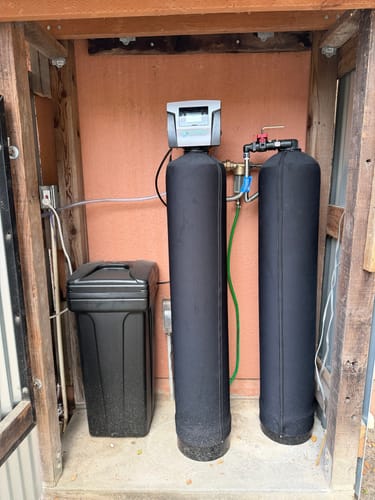
After months of frustration, I decided to tackle this problem seriously. I spent weeks researching water softening technologies, reading studies about ion exchange processes, and learning about different resin types.
I discovered that traditional salt-based systems use sodium chloride to regenerate the resin bed, while newer systems might use potassium chloride for health-conscious households. The ion exchange process fascinated me – hard water minerals like calcium and magnesium get swapped out for sodium or potassium ions as water flows through specialized resin beads.
Capacity became a crucial factor. With a family of four and our high hardness level, I calculated we needed a system capable of handling at least 32,000 grains before regeneration. Flow rate was equally important – I didn't want pressure drops during peak usage times when multiple fixtures ran simultaneously.
I also researched certifications extensively. NSF/ANSI 44 certification for performance claims became non-negotiable. I wanted assurance that any system I purchased had been independently tested and verified.
The SoftPro ECO caught my attention because of its upflow regeneration design and high-capacity resin. The lifetime warranty on the control valve was unprecedented in my research. Most competitors offered 5-10 year warranties at best.
Why I Chose the SoftPro ECO: The Decision Factors
Several features convinced me the SoftPro ECO was the right choice for our situation. The upflow regeneration system promised 75% less salt usage compared to traditional downflow systems. With salt prices rising and environmental concerns growing, this efficiency appealed to me.
The Vortech tank design caught my attention during my research. Unlike traditional systems where resin beds can channel and become less effective over time, the Vortech technology ensures even water distribution throughout the entire resin bed. This meant longer resin life and more consistent performance.
Sizing was straightforward with their online calculator. Based on our water hardness level and household size, they recommended a 32,000 grain system. The compact design fit perfectly in our utility room without requiring major modifications.
The control valve technology impressed me most. The control head is considered the gold standard in the industry. It's mechanical rather than electronic, meaning fewer components to fail and easier repairs if needed. The time-tested design has been proven in thousands of installations.
Customer reviews consistently mentioned the build quality and longevity of SoftPro systems. Many users reported 15+ years of trouble-free operation with basic maintenance. The lifetime warranty gave me confidence in the manufacturer's commitment to quality.
Installation Experience: Easier Than Expected

The system arrived well-packaged with every component clearly labeled. The installation manual was comprehensive yet easy to follow. I'm reasonably handy, but I decided to hire a local plumber for the initial installation to ensure everything was done correctly.
My plumber was familiar with the SoftPro ECO and praised the quality of the components. The installation took about three hours, including connecting to our existing plumbing and installing the bypass valve system. The most time-consuming part was running the drain line to our utility sink.
The system required 120V electrical connection for the control valve. Fortunately, we had an outlet nearby, so no additional electrical work was needed. The plumber tested all connections for leaks and walked me through the initial programming.
Programming was straightforward using the simple button interface. We set the hardness level, regeneration schedule, and time of day for the cleaning cycle. The system automatically calculated salt dosage and cycle frequency based on our water usage patterns.
First startup went smoothly. The system ran its initial regeneration cycle, which took about 90 minutes. I was surprised by how quiet the operation was – barely noticeable even standing next to it during regeneration.
Performance Results: The Transformation Was Immediate
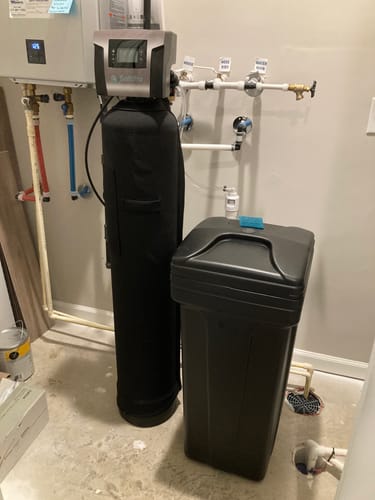
The difference was noticeable within 24 hours of installation. The first shower felt completely different – my skin wasn't tight afterward, and my hair felt softer and more manageable. My wife noticed the change immediately and commented on how much better her skin felt.
Our glassware started coming out of the dishwasher spotless again. No more cloudy residue or water spots that required hand-drying to avoid. The transformation was remarkable – glasses looked crystal clear for the first time in years.
I tested the water hardness after one week and measured less than 1 grain per gallon throughout the house. The system was performing exactly as promised, reducing our 18 GPG water to virtually zero hardness.
The coffee maker was where I noticed the biggest difference. The water tasted cleaner and brighter. Coffee flavors became more pronounced without the mineral interference. After six months, there's still no mineral buildup in the machine.
Soap and shampoo performance improved dramatically. We used approximately 50% less detergent for the same cleaning power. Clothes came out softer, and colors appeared more vibrant. The fabric softener became unnecessary – another cost savings.
Our water heater efficiency improved noticeably. The next energy bill showed a 15% reduction in heating costs. Scale buildup that had been forming on fixtures began dissolving gradually as soft water flowed through the system.
Operating Costs and Maintenance: Surprisingly Affordable
Salt consumption has been much lower than expected. The upflow regeneration design lives up to its efficiency claims. We use approximately 40 pounds of salt per month for our family of four, compared to the 80+ pounds our neighbor uses with his older downflow system.
I buy salt in bulk from the local home improvement store. Diamond Crystal or Morton System Saver salt costs about $6 per 40-pound bag. Our monthly salt cost runs around $6-8, making the operational expense quite reasonable.
The system regenerates automatically every 8-10 days based on our water usage. Each regeneration cycle uses about 50 gallons of water and takes 90 minutes. I barely notice when it's running – the process is very quiet.
Maintenance has been minimal. Every three months, I check the salt level and add bags as needed. The brine tank is easy to access, and salt loading takes just a few minutes. I also verify that the regeneration schedule matches our current water usage patterns.
Annual maintenance involves cleaning the brine tank and checking the control valve settings. The first year cleaning took about 30 minutes. The tank design makes this task straightforward without special tools.
The system includes a bypass valve for maintenance or emergencies. During the one time I needed to service the unit, we simply turned the bypass and had immediate access to untreated water. The design makes maintenance user-friendly.
Real-World Impact: Life-Changing Benefits
Six months later, the improvements continue to surprise me. Our morning routines became more pleasant when showering stopped leaving us with dry, itchy skin. My wife's eczema, which had worsened since moving here, improved significantly once we eliminated the hard water irritation.
Housework became easier and more effective. Bathroom cleaning takes half the time without scrubbing soap scum and mineral deposits. The shower doors stay cleaner longer, requiring weekly rather than daily attention.
Our appliances are performing like new again. The dishwasher runs more efficiently without fighting mineral buildup. Ice cubes from the refrigerator are crystal clear instead of cloudy. Even our humidifier runs cleaner without the white dust that plagued us previously.
Laundry results exceeded expectations. Whites stay whiter, and colors remain vibrant. Towels feel softer and more absorbent. We eliminated fabric softener entirely, saving money and reducing chemical exposure.
Guests consistently comment on our water quality. Several friends have asked about our system after noticing how different our water tastes and feels. It's become a point of pride rather than embarrassment.
The financial benefits add up quickly. Between reduced soap usage, lower energy bills, and eliminated bottled water purchases, we're saving approximately $40 monthly. The system is paying for itself faster than anticipated.
Final Verdict: Worth Every Penny
After eight months of ownership, I can confidently recommend the SoftPro ECO Well Water Softener to anyone dealing with hard water issues. The performance has been flawless, maintenance minimal, and benefits substantial.
Would I purchase this system again?
Absolutely. The combination of efficiency, reliability, and performance makes it an outstanding value. The lifetime warranty provides peace of mind that cheaper alternatives can't match.
The upfront investment seems significant, but the long-term benefits justify every dollar spent. Our quality of life improved measurably, and the ongoing savings help offset the initial cost.
For families dealing with very hard water like ours, this system delivers transformational results. The engineering quality, customer support, and proven track record make SoftPro a trustworthy choice.
If you're tired of fighting hard water problems daily, the SoftPro ECO offers a permanent solution that works exactly as advertised. The water here is very hard, and this takes care of it completely.



