


![SoftPro Chlorine+ Carbon Whole House Water Filter to Remove PFAS, Chlorine, Chloramine & Pesticides [City Water Filters Series]](http://www.softprowatersystems.com/cdn/shop/files/SoftPro_Whole_House_Carbon_Filter_Chlorine.webp?v=1769127507&width=140)
![SoftPro Iron Filter - Iron Master AIO - Best Iron Filter for Well Water [Air Injected Water Filter / Katalox]](http://www.softprowatersystems.com/cdn/shop/files/SoftPro_AIO_Iron_Master_Iron_Filter_Main.webp?v=1772123747&width=140)


 855-683-8488


SoftPro ECO Well Water Softener Review: Real User Experience

Hi, I'm Pamela Q. I live in Washington a rural area where well water challenges are just part of daily life. Craig "The Water Guy" Phillips asked me to share my experience as a homeowner with the SoftPro ECO™ Well Water Softener (Top Seller & Lifetime Warranty) I purchased. This is how my adventures played out. I hope this helps you in your decision.
The Iron and Rust Nightmare That Started It All
Living out in the country has its perks—privacy, space, fresh air—but it also comes with challenges that city folks rarely think about. Have you ever opened your dishwasher to find your "clean" dishes covered in orange-brown stains?
That was my reality for three frustrating years before I finally decided enough was enough.
Our well water had iron levels that tested at 4.2 parts per million, which I learned was nearly triple the EPA's recommended maximum of 0.3 ppm for aesthetic purposes. The rust problems weren't just cosmetic annoyances—they were affecting every aspect of our household water usage.
My white laundry gradually turned dingy orange, no matter what detergent I used or how much bleach I added. The toilets developed persistent rust rings that required weekly scrubbing with pumice stones. Our coffee maker died after eighteen months, clogged with iron deposits that no amount of vinegar descaling could remove.
Did you know that iron bacteria can actually feed off the iron in your water, creating slimy biofilms in your plumbing?
I discovered this the hard way when black, smelly slime started appearing in our toilet tanks and faucet aerators. The smell was particularly noticeable in the mornings—a musty, metallic odor that made drinking water from the tap absolutely unappetizing.
Beyond the aesthetic issues, the iron was costing us money. Our water heater's efficiency dropped noticeably as iron deposits built up on the heating elements. I calculated we were using 30% more detergent and fabric softener to compensate for the hard, iron-laden water. Bottled water for drinking and cooking was adding $60 monthly to our grocery budget.
Research Phase: Learning About Iron Removal and Water Softening
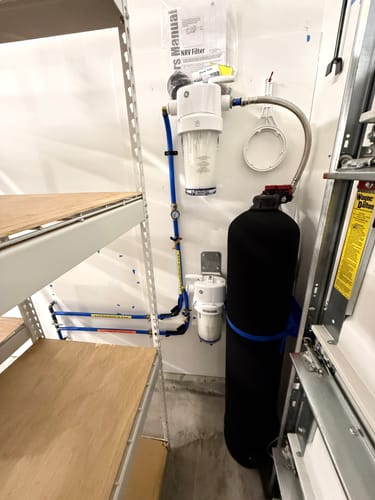
After years of band-aid solutions, I committed to finding a permanent fix. My research journey lasted about two months, and I learned more about water chemistry than I ever expected to need.
The first thing I discovered was that not all iron is the same. Our water contained primarily ferrous iron (dissolved iron that's invisible until it oxidizes), but we also had some ferric iron (the visible, rust-colored particles) and iron bacteria. This combination meant we needed more than just a basic water softener—we needed a system specifically designed for iron removal.
I tested several treatment approaches in my research:
Sediment filters alone couldn't handle dissolved iron. They'd catch the visible rust particles but leave the dissolved iron to oxidize later in our plumbing. Air injection systems seemed promising—they oxidize ferrous iron into ferric iron, then filter it out—but they required significant maintenance and didn't address the hardness minerals causing additional problems.
Traditional salt-based water softeners can remove some iron, but most manufacturers recommend no more than 2-3 ppm of iron, and our levels were higher. Iron fouling of the resin bed was a real concern that could lead to frequent, expensive cleanings or premature replacement.
The SoftPro ECO caught my attention because it specifically advertised iron removal capabilities up to 6 ppm while simultaneously addressing hardness minerals like calcium and magnesium. What really impressed me was the lifetime warranty—how confident must they be in their product to offer that kind of coverage?
The system uses a specialized resin that's more resistant to iron fouling than standard softener resins. It also includes an iron removal setting that adjusts the regeneration cycle to better handle iron contamination. This seemed like exactly what our challenging water conditions required.
Unboxing and First Impressions
The SoftPro ECO arrived in remarkably good condition via freight delivery. The packaging was clearly designed for a 200+ pound system—heavy-duty strapping and foam protection kept everything secure during shipping.
My first impression was how compact yet substantial the unit appeared. At 22 inches wide by 54 inches tall, it fit the space I'd allocated in our basement utility room, but the build quality was immediately apparent. The fiberglass mineral tank felt solid, not like the thin plastic tanks I'd seen on some competitors.
The control head was more sophisticated than I expected. Instead of basic timer controls, it featured a digital display showing remaining capacity, days until regeneration, and current flow rates. The programming manual was actually comprehensible—a pleasant surprise after dealing with cryptic instructions on other appliances.
All the necessary fittings, bypass valve, and installation hardware were included. The resin appeared to be high-quality cation exchange resin specifically formulated for iron removal. Even the brine tank felt sturdy, with a heavy-duty salt platform and well-designed overflow prevention.
One detail that impressed me was the inclusion of a water test kit for verifying performance after installation. This showed the manufacturer's confidence in their product and helped me establish baseline measurements for comparison.
Installation Experience and Initial Setup

I chose professional installation through a local water treatment dealer, which cost $485 but proved worthwhile given the plumbing modifications required. Our existing setup needed a bypass valve installation and proper drainage for the regeneration cycle.
The installer spent considerable time on the initial programming, customizing the regeneration schedule based on our household size and specific water conditions. He set the iron removal level to 4 ppm and programmed a more frequent backwash cycle to prevent iron buildup on the resin bed.
Did you know that iron removal systems require different salt than basic water softeners?
We switched to solar salt pellets with an iron removal additive, which helps clean the resin during each regeneration cycle. This was a detail I hadn't considered during my research but proved crucial for long-term performance.
The initial startup took about four hours total—two for installation, one for programming and testing, and another for the first regeneration cycle. The installer tested our raw water, then tested the treated water after the first cycle. Our iron levels dropped from 4.2 ppm to 0.1 ppm immediately, which was exactly the performance we needed.
The system's first regeneration was louder than I expected—not problematic, but noticeable. It runs for about 90 minutes every third day with our usage patterns, typically starting at 2 AM when water demand is minimal. The regeneration uses approximately 45 gallons of water and 2.5 pounds of salt per cycle.
Real-World Performance After 18 Months
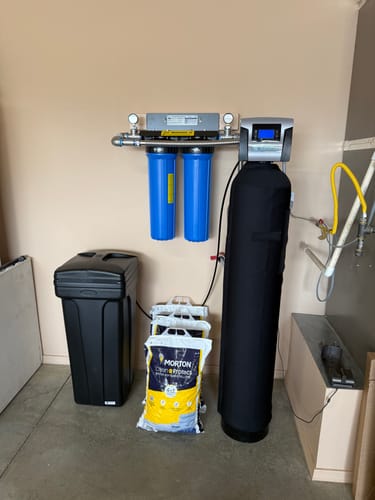
The transformation was noticeable within the first week, but the full impact became clear over several months of use. Our iron levels consistently test below 0.2 ppm now, well within acceptable standards for both taste and appliance protection.
The most dramatic change was in our laundry. Whites stayed white, and colored fabrics retained their vibrancy instead of developing that dull, orange tinge we'd grown accustomed to. I'm using about 30% less detergent now because the softened water allows soap to work more efficiently.
Kitchen cleanup became significantly easier. Our stainless steel sink maintains its shine instead of developing those stubborn rust stains. The dishwasher produces spot-free glassware, and I've eliminated the expensive rinse aid we previously relied on. Our coffee maker is still running strong after 18 months—a marked improvement from the 12-18 month lifespan we experienced before.
Have you ever noticed how iron-laden water affects your skin and hair?
I didn't realize the connection until after installation. My skin feels less dry, especially during winter months, and my hair is noticeably softer and more manageable. The metallic taste and odor that occasionally plagued our tap water completely disappeared.
The system's efficiency has remained consistent throughout our ownership. Monthly salt consumption averages 15-20 pounds depending on usage, and the iron removal performance hasn't degraded. I test our water every three months using the included test strips, and results consistently show iron levels below 0.3 ppm.
One unexpected benefit was the improvement in our water heater efficiency. Our annual maintenance technician noted significantly less sediment buildup compared to previous years, which should extend the unit's lifespan and maintain energy efficiency.
Maintenance Requirements and Long-Term Ownership
The SoftPro ECO's maintenance routine is refreshingly straightforward. Every two weeks, I add one 40-pound bag of solar salt pellets to the brine tank. The system monitors salt levels and displays warnings when refilling is needed.
Monthly tasks include checking the brine tank for salt bridging (hasn't happened yet) and cleaning the venturi valve—a simple process that takes about ten minutes. The digital control head displays error codes if any issues arise, though we haven't encountered any problems in 18 months.
The iron removal resin requires periodic cleaning with iron-out solution, which I perform every six months. This involves adding the cleaning solution to the brine tank before a regeneration cycle. The process costs about $15 and takes no additional time since the system handles it automatically.
Annual maintenance includes inspecting the bypass valve and checking system connections for leaks. The control head's diagnostic features track resin bed efficiency and water usage patterns, alerting me to any performance changes that might indicate problems.
What impressed me most about the maintenance requirements?
Everything is designed for homeowner service—no specialized tools or technical expertise required. The manual includes clear troubleshooting guides and maintenance schedules that make long-term ownership straightforward.
Salt consumption has remained steady at 15-20 pounds monthly, costing approximately $8-12 per month depending on salt prices. The iron cleaning solution adds another $30 annually. Total operating costs average less than $150 yearly, which is quite reasonable for the performance delivered.
Cost Analysis and Value Assessment
The SoftPro ECO represented a significant upfront investment at $1,847 plus $485 for professional installation. However, the cost-benefit analysis becomes favorable when considering the problems it solved and ongoing savings generated.
Immediate savings included eliminating our $60 monthly bottled water expense. Reduced detergent and cleaning product usage saves approximately $25 monthly. The protection provided to our water heater, dishwasher, and other appliances should extend their service life significantly—our previous coffee maker replacement cycle was costing $150 annually.
Over 18 months, operational costs have totaled $180 for salt and cleaning supplies. When factored with monthly savings of $85, the system essentially pays for its operating costs and provides additional value through appliance protection and improved water quality.
Did you know that iron damage to appliances often isn't covered under standard warranties?
Our water heater manufacturer specifically excludes iron-related damage from coverage. The SoftPro ECO effectively provides insurance against these expensive repairs while delivering immediate quality-of-life improvements.
The lifetime warranty adds substantial value to the investment. While I hope never to test it, knowing the manufacturer stands behind their product for the life of the system provides peace of mind that cheaper alternatives can't match.
Comparing to alternative solutions, standalone iron filters typically cost $800-1,200 but don't address hardness minerals. Adding a separate water softener would bring total costs close to the SoftPro ECO while requiring double the maintenance and space requirements.
Final Verdict: Is the SoftPro ECO Worth It for Iron and Rust Problems?
After 18 months of daily use, I can confidently say the SoftPro ECO has exceeded my expectations for handling our challenging well water conditions. The combination of iron removal and water softening in a single, reliable system justifies the investment for households dealing with similar issues.
The system consistently removes iron to acceptable levels while providing all the benefits of softened water. Maintenance requirements are reasonable and well-documented. The build quality suggests this system will serve us reliably for many years, backed by the manufacturer's lifetime warranty.
For rural homeowners dealing with iron levels between 2-6 ppm and hardness issues, this system addresses both problems effectively. The upfront cost is significant but reasonable when compared to the combined expense of separate iron removal and water softening systems.
Would I recommend the SoftPro ECO to other rural homeowners facing similar water challenges?
Absolutely, especially for those tired of dealing with rust stains, metallic tastes, and the ongoing expense of iron damage to appliances and laundry.
The peace of mind that comes from reliable, consistent water treatment—combined with the protection provided to our home's plumbing and appliances—makes this one of our better home improvement investments. Our water problems are solved, and we can focus on enjoying country living without the frustrations that iron-contaminated well water previously caused.



