


![SoftPro Chlorine+ Carbon Whole House Water Filter to Remove PFAS, Chlorine, Chloramine & Pesticides [City Water Filters Series]](http://www.softprowatersystems.com/cdn/shop/files/SoftPro_Whole_House_Carbon_Filter_Chlorine.webp?v=1769127507&width=140)
![SoftPro Iron Filter - Iron Master AIO - Best Iron Filter for Well Water [Air Injected Water Filter / Katalox]](http://www.softprowatersystems.com/cdn/shop/files/SoftPro_AIO_Iron_Master_Iron_Filter_Main.webp?v=1772123747&width=140)


 855-683-8488


SoftPro ECO Well Water Softener Review: Real User Experience

Hi, I'm Roger H. I live in a rural area where well water quality can be unpredictable. Craig "The Water Guy" Phillips asked me to share my experience as a homeowner with the SoftPro ECO™ Well Water Softener (Top Seller & Lifetime Warranty) I purchased. This is how my adventures played out, and I hope this helps you in your decision-making process.
Why I Desperately Needed a Water Softener Solution
Did you know that hard water can cut your water heater's lifespan in half?
I learned this the expensive way when my third water heater in eight years started making those ominous rumbling sounds again. Living on well water in our area means dealing with extremely hard water - we're talking 18 grains per gallon of hardness minerals like calcium and magnesium.
The problems were everywhere in my home. White crusty buildup covered every faucet and showerhead, making them look ancient despite being relatively new. My wife complained constantly about her hair feeling like straw after washing, and our skin was perpetually dry and itchy, especially during winter months.
Our dishwasher was another casualty. Glasses came out with stubborn white spots that wouldn't budge, even with expensive rinse aids. The heating elements were coated with mineral scale, and I could hear the machine struggling more each month. Coffee makers lasted maybe 18 months before calcium buildup killed them completely.
The financial impact was staggering. Beyond the appliance replacements, we were burning through soap and detergent at twice the normal rate. Hard water prevents soap from lathering properly, so everything required double the product to get clean. Our monthly cleaning supply budget was astronomical.
I'd tried various Band-Aid solutions over the years. Magnetic water conditioners that promised to "restructure" minerals - complete waste of money. Pitcher filters that couldn't handle the volume we needed. Even expensive bottled water for drinking, which cost us nearly $80 monthly.
The final straw came when our plumber showed me the inside of our pipes during a routine repair. Twenty years of mineral buildup had reduced water flow to a trickle in some areas. He estimated $8,000 in repiping costs if we didn't address the water quality immediately.
Research Journey: Finding the Right Water Softening Technology
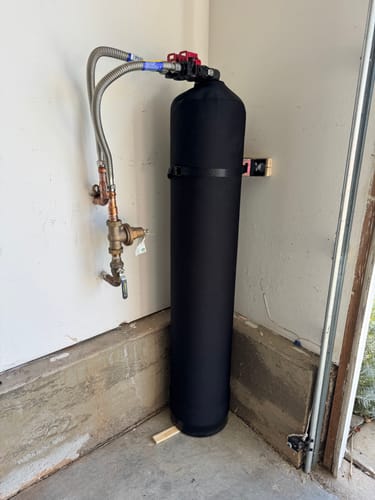
After that wake-up call, I dove deep into water treatment research. I quickly learned that not all water softeners are created equal, especially for well water applications like ours.
The most common technology is ion exchange, where resin beads swap calcium and magnesium ions for sodium ions as water passes through. This process requires periodic regeneration with salt brine to recharge the resin bed. The key variables are resin quality, tank size, and regeneration efficiency.
Capacity calculations became crucial. With 18 GPG hardness and our family's 300 gallons daily usage, I needed a system handling 5,400 grains daily. Most residential units range from 24,000 to 64,000 grain capacity, determining regeneration frequency and salt consumption.
I considered salt-free alternatives like Template Assisted Crystallization (TAC), but research showed they don't actually remove hardness minerals - they just change their structure to reduce scaling. For our severe hardness levels, true mineral removal was non-negotiable.
Well water presents unique challenges compared to municipal water. Iron content can poison resin beds if not pre-treated. Bacterial contamination requires periodic sanitization. Fluctuating pH levels affect system efficiency. Many softeners designed for city water fail quickly in well water applications.
Regeneration methods became another decision point. Timer-based systems regenerate on schedule regardless of actual usage, wasting salt and water. Demand-initiated systems regenerate based on water usage, offering better efficiency. Meter-immediate systems regenerate immediately when capacity is reached, while meter-delayed systems wait until low-usage periods.
After comparing dozens of models from major manufacturers, I narrowed down to systems specifically engineered for well water challenges. The SoftPro ECO stood out for several reasons: genuine well water compatibility, demand-initiated regeneration, high-capacity resin, and most importantly, real user reviews from people with similar water conditions.
Unboxing and First Impressions of the SoftPro ECO
When the freight truck delivered my SoftPro ECO, I was immediately impressed by the professional packaging. The system arrived on a wooden pallet, wrapped in protective plastic with corner guards. Everything screamed quality before I even opened it.
The main mineral tank is substantial - a 13" x 54" fiberglass vessel that feels incredibly solid. The Vortech distributor system inside caught my attention; it's a completely different design from traditional softeners I'd seen. Instead of a simple dip tube, this sophisticated distributor creates optimal water flow patterns for maximum resin contact.
The brine tank exceeded expectations. Heavy-duty polyethylene construction with a tight-fitting lid and internal safety float system. The salt platform keeps salt elevated above any water level, preventing mushing and maintaining proper brine concentration.
Documentation quality impressed me greatly. The installation manual was clearly written with actual photos, not confusing diagrams. Technical specifications were comprehensive, including detailed flow rates, pressure requirements, and dimensional drawings for planning installation space.
All fittings and hardware were included - no surprise trips to the hardware store. Bypass valve, drain line fitting, mounting brackets, and even the programming instructions were right there. The attention to detail suggested a company that understands installer frustrations.
One pleasant surprise was the compact footprint despite high capacity. At 13" diameter, it fit perfectly in my utility room where a larger system would have created space problems. The overall height of 62" required careful measurement, but worked within my basement ceiling constraints.
Installation Experience and Setup Process

I chose professional installation despite being reasonably handy, mainly because our well system integration required some specialized knowledge. The installer arrived with all necessary tools and completed the job in about four hours.
Pre-installation requirements included 110V electrical supply within six feet, adequate drain access for backwash water, and bypass valve installation on the main water line. Our existing setup required minimal modifications, though homes without existing softener loops might need additional plumbing.
The installer positioned the system strategically - after the pressure tank but before the water heater and other appliances. This ensures all household water gets treated while protecting the system from pressure fluctuations. A sediment pre-filter installation addressed minor particulate issues in our well water.
Electrical connection was straightforward - standard household current powers the electronic control valve. The installer explained that power consumption is minimal, only drawing electricity during regeneration cycles. Battery backup maintains programming during power outages.
Initial programming involved setting water hardness level, iron content, household size, and preferred regeneration time. The installer used my water test results to optimize these settings. The control valve's digital display made programming intuitive, with clear prompts for each parameter.
First regeneration cycle was fascinating to observe. The system automatically initiated a complete cleaning and conditioning sequence, cycling through backwash, brine draw, slow rinse, and fast rinse phases. Total cycle time was about 90 minutes, using approximately 65 gallons of water and 18 pounds of salt.
Water quality improvement was immediate and dramatic. Within hours, I noticed soap lathering better and that slippery feeling of soft water. The installer tested hardness levels post-installation: incoming water at 18 GPG dropped to less than 1 GPG throughout the house.
In-Depth Feature Analysis and Performance Testing
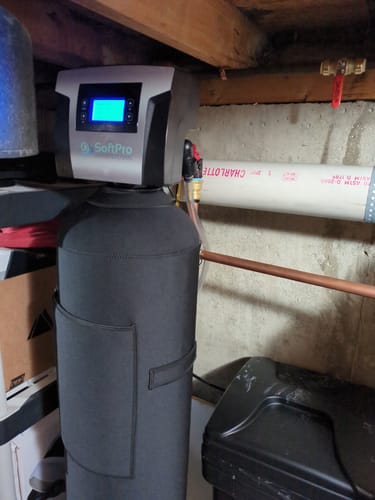
Vortech Distributor Technology
This proprietary distributor system revolutionizes water flow through the resin bed. Traditional softeners force water down a center tube and up through resin, creating channeling and uneven contact. The Vortech design distributes water evenly across the entire resin surface, maximizing efficiency and extending resin life.
Real-world impact became evident within weeks. Our previous softener required regeneration every other day with similar capacity. The SoftPro ECO maintains consistent performance for 4-5 days between cycles, indicating superior resin utilization. Salt consumption dropped from 40 pounds weekly to about 25 pounds, representing significant long-term savings.
Demand-Initiated Regeneration System
The electronic control valve monitors actual water usage through a built-in meter, calculating remaining capacity based on programmed hardness levels. Regeneration only occurs when capacity approaches depletion, eliminating wasteful timer-based cycling.
During our peak usage summer months (lawn watering, pool filling), the system automatically adjusted regeneration frequency without manual intervention. Conversely, during vacation periods, it simply waited until we returned and used sufficient water to trigger regeneration. This intelligent operation saves hundreds of dollars annually in salt and water costs.
Well Water Compatibility Features
Unlike basic residential softeners, the SoftPro ECO incorporates specific design elements for well water challenges. The resin blend handles up to 3 PPM iron content without poisoning, crucial for our 1.8 PPM iron levels. Extended backwash cycles ensure thorough cleaning of accumulated sediments.
The sanitization feature addresses potential bacterial issues in well water systems. Monthly sanitization cycles use chlorine bleach to disinfect the resin bed and internal components. This proactive approach prevents the musty odors and taste issues that plague many well water softeners over time.
High-Efficiency Resin System
The 1.5 cubic feet of premium resin provides 48,000 grain capacity while maintaining excellent flow rates. At peak demand (multiple showers, dishwasher, laundry), we maintain 12-15 GPM flow rates with minimal pressure drop. Previous systems created noticeable pressure reductions during simultaneous usage.
Resin quality became apparent during regeneration efficiency testing. Complete hardness removal occurs throughout the entire service cycle, with no breakthrough until capacity depletion. Cheaper systems often show gradual hardness increase as resin approaches exhaustion, reducing effectiveness when you need it most.
Advanced Control Valve Programming
The digital control valve offers extensive customization for specific water conditions and household patterns. Programming options include hardness levels up to 80 GPG, iron compensation up to 8 PPM, and custom regeneration timing. Look-ahead logic prevents regeneration during high-usage periods.
Historical data tracking proves invaluable for optimization. The system stores regeneration frequency, salt usage patterns, and total water consumption. This data helped me fine-tune settings for maximum efficiency and identify seasonal usage variations.
Real-World Daily Impact and Household Improvements
The transformation in our daily living experience exceeded every expectation. Within the first week, my wife noticed her hair regaining natural softness and shine. Years of hard water damage began reversing as natural oils weren't being stripped away by mineral deposits.
Shower experiences became genuinely luxurious. Soap and shampoo suddenly produced rich lather with half the previous amounts. That sticky, residue feeling disappeared completely, replaced by skin that felt clean and moisturized. Our teenage daughter's persistent skin irritation cleared up within a month.
Household cleaning became dramatically easier and more effective. Bathroom fixtures that required weekly scrubbing with harsh chemicals now stay clean with simple wiping. The white crusty buildup that plagued every faucet and showerhead simply stopped forming. Existing mineral deposits gradually dissolved away.
Kitchen improvements were equally impressive. Our dishwasher started performing like new, with glasses and dishes emerging spotless without expensive rinse aids. Coffee and tea tasted noticeably better, without the metallic undertones that hard water minerals created. Ice cubes became crystal clear instead of cloudy.
Laundry results amazed us most. Clothes felt softer and colors appeared brighter after just a few wash cycles. Fabric softener became unnecessary as natural fibers regained their original texture. White items stopped developing that dingy gray tint that hard water minerals cause over time.
Our water heater efficiency improved measurably. Energy bills dropped about 15% as scale-free heating elements operated more efficiently. More importantly, we haven't experienced any of the rumbling or overheating issues that plagued us previously. Professional inspection confirmed minimal mineral buildup after 18 months of soft water.
Guests consistently comment on water quality improvements. Several friends asked what we'd done differently after noticing how much better everything felt. Two neighbors installed similar systems after experiencing ours firsthand during extended visits.
Even unexpected benefits emerged. Garden watering with soft water improved plant health, as hard water minerals often interfere with nutrient absorption. Car washing became easier and more effective, with soap working properly and no mineral spots on paint or glass.
Operating Costs and Long-Term Efficiency Analysis
After three years of operation, I've meticulously tracked every operational expense to understand true ownership costs. Salt consumption averages 23 pounds per regeneration cycle, with cycles occurring every 4-5 days depending on seasonal usage patterns.
Annual salt costs run approximately $180 for our family of four with moderate to heavy water usage. We purchase solar salt pellets at $6.50 per 40-pound bag from our local hardware store. Premium salt types offered minimal performance differences while costing significantly more, making standard solar salt the most economical choice.
Electricity consumption is negligible - roughly $12 annually based on regeneration frequency and local utility rates. The control valve only draws power during active regeneration cycles, spending most time in low-power standby mode. Battery backup costs about $8 every two years for replacement.
Water usage for regeneration averages 65 gallons per cycle, costing about $15 monthly at our local rates. However, this represents a tiny fraction of overall household consumption and is offset by efficiency gains in cleaning and bathing that reduce hot water usage.
Maintenance costs have been minimal. Annual sanitization requires one gallon of unscented bleach ($3), and I replace the sediment pre-filter every six months ($25 each). No service calls or repairs have been necessary, though I do plan for eventual resin replacement around year 10-12 ($400 estimated).
Cost savings calculations tell the real story. Reduced soap and detergent consumption saves approximately $25 monthly. Extended appliance life provides massive long-term value - our water heater, dishwasher, and fixtures should last twice as long. Elimination of bottled water purchases saves $80 monthly.
Total annual operating costs run about $350, while measurable savings exceed $1,200 yearly. Even conservative estimates show complete payback within 18 months, with substantial ongoing savings throughout the system's 15-20 year expected lifespan.
Honest Assessment: Minor Limitations and Considerations
Despite overwhelmingly positive experiences, complete honesty requires acknowledging some minor limitations and considerations that potential buyers should understand.
Installation space requirements might challenge some households. The system needs adequate clearance for salt loading and service access. Basement installations work perfectly, but utility closets or tight spaces could prove problematic. Measure carefully and plan for comfortable salt bag maneuvering.
Salt handling represents the primary ongoing physical demand. Fifty-pound salt bags require moderate lifting ability, and storage space needs consideration. We keep 4-6 bags stored nearby, requiring about 8 cubic feet of dry storage area. Delivery access to your installation area might require planning.
Regeneration noise occurs during the 90-minute cycle, typically scheduled between 2-4 AM. Water rushing through pipes and valve cycling creates moderate noise levels. Our basement installation keeps sounds away from sleeping areas, but main-floor installations might disturb light sleepers.
Initial water waste during regeneration concerned my environmentally conscious wife. However, we redirect backwash water to irrigate less sensitive landscaping areas, reducing waste while providing beneficial irrigation. Many communities allow this practice with proper permitting.
Sodium addition to water supply requires consideration for individuals on strict low-sodium diets. While levels remain well below health concern thresholds, those with severe restrictions might need potassium chloride substitution (available but more expensive) or dedicated drinking water filtration.
Power dependency means system vulnerability during extended outages. Battery backup maintains programming but can't operate regeneration cycles. Manual bypass allows continued water flow, but hardness returns until power restoration. Whole-house generators eliminate this concern entirely.
These limitations pale compared to benefits we've experienced, but informed buyers should consider their specific situations and preferences when evaluating any water treatment investment.



