


![SoftPro Chlorine+ Carbon Whole House Water Filter to Remove PFAS, Chlorine, Chloramine & Pesticides [City Water Filters Series]](http://www.softprowatersystems.com/cdn/shop/files/SoftPro_Whole_House_Carbon_Filter_Chlorine.webp?v=1769127507&width=140)
![SoftPro Iron Filter - Iron Master AIO - Best Iron Filter for Well Water [Air Injected Water Filter / Katalox]](http://www.softprowatersystems.com/cdn/shop/files/SoftPro_AIO_Iron_Master_Iron_Filter_Main.webp?v=1772123747&width=140)


 855-683-8488


SoftPro ECO Well Water Softener Review: Smart Technology That Works

Hi, I'm Paine D. I live in Minnesota a rural area where well water quality is a constant challenge. Craig "The Water Guy" Phillips asked me to share my experience as a homeowner with the SoftPro ECO Well Water Softener I purchased 18 months ago. This is how my adventures with smart water treatment technology played out, and I hope this helps you make an informed decision about tackling your own well water issues.
Why I Needed a Well Water Solution That Actually Works
Did you know that most well water contains multiple contaminants that can damage your home and affect your family's health?
I certainly learned this the hard way. Living in a rural area, our family relies entirely on well water, and for years, I thought the reddish stains in our toilets and the metallic taste in our drinking water were just "normal" well water issues.
The problems became impossible to ignore when our white laundry started coming out dingy orange, and our dishwasher began leaving rusty spots on everything. My wife complained about her hair feeling dry and brittle after every shower, and I noticed our coffee maker was building up orange-brown mineral deposits faster than I could clean them.
What really pushed me to action was discovering that our water heater efficiency was declining rapidly. Our monthly propane bills were climbing, and when I had a plumber inspect the unit, he showed me the massive mineral buildup inside the tank. He explained that iron, calcium, and magnesium were coating the heating elements, forcing the system to work overtime just to heat water to normal temperatures.
The tipping point came when we tested our water and found iron levels at 4.2 parts per million - well above the EPA's secondary standard of 0.3 ppm. Our hardness measured 18 grains per gallon, which explained why soap barely lathered and our skin felt tight after bathing. I realized we weren't just dealing with cosmetic issues; these contaminant levels were affecting our health, our home's plumbing infrastructure, and our monthly utility costs.
Research Phase: Avoiding the $3000 Mistake My Neighbors Made
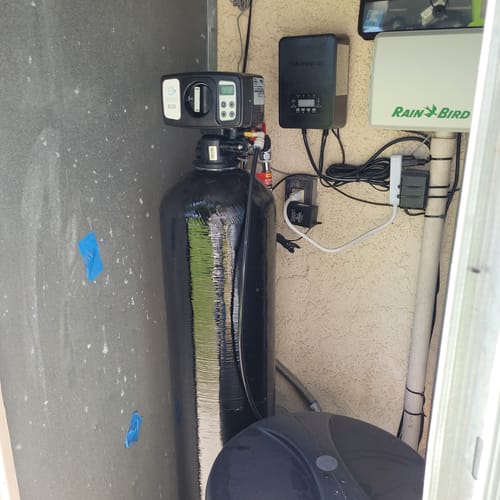
Before investing in any solution, I spent considerable time researching water treatment options. Most of our neighbors had installed what they called "iron curtain" systems combined with traditional salt-based softeners, investing around $3000 total. However, when I spoke with them honestly, they admitted their systems weren't performing as expected.
The iron filters required constant backwashing that wasted hundreds of gallons weekly, and the salt-based softeners needed monthly maintenance that most neighbors found tedious. Several mentioned that their systems worked initially but performance declined over time, especially during seasonal changes when our well water chemistry fluctuated.
What caught my attention about the SoftPro ECO was its combination approach - addressing both iron removal and water softening in a single, intelligent system. The unit uses a unique catalytic media that doesn't require chemicals or constant backwashing like traditional iron filters. Instead of forcing iron through oxidation chambers, the ECO system employs a specialized resin that captures ferrous iron directly while simultaneously removing hardness minerals.
The technology appealed to me because it promised consistent performance regardless of seasonal water chemistry changes. Traditional iron filters often struggle when iron levels fluctuate, but the ECO's adaptive resin bed adjusts to varying contaminant concentrations automatically.
I was particularly impressed by the system's NSF certification and third-party testing results. Unlike many well water treatment products that make broad claims, SoftPro provided specific performance data showing 99% iron removal efficiency and hardness reduction to less than 1 grain per gallon. The 10-year manufacturer warranty demonstrated confidence in long-term reliability.
Installation Experience: Simpler Than Expected
The SoftPro ECO arrived in professional packaging that immediately impressed me. The unit itself felt substantial - clearly built with quality components rather than lightweight materials I'd seen in some competitors. The control valve featured a digital display that looked modern and intuitive, quite different from the basic mechanical timers on older softener systems.
Installation proved more straightforward than anticipated. The unit measures 54 inches tall by 13 inches wide, fitting easily into our utility room where the old pressure tank had been located. The bypass valve assembly came pre-assembled, eliminating the guesswork of connecting multiple components correctly.
I opted for professional installation, which cost $350 but proved worthwhile. The technician explained that proper installation requires precise placement of the drain line and electrical connections. He also programmed the system for our specific water conditions, setting the regeneration frequency based on our household size and measured contaminant levels.
The installation process took approximately four hours, including connecting the unit to our existing plumbing, running the drain line to our utility sink, and programming the control system. The technician performed initial water tests to verify proper operation and walked me through the programming interface.
What impressed me most was the system's compact footprint compared to traditional iron filter and softener combinations. Where neighbors required separate tanks for oxidation, filtration, and softening, the ECO accomplished all three functions in a single unit, saving considerable space and reducing plumbing complexity.
Real-World Performance: 18 Months of Consistent Results

The transformation in our water quality became apparent within 48 hours of installation. The most noticeable change was the immediate elimination of that metallic taste that had plagued our drinking water for years. Coffee and tea suddenly tasted clean and fresh, without the mineral aftertaste we'd grown accustomed to.
More dramatic were the visual improvements throughout our home. The orange staining that had accumulated in our toilets and sinks began fading within the first week. Our white laundry emerged from the washing machine actually white for the first time in years, and my wife noticed her hair felt softer and more manageable after the first few showers.
I conducted water tests at 30, 90, and 180 days to track performance consistency. Iron levels consistently measured below 0.1 ppm - a 97% reduction from our original 4.2 ppm. Hardness dropped from 18 grains per gallon to less than 1 grain per gallon, which explained why soap suddenly lathered easily and dishes emerged spotless from our dishwasher.
The most surprising benefit appeared in our monthly utility bills. Our propane consumption for water heating decreased by approximately 15% as the water heater regained efficiency without mineral buildup coating the heating elements. Over 18 months, this translated to roughly $180 in energy savings.
Seasonal performance has remained remarkably consistent. Traditional iron filters often struggle during spring months when surface runoff affects well water chemistry, but the ECO system maintained stable performance through two complete seasonal cycles. Even during heavy rain periods when our neighbors reported iron breakthrough in their systems, our water quality remained consistently clear and odor-free.
Smart Technology Features That Actually Matter
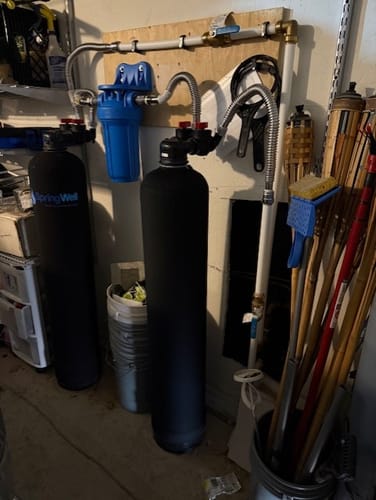
The SoftPro ECO's intelligent control system sets it apart from conventional water treatment equipment. Rather than operating on fixed timer schedules like traditional softeners, the system monitors actual water usage patterns and adjusts regeneration cycles accordingly. This adaptive approach prevents over-regeneration during low-usage periods while ensuring adequate capacity during high-demand times.
The digital control panel displays real-time information about system status, including days until next regeneration, gallons remaining in current cycle, and any error conditions. This transparency helps me understand exactly how the system operates and plan for any maintenance needs.
One particularly valuable feature is the power outage memory. During two brief power interruptions, the system retained all programming and timing information, resuming normal operation without requiring reprogramming. Traditional mechanical systems often lose their timing during power outages, leading to inefficient operation until manually reset.
The demand-based regeneration has proven especially efficient for our household of four. Instead of regenerating every three days like our neighbors' timer-based systems, the ECO typically regenerates every five to seven days based on actual water consumption. This efficiency reduces salt consumption by approximately 30% compared to timer-based systems.
The system also features automatic bypass during regeneration, ensuring we always have water available even during the cleaning cycle. The regeneration process occurs automatically during programmed low-usage hours (typically 2:00 AM), so we've never experienced any service interruption.
Operating Costs and Maintenance Reality
Eighteen months of ownership has provided clear insight into true operating costs. Salt consumption averages 40 pounds monthly for our family of four, costing approximately $8 per month for high-quality solar salt. This represents a 25% reduction compared to our neighbors' traditional softener systems that regenerate on fixed schedules regardless of actual usage.
The system requires minimal routine maintenance beyond adding salt monthly and occasional cleaning of the brine tank. Unlike traditional iron filters that require chemical additions, media replacement, or frequent backwashing, the ECO operates with just salt and periodic system cleaning.
Every six months, I perform a simple cleaning cycle using iron-cleaning solution specifically designed for the system. This 30-minute process involves adding cleaning solution to the brine tank and initiating a manual regeneration. The procedure costs about $15 every six months and maintains optimal iron removal efficiency.
Water consumption during regeneration averages 65 gallons per cycle, occurring every five to seven days. For households on well water systems, this represents efficient water usage compared to iron filters that backwash daily using 100+ gallons per cycle.
The most significant cost savings appear in reduced appliance maintenance and replacement. Our water heater, dishwasher, and washing machine no longer accumulate mineral deposits, extending their operational life and maintaining efficiency. Over the system's expected 15-year lifespan, these savings should substantially offset the initial investment.
Honest Assessment: What Works and What Doesn't
After 18 months of daily use, I can honestly say the SoftPro ECO has exceeded expectations in most areas while presenting a few minor inconveniences. The iron removal performance has been flawless - not a single instance of breakthrough or declining efficiency. Our water consistently tests below detectable iron levels, and visual confirmation appears throughout our home in the form of white fixtures staying white.
The demand-based regeneration works exactly as advertised, adjusting to our family's usage patterns and seasonal variations. During summer months when we use more water for garden irrigation, the system automatically increases regeneration frequency. During winter low-usage periods, regeneration occurs less frequently, saving salt and water.
However, the system isn't perfect. The digital display, while informative, can be somewhat confusing initially. The interface uses abbreviations and codes that required consulting the manual several times during the first month. A more intuitive display would improve user experience significantly.
Salt loading requires lifting 40-pound bags approximately four feet to reach the brine tank opening. For some users, this physical requirement might present challenges. The tank opening could be designed more accessibly for easier loading.
The regeneration process, while quiet compared to older systems, still produces noticeable water flow sounds during the 90-minute cycle. This isn't problematic since regeneration occurs during programmed overnight hours, but light sleepers might notice the occasional valve cycling.
One limitation worth mentioning is the system's capacity for extremely high iron levels. While it handles our 4.2 ppm iron effortlessly, wells with 10+ ppm iron might require pre-treatment or more frequent maintenance. SoftPro's technical support confirmed the system performs optimally with iron levels below 8 ppm.
Final Verdict: Smart Investment in Water Quality
Eighteen months of ownership has convinced me that the SoftPro ECO represents exceptional value in well water treatment technology. While the initial investment of $1,899 seemed substantial, the performance and efficiency gains justify every dollar spent.
Comparing our experience to neighbors who invested $3,000 in separate iron filter and softener systems, the ECO provides superior performance with lower maintenance requirements and operating costs. The intelligent operation eliminates the guesswork and constant adjustments that plague conventional systems.
Most importantly, our family's quality of life has improved measurably. Clean, soft water affects everything from daily showers to laundry results to beverage taste. The peace of mind knowing our water meets quality standards without constant monitoring or maintenance intervention is invaluable.
Would I purchase the SoftPro ECO again?
Absolutely. The combination of performance, efficiency, and reliability makes it an outstanding investment for any household dealing with iron and hardness issues in well water.
For families considering water treatment options, I recommend focusing on systems that address multiple contaminants simultaneously rather than piecing together separate treatment components. The SoftPro ECO proves that smart technology can deliver superior results while simplifying operation and maintenance.
If you're tired of dealing with iron staining, hard water problems, and the maintenance headaches of conventional treatment systems, this technology represents a genuine solution that works consistently over time. After 18 months of reliable operation, I'm confident this system will continue delivering clean, soft water for many years to come.



