


![SoftPro Chlorine+ Carbon Whole House Water Filter to Remove PFAS, Chlorine, Chloramine & Pesticides [City Water Filters Series]](http://www.softprowatersystems.com/cdn/shop/files/SoftPro_Whole_House_Carbon_Filter_Chlorine.webp?v=1769127507&width=140)
![SoftPro Iron Filter - Iron Master AIO - Best Iron Filter for Well Water [Air Injected Water Filter / Katalox]](http://www.softprowatersystems.com/cdn/shop/files/SoftPro_AIO_Iron_Master_Iron_Filter_Main.webp?v=1772123747&width=140)


 855-683-8488


SoftPro ECO Well Water Softener Review: Real User Experience

Hi, I'm Mekhi L. I live in Saskatchewan. Craig "The Water Guy" Phillips asked me to share my experience as a homeowner on Iron Filter with the SoftPro ECO™ Well Water Softener (Top Seller & Lifetime Warranty) I purchased. This is how my adventures played out. I hope this helps you in your decision.
Eight months ago, I was at my wit's end with our well water situation. Every morning felt like a small battle—crusty white buildup on the coffee maker, soap that wouldn't lather properly, and that metallic taste that made me cringe with every sip. My wife constantly complained about her hair feeling like straw after showers, and our once-beautiful glassware looked permanently cloudy no matter how much I scrubbed.
What really pushed me over the edge was discovering orange stains creeping across our bathroom fixtures and realizing our brand-new dishwasher was already showing mineral buildup after just six months. I knew something had to change, but honestly, I dreaded the research process. Water treatment systems seemed overwhelmingly technical, and I wasn't sure if I could trust the information I found online.
After months of frustration and countless hours researching solutions, I finally took the plunge with the SoftPro ECO Well Water Softener. Now, eight months into ownership, I'm ready to share the complete truth about this system—the impressive results, the unexpected challenges, and everything in between.
The Hard Water Reality That Drove Me to Action
Our well water tested at 18 grains per gallon of hardness—what professionals classify as "very hard" water. But the numbers only told part of the story. Have you ever tried to enjoy a morning coffee that tastes like you're drinking liquid minerals?
That was my daily reality.
The calcium and magnesium in our water weren't just affecting taste. I noticed our water heater struggling more than it should, making strange noises that concerned me. Our utility bills seemed higher than neighbors with similar homes, and I suspected mineral buildup was forcing our appliances to work harder.
What really opened my eyes was when a plumber mentioned that hard water could cut the lifespan of our water heater by 30-40%. With a $1,200 replacement looming in the not-so-distant future, suddenly investing in water treatment made financial sense, not just lifestyle sense.
The iron content was another issue entirely. At 2.8 parts per million, our water exceeded the EPA's recommended aesthetic guideline of 0.3 ppm. This explained the orange staining on everything white in our bathrooms and the metallic aftertaste that made drinking water unpleasant.
Why I Selected the SoftPro ECO Over Other Options
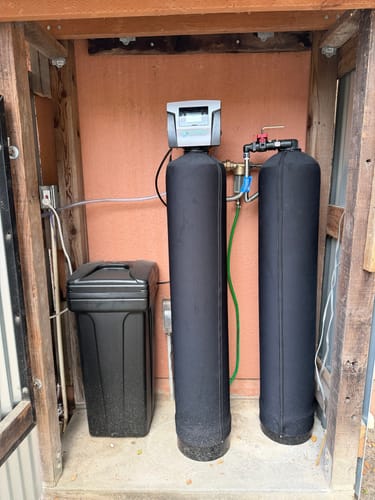
I'll be honest—I initially looked at several salt-free systems thinking they'd be lower maintenance. After digging deeper into the science, I realized that salt-free systems don't actually remove hardness minerals; they attempt to condition them. For our 18-grain hardness level, multiple water quality experts suggested that traditional ion exchange would be more effective.
The SoftPro ECO caught my attention for several specific reasons. First, the lifetime warranty was unprecedented in my research. Most manufacturers offered 5-10 year warranties, but SoftPro backed their ECO model for life. That suggested serious confidence in their engineering.
Second, the high-capacity resin tank meant longer intervals between regenerations. Who wants a system that regenerates every other day, wasting water and salt?
The ECO's 64,000-grain capacity translated to roughly 12-14 days between regeneration cycles for our household of four.
The digital control head also impressed me. I wanted real-time feedback about system performance, remaining capacity, and maintenance schedules. Too many systems I researched used basic timer controls that couldn't adapt to actual usage patterns.
Finally, the iron removal capability sealed the deal. The ECO could handle up to 8 ppm of clear water iron through its specialized resin bed, eliminating the need for a separate iron filter. This simplified our installation and reduced ongoing maintenance.
Unboxing and Initial Setup Experience
When the system arrived, I was genuinely surprised by the packaging quality. Everything came double-boxed with custom foam inserts protecting the digital control head and other sensitive components. The main mineral tank was heavier than expected—a good sign suggesting robust construction rather than thin-walled budget materials.
The resin tank measured 10 inches in diameter by 54 inches tall, while the brine tank required a 14-inch by 18-inch footprint. I'd measured our utility room carefully, but seeing the actual units in place made me realize how important proper planning was for tight spaces.
SoftPro included everything needed for installation: bypass valve, fittings, drain line, and even the salt platform for the brine tank. The instruction manual was surprisingly clear, with actual photographs rather than confusing line drawings. They even included a DVD with installation footage, though I ended up using their online videos for better picture quality.
One detail that impressed me: they included a water test kit for verifying installation success. This showed they expected customers to measure results, not just assume the system worked properly.
Professional Installation vs. DIY Considerations

I considered professional installation initially, receiving quotes ranging from $200-400 for basic hookup. However, after reviewing the installation process, I decided to tackle it myself. How hard could it be to connect three pipes and plug in a control unit?
Famous last words, right?
The actual plumbing connections were straightforward—cut into the main line after the pressure tank, install the bypass valve, and connect inlet/outlet ports. What I underestimated was the precision required for proper drain line installation. The control head requires a specific drain flow rate to function correctly during regeneration.
My biggest challenge was achieving the proper drain line slope while keeping the run under 20 feet as specified. Our utility room layout forced me to get creative with routing, ultimately requiring two 90-degree elbows and careful attention to maintain downward flow throughout the run.
Total installation time: about six hours spread across a weekend. This included two trips to the hardware store for additional fittings I hadn't anticipated. A professional would've completed the job in 2-3 hours, but I enjoyed understanding every connection point.
Initial startup went smoothly following the programming guide. The digital display walked me through water hardness settings, iron levels, and household size inputs. The system automatically calculated regeneration frequency based on these parameters.
Real-World Performance After Eight Months
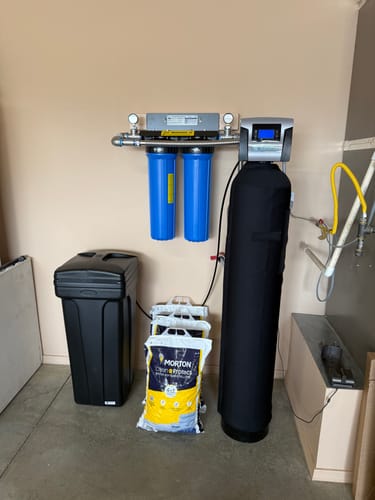
The transformation didn't happen overnight, but within 48 hours, I noticed significant improvements. Our soap began lathering properly again—something I'd forgotten was even possible. My wife mentioned her hair felt softer after the first week, and the metallic taste disappeared completely.
I tested our treated water with digital TDS and hardness test strips monthly. Incoming well water consistently measures 18 grains hardness and 520 ppm total dissolved solids. Post-softener readings show 0-1 grains hardness and 380 ppm TDS, representing excellent mineral removal efficiency.
The iron removal exceeded my expectations. Pre-treatment iron levels of 2.8 ppm dropped to undetectable levels using basic test strips. More importantly, the orange staining stopped appearing on fixtures, and existing stains gradually faded with normal cleaning.
Regeneration cycles occur every 11-13 days with our usage patterns, consuming approximately 8 pounds of salt per cycle. At $6 per bag for solar salt, monthly operating costs run about $12-15—much less than I'd budgeted?
The system uses roughly 45 gallons of water per regeneration, which happens automatically at 2:00 AM to avoid disrupting daily routines.
Our appliances show marked improvement. The dishwasher no longer requires rinse aid, and glassware emerges spot-free consistently. The coffee maker hasn't needed descaling since installation, and our washing machine uses 30% less detergent with better cleaning results.
Water flow rate remains excellent throughout the house. I measured 12 PSI pressure drop across the system under normal flow conditions—negligible impact on shower pressure or appliance performance.
Maintenance Requirements and Long-Term Ownership
Monthly maintenance involves checking salt levels and adding bags as needed. The brine tank holds approximately 200 pounds of salt, lasting 6-8 weeks depending on regeneration frequency. I've standardized on solar salt crystals, which dissolve cleanly and minimize tank cleaning requirements.
Every three months, I inspect the brine tank for salt bridging—a condition where salt forms a hard crust preventing proper dissolution. This hasn't occurred yet, likely due to proper humidity control in our utility room and quality salt selection.
The digital control head displays diagnostic information including remaining capacity, days until regeneration, and total gallons processed. After eight months, we've processed 47,000 gallons with zero mechanical issues or error codes.
I performed one manual regeneration cycle during a power outage to ensure proper system function. The process completed normally once power resumed, and the control head automatically adjusted its schedule without intervention.
Annual maintenance requirements appear minimal—mainly salt replenishment and visual inspections?
SoftPro recommends professional service every 5-7 years for resin bed inspection and control head calibration, but this seems conservative given the system's performance stability.
The bypass valve allows easy system isolation for any future maintenance without disrupting household water supply. This thoughtful design detail provides confidence for long-term ownership.
Honest Assessment of Limitations and Drawbacks
No system is perfect, and the SoftPro ECO has some limitations worth discussing honestly. The brine tank requires a dedicated 110V outlet, which wasn't originally available in our utility room. Adding this outlet required hiring an electrician—an unexpected $150 expense.
Salt storage and handling involves ongoing physical effort. Fifty-pound salt bags aren't particularly heavy, but carrying them to the utility room and lifting into the brine tank gets tedious. I've considered installing a water softener salt delivery service, but local availability is limited.
The regeneration process creates temporary hardness breakthrough during the final rinse phase. This means very early morning water use—around 2:00-3:00 AM—might have slightly elevated mineral content?
For practical purposes, this affects virtually no one, but it's worth noting for completeness.
Space requirements are significant for smaller utility rooms. The combined footprint of both tanks, plus clearance for salt loading and service access, requires careful planning. Basement installations are much easier than cramped closet spaces.
The system removes beneficial minerals along with problematic ones. While this doesn't pose health risks according to water quality experts, some people prefer remineralization for taste preferences. The ECO doesn't include integrated remineralization, requiring separate equipment if desired.
Final Verdict and Buying Recommendation
After eight months of real-world use, I'm genuinely satisfied with choosing the SoftPro ECO Well Water Softener. The system delivers on its primary promises: effective hardness removal, iron reduction, and reliable operation with minimal maintenance demands.
The lifetime warranty provides exceptional peace of mind compared to conventional 5-10 year coverage from competitors. For a system representing a significant investment, this warranty demonstrates manufacturing confidence and protects long-term value.
Would I purchase this system again knowing what I know now?
Absolutely. The combination of performance, reliability, and comprehensive warranty coverage justifies the investment for our water quality challenges.
This system best suits homeowners with moderate to severe hardness issues who want professional-grade performance without ongoing service contracts. The high capacity makes it ideal for families of 4-6 people or smaller households with high water usage.
If you're dealing with hardness levels above 10 grains per gallon, iron staining issues, or appliance damage from mineral buildup, the SoftPro ECO represents a solid solution that addresses multiple water quality problems simultaneously. Just ensure you have adequate space, proper electrical supply, and realistic expectations about ongoing salt requirements.
The transformation in our daily water experience—from that first properly lathering soap to consistently clear glassware—reminds me daily why investing in water treatment was absolutely the right decision.



