


![SoftPro™ Chlorine+ Carbon Whole House Water Filter to Remove PFAS, Chlorine, Chloramine & Pesticides [City Water Filters Series]](http://www.softprowatersystems.com/cdn/shop/files/SoftPro_Whole_House_Carbon_Filter_with_Spin_Down_Water_Filter.webp?v=1783547361&width=140)


 855-683-8488


SoftPro Elite Basic High Flow Water Softener Review

Hi, I'm Kelvin T. I live in Phoenix. Craig "The Water Guy" Phillips asked me to share my experience as a homeowner on Iron Filter with the SoftPro® Elite HE Water Softener for City Water (Industry's Best Softener & Filter Combo) I purchased. This is how my adventures played out. I hope this helps you in your decision.
Eighteen months ago, I was standing in my shower, scrubbing white mineral buildup off the glass doors for what felt like the hundredth time. My wife kept complaining about her hair feeling like straw, and our coffee maker had developed a crusty white coating around the heating element. When I noticed that most full-time RVers at our local resort had the SoftPro Elite Basic sitting outside their rigs, I knew it was time to take action.
The hard water stains weren't just an aesthetic annoyance—they represented a costly problem that was slowly damaging our appliances and affecting our quality of life. After months of research and real-world testing, I can confidently say this system transformed our water quality in ways I didn't expect.
The Hard Water Problem That Pushed Me to Act
Living in an area with 18 grains per gallon of hardness, I was fighting a losing battle against calcium and magnesium deposits. Our municipal water supply, while safe to drink, contained dissolved minerals that wreaked havoc throughout our home.
The most frustrating part was watching our expensive appliances suffer. Our tankless water heater's efficiency dropped noticeably as scale built up on the heating elements. The dishwasher left spots on everything, despite using rinse aids and premium detergents. Even worse, our skin felt tight and itchy after every shower, and my wife's colored hair started fading faster than normal.
But here's what really opened my eyes:
I calculated that we were spending an extra $40 monthly on cleaning products, bottled water, and extra detergent just to combat the effects of hard water. Over a decade, that's nearly $5,000 in hidden costs—not including potential appliance repairs or replacements.
I tried various temporary solutions: citric acid treatments for the coffee maker, vinegar soaks for showerheads, and premium detergents that promised to work in hard water. Nothing addressed the root cause, and I was tired of treating symptoms instead of solving the problem.
Research Phase: Why I Chose SoftPro Elite Basic
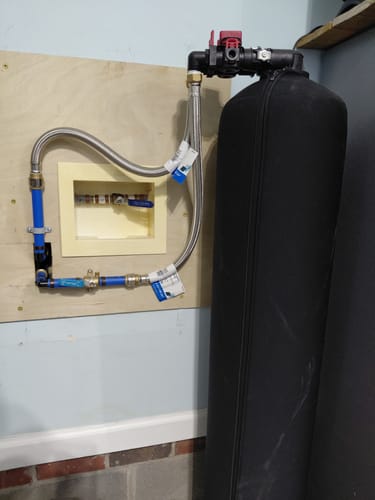
After six weeks of research, I narrowed my focus to high-efficiency water softeners that could handle our household's 280 gallons per day usage. The SoftPro Elite Basic caught my attention because of its upflow regeneration design and fine mesh resin.
Most conventional softeners use downflow regeneration, where the brine solution flows the same direction as service water. The SoftPro's upflow system reverses this, creating more efficient ion exchange and using 50% less salt. For a household going through 80 pounds of salt monthly with a conventional system, this efficiency gain was significant.
The fine mesh resin was another deciding factor. Did you know that resin bead size affects contact time with hard water minerals?
Smaller beads provide more surface area for ion exchange, allowing the system to operate at higher flow rates without sacrificing softening capacity. This meant we could maintain full pressure during peak usage times.
I also appreciated the 10-year control valve warranty and the fact that SoftPro manufactures their own components rather than assembling third-party parts. When you're investing in a system that should last 15-20 years, build quality and manufacturer support matter.
Unboxing and Initial Setup Experience
The SoftPro Elite Basic arrived on a freight truck, professionally wrapped and secured to a pallet. At 180 pounds, this isn't a system you handle alone. The fiberglass tank felt substantial—no cheap plastic that might crack under pressure.
Inside the box, I found the control head pre-programmed with standard settings, a 50-pound bag of solar salt, installation hardware, and a comprehensive manual that actually made sense. The bypass valve assembly was already connected, which saved me the headache of figuring out proper positioning.
What impressed me most was the attention to detail in packaging. Every connection point was protected with caps, and the control head was secured with custom foam inserts. This wasn't some mass-produced unit thrown together—it felt like a premium appliance.
The only surprise was the brine tank size. At 18 inches wide by 33 inches tall, it's larger than some compact units I'd considered, but this capacity means longer intervals between salt refills.
Installation: Professional vs DIY Decision

Initially, I planned to install this myself. I have basic plumbing experience and the confidence to tackle most home improvement projects. However, after reviewing the installation requirements, I decided to hire a local plumber for the initial hookup.
The decision came down to three factors: proper sizing of the bypass loop, electrical connections for the control head, and ensuring adequate drain access for regeneration cycles. My basement plumbing configuration required some creative pipe routing that I wasn't comfortable attempting.
My plumber, who'd installed several SoftPro units, completed the job in four hours. The total installation cost was $320, which included new supply lines, a proper drain connection, and electrical outlet installation. He also walked me through the initial programming and regeneration cycle.
Would I hire a professional again?
Absolutely. The peace of mind knowing everything was connected properly, plus the informal warranty on installation work, was worth every penny. Some projects are perfect for DIY, but this wasn't one of them for my situation.
The system's location in my basement utility room provided easy access for maintenance while keeping it out of living spaces. The compact footprint fit perfectly between my water heater and electrical panel, with room for salt storage nearby.
Performance Testing and Real-World Results
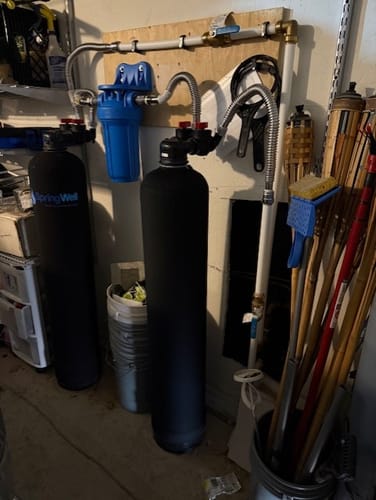
After the 48-hour startup period, I began testing water quality throughout our home. Using a TDS meter and hardness test strips, I tracked performance at multiple fixtures over the first month.
The results were dramatic. Incoming water measured 18 grains per gallon hardness with 340 PPM total dissolved solids. Post-softener readings consistently showed 0 grains hardness and 180 PPM TDS—the reduction representing removed calcium and magnesium minerals.
But the real test was daily living. Within a week, I noticed soap lathered more easily in the shower. My wife's hair felt silky instead of straw-like, and our skin stopped feeling tight after bathing. The change was so noticeable that our teenage daughter asked if we'd switched to different soap products.
Coffee taste improved significantly once mineral buildup stopped interfering with extraction. Our espresso machine, which had been producing increasingly bitter shots, returned to proper flavor profiles. I hadn't realized how much dissolved minerals were affecting taste until they were gone.
The most surprising benefit was laundry performance.
Colors stayed vibrant longer, whites looked brighter, and fabric softness improved without changing detergents. We actually reduced detergent usage by about 30% while achieving better cleaning results.
Dishwasher performance was like night and day. Glassware emerged spotless, and the white film that had plagued our dark dishes completely disappeared. Our stainless steel cookware regained its original shine without extra scrubbing.
Long-Term Ownership: 18 Months Later
Now, after a year and a half of daily use, I can provide perspective on long-term ownership costs and maintenance requirements. This system has been remarkably consistent, requiring minimal intervention.
Salt consumption averages 40 pounds monthly for our family of four—exactly half what my neighbor uses with his conventional downflow softener. At current salt prices, that's about $8 monthly in consumables. The efficiency claims weren't marketing hype; they're measurably accurate.
Regeneration cycles occur every 12-14 days based on our calculated usage. The system's meter tracks gallons processed rather than using a simple timer, ensuring regeneration happens only when needed. This smart metering has saved both salt and water compared to time-based systems.
Maintenance has been straightforward. Every six months, I clean the brine tank and check salt levels. The resin bed hasn't required any special treatments or cleaners. The control head's self-diagnostic features alert me to any irregularities, though none have occurred.
Performance remains consistent with initial testing. Water hardness stays at zero grains per gallon, and flow pressure maintains 45-50 PSI throughout the house during normal usage.
Even when running the dishwasher and taking a shower simultaneously, pressure drops are minimal.
The only minor issue I've encountered is occasional salt bridging in the brine tank during humid summer months. This happens when salt forms a hard crust over water beneath, preventing proper brine formation. A quick stir with a broom handle every few months prevents this problem.
Operating Costs and Efficiency Analysis
Understanding true ownership costs requires tracking more than just salt consumption. Over 18 months, I've documented every expense related to system operation and compared it to our previous hard water situation.
Monthly operating costs break down as follows: $8 for salt, $3 estimated electricity for control head and regeneration cycles, and $2 for increased water usage during regeneration. Total monthly operating cost: $13.
Compare this to our previous hard water expenses: $15 monthly for extra cleaning products, $12 for bottled water (we drank bottled due to mineral taste), $8 for additional detergent and soap, and $5 for descaling products. Previous monthly hard water costs: $40.
The system pays for itself through reduced operating expenses alone.
With net monthly savings of $27, the payback period for our $1,200 investment is approximately three years and eight months. Factor in extended appliance life and potential repair savings, and the economics become even more favorable.
Energy efficiency deserves special mention. The SoftPro's meter-controlled regeneration prevents unnecessary cycles that waste salt and water. Conventional timer-based systems regenerate regardless of actual usage, often wasting resources during periods of low water consumption.
Water heating efficiency improved measurably after installation. Our tankless water heater now operates at rated efficiency without scale buildup reducing heat transfer. This translates to lower natural gas consumption and consistent hot water temperatures.
Who Should Consider This System and Final Thoughts
After 18 months of ownership, I can confidently recommend the SoftPro Elite Basic for specific situations. This system excels for households with moderate to severe hardness (10+ grains per gallon) who value efficiency and long-term reliability over initial cost savings.
Perfect candidates include families using 200-400 gallons daily, homeowners with expensive appliances to protect, and anyone frustrated with cleaning challenges caused by hard water. The upflow design and fine mesh resin justify the premium over basic softeners through measurable efficiency gains.
However, this isn't the right choice for everyone. Budget-conscious buyers might find adequate performance with conventional downflow systems. Renters or those planning to move within five years won't recoup the investment. Very low water usage households won't realize the efficiency benefits that make this system special.
Would I purchase the SoftPro Elite Basic again?
Without hesitation. The combination of efficiency, build quality, and consistent performance has exceeded my expectations. More importantly, it solved our hard water problems completely while reducing our ongoing expenses.
The transformation in water quality throughout our home—from better-tasting coffee to spot-free dishes to softer skin—reminds me daily that this was one of our best home improvement investments. Sometimes the solutions that seem expensive upfront provide the greatest long-term value.
For homeowners dealing with hard water frustrations, the SoftPro Elite Basic offers a professional-grade solution that delivers on its efficiency and performance promises. After experiencing the difference it's made in our daily lives, I can't imagine going back to hard water.






