


![SoftPro Chlorine+ Carbon Whole House Water Filter to Remove PFAS, Chlorine, Chloramine & Pesticides [City Water Filters Series]](http://www.softprowatersystems.com/cdn/shop/files/SoftPro_Whole_House_Carbon_Filter_Chlorine.webp?v=1769127507&width=140)
![SoftPro Iron Filter - Iron Master AIO - Best Iron Filter for Well Water [Air Injected Water Filter / Katalox]](http://www.softprowatersystems.com/cdn/shop/files/SoftPro_AIO_Iron_Master_Iron_Filter_Main.webp?v=1772123747&width=140)


 855-683-8488


SoftPro Elite HE Water Softener Review: Real User Results

Hi, I'm Megan T. I live in a suburb where hard water has been the bane of my existence for years. Craig "The Water Guy" Phillips asked me to share my experience as a homeowner with the SoftPro® Elite HE Water Softener for City Water (Industry's Best Softener & Filter Combo) I purchased eight months ago. This journey has been quite the learning experience, and I hope sharing my real-world results helps you make an informed decision about tackling your own water issues.
Did you know that over 85% of American homes deal with hard water issues?
I certainly didn't realize I was part of such a massive group until I started researching why my glassware looked perpetually cloudy and my skin felt like sandpaper after every shower. The frustration had been building for months—white crusty buildup on every faucet, my coffee maker dying an early death, and don't even get me started on the soap scum situation in our bathrooms.
The Hard Water Reality That Drove Me to Act
Living in our suburban home for three years, I'd grown increasingly frustrated with what I now know were classic hard water symptoms. Every morning, I'd wake up to water spots on dishes I'd just washed the night before. The shower doors required weekly scrubbing with heavy-duty cleaners just to see through them.
But the real wake-up call came when our dishwasher repair technician explained that the white film coating everything wasn't a detergent issue—it was mineral buildup from hard water. He showed me the inside of our six-month-old appliance, already showing signs of scale damage. "You need to address your water quality, or you'll be replacing appliances every few years," he said matter-of-factly.
I tested our water with a basic TDS meter from the hardware store and got readings consistently above 180 ppm. The city water report confirmed what I suspected: our municipal supply contained 12 grains per gallon of hardness minerals, primarily calcium and magnesium carbonates. That's considered "very hard" by water quality standards.
The financial impact was becoming clear too. We were going through fabric softener like crazy, using twice the recommended amount of laundry detergent, and I'd already replaced our coffee maker once due to mineral clogging. The hidden costs were adding up faster than I'd realized.
Research Phase: Navigating the Water Treatment Maze
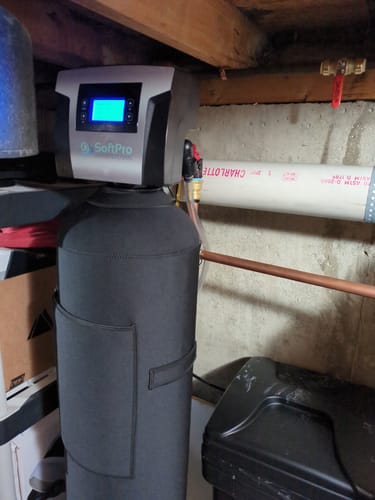
Once I understood the scope of our hard water problem, I dove into research mode. The world of water treatment felt overwhelming initially—salt-based systems, salt-free conditioners, reverse osmosis units, combination systems. Each technology seemed to have passionate advocates and equally vocal critics.
I spent weeks reading about ion exchange processes, regeneration cycles, and efficiency ratings. The NSF certification standards became my guidebook for separating legitimate products from marketing fluff. I learned that NSF/ANSI 44 certification specifically addresses water softening performance, while NSF/ANSI 42 covers chlorine and taste/odor reduction.
Space constraints in our utility room eliminated several options immediately. Our setup required a compact system that could handle peak flow rates during morning routines when showers, dishwasher, and washing machine might run simultaneously. I calculated our household's daily water usage at approximately 240 gallons for four people, factoring in our teenager's lengthy showers.
The SoftPro Elite HE caught my attention because it combined water softening with filtration capabilities in a single, space-efficient unit. The 64,000-grain capacity seemed appropriate for our household size and water hardness level. More importantly, the upflow regeneration design promised better efficiency and longer resin life compared to traditional downflow systems I'd researched.
Why the SoftPro Elite HE Won My Decision
After comparing dozens of systems, several factors pushed the SoftPro Elite HE to the top of my list. The combination of proven ion exchange technology with advanced filtration addressed multiple water quality issues I'd identified in our municipal supply.
The digital control valve impressed me with its programming flexibility and diagnostic capabilities. Unlike basic timer-based systems, this unit monitors actual water usage and adjusts regeneration cycles accordingly. For a household with varying water consumption patterns, demand-initiated regeneration made more sense than arbitrary scheduling.
Build quality became apparent during my research into the manufacturing process. The resin tank construction uses filament-wound fiberglass with NSF-approved materials throughout the water contact surfaces. The control valve carries a 10-year manufacturer warranty, suggesting confidence in long-term reliability.
Energy efficiency considerations sealed the deal. The low-voltage operation draws minimal power, and the high-efficiency design reduces both salt and water consumption during regeneration cycles. In our environmentally conscious household, minimizing waste resonated strongly with our values.
Unboxing and Initial Setup Experience

Delivery arrived exactly as scheduled, with the system packaged more securely than I'd expected for such a substantial piece of equipment. The main resin tank weighed approximately 150 pounds when loaded, requiring two people to position properly in our utility room.
Component quality exceeded my expectations immediately. The digital control head felt substantial and well-engineered, with a clear LCD display and intuitive button layout. All connection fittings appeared to be high-grade materials with proper threading and sealing surfaces.
The installation manual provided clear, step-by-step instructions with helpful diagrams for various plumbing configurations. However, I quickly realized that while DIY installation was technically possible, our specific setup would benefit from professional expertise. The need to install a bypass valve and properly integrate with our existing water heater and pressure tank setup convinced me to hire a certified installer.
Pre-installation preparation required clearing adequate space and ensuring proper electrical supply for the control valve. The unit needed a standard 110V outlet within six feet and access to a drain for the regeneration discharge. Fortunately, our utility room layout accommodated these requirements without major modifications.
Installation Day: From Plumbing Chaos to Crystal Clear Water
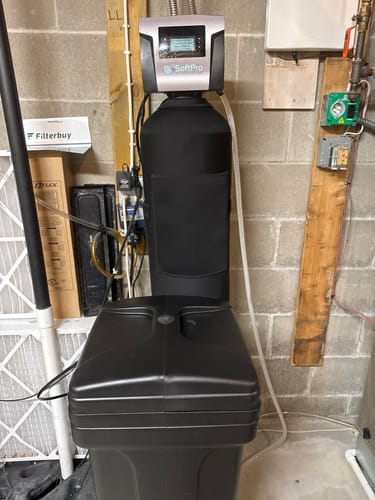
Professional installation proved to be the right choice for our situation. The certified technician arrived with specialized tools and immediately assessed our existing plumbing configuration. What I'd estimated as a four-hour project stretched to nearly seven hours due to unexpected complications with our main water line connections.
The installation process revealed some interesting challenges. Our home's original plumbing included a section of galvanized pipe that needed replacement to prevent flow restriction. The technician explained that maintaining adequate flow rates was crucial for the system's efficiency and our household's water pressure needs.
Bypass valve installation required cutting into the main supply line and installing three separate valves for service flexibility. This allows complete system isolation for maintenance while maintaining water supply to the house—a feature I hadn't fully appreciated until seeing it implemented.
Initial system startup involved several steps I wouldn't have known to perform correctly. The resin bed required specific preparation procedures, including a thorough backwash cycle and proper conditioning. The technician programmed the control valve with our household parameters: water hardness level, household size, and regeneration preferences.
First regeneration cycle ran that evening, lasting approximately 90 minutes with various stages clearly indicated on the digital display. The system automatically initiated backwash, brine draw, rinse, and refill sequences without intervention. Hearing the process for the first time was reassuring—everything sounded mechanical and purposeful rather than concerning.
Real-World Performance: Eight Months of Hard Data
The transformation in our water quality became apparent within 48 hours of installation. Testing post-treatment water showed hardness levels dropping from 12 grains per gallon to less than 1 grain per gallon—well within the "soft" water range recommended for household use.
Soap performance improved dramatically across all applications. Laundry detergent usage decreased by roughly 40% while achieving better cleaning results. Our dishwasher finally started producing spot-free glassware, and the persistent white film on shower doors became a thing of the past. These changes weren't subtle—they were immediately obvious to everyone in our household.
Appliance protection benefits emerged over the following months. Our coffee maker, previously requiring monthly descaling, now operates for three months between cleanings. The water heater efficiency improved noticeably, with our monthly gas bill showing a modest but consistent decrease after installation.
Flow rate performance met our household's peak demand requirements without pressure drops. Simultaneous operation of multiple fixtures—shower, dishwasher, and washing machine—maintained adequate pressure throughout the house. The system's 12 GPM flow rate proved sufficient for our family's usage patterns.
Regeneration frequency stabilized at every 4-5 days with our current water consumption and hardness levels. Each cycle consumes approximately 8 pounds of salt and 45 gallons of water during the regeneration process. These consumption rates align closely with the manufacturer's efficiency specifications.
Chlorine reduction capabilities addressed our municipal water's chemical taste and odor issues effectively. While not the primary reason for installation, this filtration benefit improved our drinking water quality noticeably. We've actually reduced our bottled water purchases as a result.
Daily Living Impact: The Unexpected Benefits
Beyond the obvious water quality improvements, several unexpected benefits emerged during our first eight months of ownership. Personal care routines changed significantly as softer water required adjustments to soap and shampoo usage. Initially, I over-shampooed because I was accustomed to hard water's poor lathering characteristics.
Skin and hair health improvements were gradual but noticeable. My daughter's eczema, which we'd attributed to environmental allergens, showed marked improvement within six weeks. While I can't definitively credit the water softener alone, eliminating harsh mineral content from daily showers certainly contributed to the positive changes.
Cleaning routines throughout the house became significantly easier. Bathroom maintenance dropped from weekly intensive scrubbing to monthly light cleaning for soap scum and mineral deposits. Kitchen faucets and sinks maintain their appearance much longer between cleanings.
Laundry results improved beyond just reduced detergent usage. Whites stay whiter longer, and colored fabrics maintain their vibrancy through more wash cycles. Towels feel noticeably softer and more absorbent—a change every family member commented on independently.
Unexpected cost savings accumulated over time. Reduced soap, detergent, and cleaning product consumption offset a portion of the system's operational costs. Our monthly household chemical budget decreased by approximately $25-30, which wasn't a factor I'd calculated during initial cost-benefit analysis.
Visitor reactions provided external validation of the improvements. Guests consistently commented on our water quality, particularly the lack of chlorine taste and the effective soap lathering. Several friends have since installed similar systems based on their experiences during visits.
Honest Assessment: What I'd Tell My Best Friend
After eight months of real-world use, this system has delivered on its primary promises while exceeding my expectations in several areas. The combination of effective hard water treatment and chlorine filtration addressed our specific municipal water issues comprehensively.
Installation investment proved worthwhile for our household's water quality challenges and usage patterns. The upfront cost, approximately $2,400 including professional installation, represents significant value considering the appliance protection and daily quality-of-life improvements we've experienced.
Maintenance requirements align with my expectations for a mechanical system of this complexity. Monthly salt additions take about five minutes, and quarterly system checks ensure optimal performance. The digital control valve provides helpful diagnostic information for monitoring system health proactively.
However, this system isn't perfect for every situation. Space requirements eliminate it from smaller utility areas, and the ongoing salt consumption creates additional household maintenance responsibilities. Households with minimal hard water issues might find the investment difficult to justify compared to simpler filtration solutions.
The learning curve for optimal soap and detergent usage took several weeks to navigate. Soft water lathers more readily, requiring adjustments to established routines. This transitional period might frustrate households expecting immediate, seamless improvements without any behavioral adaptations.
Overall satisfaction remains high eight months post-installation. The system reliably produces the water quality improvements that motivated our initial investment. For households facing similar hard water challenges with adequate space and budget for proper installation, this represents an excellent long-term solution that delivers measurable daily benefits.



