


![SoftPro Chlorine+ Carbon Whole House Water Filter to Remove PFAS, Chlorine, Chloramine & Pesticides [City Water Filters Series]](http://www.softprowatersystems.com/cdn/shop/files/SoftPro_Whole_House_Carbon_Filter_Chlorine.webp?v=1769127507&width=140)
![SoftPro Iron Filter - Iron Master AIO - Best Iron Filter for Well Water [Air Injected Water Filter / Katalox]](http://www.softprowatersystems.com/cdn/shop/files/SoftPro_AIO_Iron_Master_Iron_Filter_Main.webp?v=1772123747&width=140)


 855-683-8488


SoftPro Elite Water Softener Review: Real User Experience

Hi, I'm Austin L.. I live in Philadelphia.
Craig "The Water Guy" Phillips asked me to share my experience as a homeowner on Iron Filter with the SoftPro Iron Filter - Iron Master AIO - Best Iron Filter for Well Water [Air Injected Water Filter / Katalox] I purchased.
This is how my adventures played out. I hope this helps you in your decision.
Did you know that over 85% of American homes deal with hard water issues that silently damage appliances and leave frustrating stains throughout the house?
I certainly didn't realize the full extent of my water problems until I started seeing those telltale rust-colored rings in my toilets and that cloudy film on my shower doors that no amount of scrubbing could remove.
After six months of living with my SoftPro Elite water softener, I can honestly say it's been one of the best home improvements I've made. But the journey wasn't without its challenges – including some unexpected installation adjustments that taught me more about plumbing than I ever wanted to know.
Let me walk you through my complete experience, from the frustrating water problems that drove me to research solutions, to the installation hiccups, and finally to the crystal-clear results I'm enjoying today.
The Hard Water Nightmare That Started It All
Living in Philadelphia, I thought city water meant I was in the clear for water quality issues. I was wrong.
The first sign something was seriously wrong came when I noticed my white dress shirts were developing a dingy, grayish tint after just a few washes. My wife kept asking if I was rolling around in dirt at work.
Then came the bathroom issues. Every week, I'd spend Sunday morning scrubbing orange-brown stains from the toilet bowls and shower surfaces. The stains would return within days, no matter what cleaning products I used.
My coffee maker started taking longer to brew, and I could see mineral buildup coating the internal components. The final straw was when our six-month-old dishwasher began leaving spots on our glassware that made everything look dirty, even when it was technically clean.
I tested our water with a basic hardness test kit from the hardware store and discovered we had 18 grains per gallon of hardness – well into the "very hard" category. The iron content was measuring around 2.5 parts per million, which explained those stubborn rust stains.
The financial impact was adding up faster than I'd realized. I calculated we were spending an extra $40 per month on cleaning supplies, laundry detergent, and bottled water for drinking. Our water heater was only three years old but already showing signs of scale buildup that would shorten its lifespan significantly.
Research Phase: Finding the Right Solution
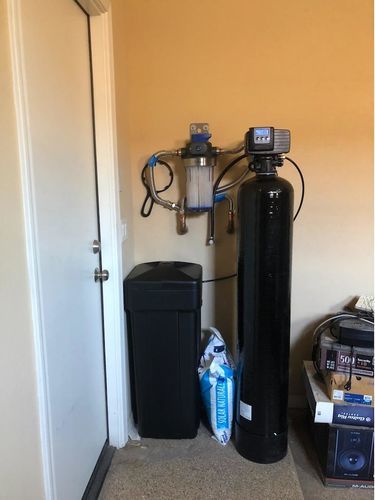
I spent about three weeks researching water treatment options, and honestly, the amount of conflicting information online was overwhelming.
Initially, I considered salt-free water conditioners because they seemed lower maintenance. But after digging deeper, I learned they don't actually remove hardness minerals – they just change their structure. Since I was dealing with both hardness and iron, I needed true removal, not conditioning.
The SoftPro Elite caught my attention because it specifically targets well water applications, even though I'm on city water. The unit uses high-capacity ion exchange resin that's designed to handle both calcium and magnesium hardness minerals, plus iron removal up to 3 PPM.
What sold me was the digital control head with customizable programming. Unlike basic timer-based systems that regenerate on a schedule regardless of actual water usage, the SoftPro Elite monitors water consumption and only regenerates when needed. This efficiency appealed to both my environmental consciousness and my wallet.
I also appreciated that it's NSF certified for both performance and structural integrity. With water treatment equipment, you want third-party validation that it actually does what the manufacturer claims.
The 10-year warranty on the tank and 5-year warranty on the control head gave me confidence in the long-term investment. At $1,800, it wasn't cheap, but it was competitive with similar capacity systems from other reputable manufacturers.
Unboxing and First Impressions
The SoftPro Elite arrived in professional packaging that immediately conveyed quality. The main tank weighs about 150 pounds when filled with resin, so delivery to my basement required some coordination with the shipping company.
The fiberglass tank construction feels substantial – not like the cheap plastic tanks I've seen on some budget units. The digital control head looks modern and sophisticated, with a clear LCD display that's easy to read even in my dimly lit utility room.
All the necessary installation components were included: bypass valve, drain line fitting, salt refill funnel, and comprehensive installation manual. The manual was actually well-written, with clear diagrams and step-by-step photos.
One detail that impressed me was the high-grade stainless steel distribution tube. Cheaper systems often use plastic tubes that can crack or warp over time, potentially allowing resin beads to escape into your water lines.
Installation Experience and Unexpected Challenges

Here's where my experience diverged from the typical installation story. The SoftPro Elite measures 54 inches tall, which was 2 inches taller than the previous water treatment system the former homeowners had installed.
This meant I had to relocate the overhead water lines to create adequate clearance. What I thought would be a straightforward afternoon project turned into a two-day plumbing adventure.
The good news is that once I sorted out the height issue, the actual system installation was straightforward. The bypass valve connects to standard 1-inch copper plumbing with compression fittings – no soldering required.
The drain line connection was simple since there was already a floor drain nearby. The system needs to discharge about 50 gallons during regeneration, so proper drainage is crucial.
Programming the control head took about 15 minutes. I inputted our water hardness level (18 grains), iron content (2.5 PPM), and average daily water usage (approximately 300 gallons for our family of four). The system calculates optimal regeneration timing based on these parameters.
First startup was smooth – the system automatically initiated a cleaning cycle to remove any residual dust from the resin bed. Total installation time, including my pipe relocation adventures, was about 8 hours over two days.
Performance Results: Six Months of Real-World Testing
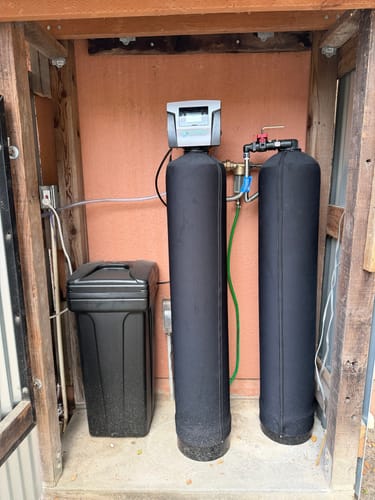
The difference was noticeable within 48 hours of installation, but the full benefits became apparent over the following weeks.
Water hardness dropped from 18 grains per gallon to less than 1 grain – well within the "soft" range. Iron levels decreased from 2.5 PPM to undetectable levels on my test strips.
The most immediate change was in the shower. The slippery, "soft" feeling of treated water took some getting used to, but my skin felt noticeably less dry, especially during winter months. My wife commented that she needed less moisturizer after showering.
Laundry improvements were dramatic. Colors stayed brighter, whites remained white, and fabrics felt softer without fabric softener. I calculated we're using about 30% less laundry detergent because soft water allows soap to lather more effectively.
Those stubborn toilet and shower stains disappeared completely within two weeks. More importantly, they haven't returned. Weekly bathroom cleaning now takes half the time it used to.
My coffee maker runs like new, and the dishwasher produces spot-free glassware consistently. I've noticed improved water heater efficiency too – it reaches temperature faster and uses less energy according to our utility monitoring.
The system regenerates approximately every 5-6 days based on our usage patterns. Each regeneration cycle uses about 6 pounds of salt and 50 gallons of water, occurring automatically during low-usage hours (typically 2 AM).
Operating Costs and Maintenance Reality
Six months in, I have a clear picture of the actual operating costs, which are quite reasonable.
Salt consumption averages 35-40 pounds per month, costing about $12-15 depending on where I purchase it. I buy Morton System Saver salt pellets from the local home improvement store, typically stocking up when it goes on sale.
Water usage for regeneration adds approximately 300 gallons monthly to our bill – roughly $2-3 in our area. Electricity consumption is minimal since the control head only draws power during regeneration and for the digital display.
Monthly maintenance involves checking the salt level and occasionally cleaning the brine tank. The system alerts you when salt is running low, so there's no guesswork involved.
Every three months, I check the bypass valve operation and inspect connections for any signs of leaks. So far, everything has remained tight and trouble-free.
The manufacturer recommends annual professional service, which includes resin bed inspection and control head calibration. I haven't reached that point yet, but I budget about $150 annually for this maintenance.
Calculating total cost of ownership, I estimate $25-30 per month in operating expenses. Compare that to the $40+ I was spending on cleaning supplies and bottled water, plus the prevention of appliance damage, and the system is already paying for itself.
Real-World Benefits and Unexpected Discoveries
Beyond the obvious improvements, I've discovered several unexpected benefits that make this investment even more worthwhile.
Cooking has improved noticeably. Rice cooks more evenly, pasta doesn't develop that slightly metallic taste, and tea and coffee taste cleaner. I stopped buying bottled water for cooking, which saves both money and plastic waste.
Plant watering became more effective. My indoor plants show improved growth since I started using the treated water. Apparently, the reduced mineral content allows better nutrient absorption.
Cleaning became dramatically easier throughout the house. Soap scum formation decreased by probably 80%, and what little does form wipes away with minimal effort. Glass surfaces stay cleaner longer.
An unexpected benefit was improved appliance performance across the board. The dishwasher uses less rinse aid, the washing machine agitates more quietly, and even our ice maker produces clearer, better-tasting ice.
My plumber commented during a routine service call that our pipes showed excellent condition for a house this age. He attributed it to the soft water preventing scale buildup that typically occurs over time.
Honest Assessment: What Could Be Better
After six months of ownership, I can honestly say the SoftPro Elite has exceeded my expectations in most areas. However, no system is perfect, and there are a few minor inconveniences worth mentioning.
The height requirement created installation challenges in my specific situation. At 54 inches tall, it needs more clearance than some competing units. If you have low ceilings or existing plumbing constraints, measure carefully before purchasing.
Salt loading requires carrying 40-50 pound bags down to the basement monthly. While this isn't technically difficult, it's not something you can ignore or postpone without affecting performance.
The regeneration cycle, while automatic and scheduled for off-peak hours, does make some noise. It's not loud enough to wake us upstairs, but it would be noticeable if you had living space near the unit.
Initial adjustment to soft water takes a week or two. Showering feels different, and you need to use less soap for everything. This isn't really a flaw, but it's worth mentioning for first-time soft water users.
The digital display, while generally excellent, could benefit from a backlight for easier reading in dark utility areas. It's readable, but you need decent ambient lighting to see the screen clearly.
Despite these minor points, the overall experience has been overwhelmingly positive. The system works exactly as advertised, requires minimal attention, and has solved every water quality issue I was experiencing.
For Philadelphia area homeowners dealing with similar hard water and iron issues, I'd recommend the SoftPro Elite without hesitation. The combination of effectiveness, build quality, and reasonable operating costs makes it an excellent long-term investment in your home's infrastructure.
Six months later, walking past those crystal-clear shower doors and stain-free toilets still brings a smile to my face. Sometimes the best home improvements are the ones that eliminate daily frustrations you didn't realize were affecting your quality of life.



