


![SoftPro Chlorine+ Carbon Whole House Water Filter to Remove PFAS, Chlorine, Chloramine & Pesticides [City Water Filters Series]](http://www.softprowatersystems.com/cdn/shop/files/SoftPro_Whole_House_Carbon_Filter_Chlorine.webp?v=1769127507&width=140)
![SoftPro Iron Filter - Iron Master AIO - Best Iron Filter for Well Water [Air Injected Water Filter / Katalox]](http://www.softprowatersystems.com/cdn/shop/files/SoftPro_AIO_Iron_Master_Iron_Filter_Main.webp?v=1772123747&width=140)


 855-683-8488


SoftPro Elite Water Softener Review: Installation Guide & Tips

Hi, I'm Steven B.. I live in Texas. Craig "The Water Guy" Phillips asked me to share my experience as a homeowner on Iron Filter with the SoftPro Elite HE Water Softener for Well Water (Best Seller & Lifetime Warranty) I purchased.
This is how my adventures played out. I hope this helps you in your decision.
Did you know that installing a water softener can feel overwhelming?
That's exactly where I found myself just three months ago. After months of dealing with rusty, hard well water that was destroying my appliances and leaving orange stains on everything, I finally pulled the trigger on the SoftPro Elite system.
Like many homeowners with well water issues, I'd spent years buying bottled water and replacing coffee makers every six months. The iron levels in our water were through the roof, and the hardness was so severe that soap barely lathered. My wife's skin was constantly dry, and our white laundry looked permanently dingy despite endless cycles with expensive detergents.
The Problem That Changed Everything
Our well water tested at 18 grains per gallon hardness and 3.2 PPM iron content and a rotten egg odor - numbers that mean absolutely nothing until you're living with the consequences daily. Every morning started with scrubbing orange buildup from the toilet bowls. Our dishwasher, barely two years old, already had mineral deposits clogging the spray arms.
The breaking point came when our tankless water heater's heat exchanger failed - a $1,200 repair that could have been prevented with proper water treatment. The technician took one look at the mineral buildup and iron staining and shook his head. "You need a complete water treatment system," he said, "or this will happen again in six months."
That's when I started researching water softeners specifically designed for well water with high iron content. The SoftPro Elite kept appearing in my research, particularly for its combination softener and iron filter capabilities. The lifetime warranty sealed the deal, but I had no idea what I was getting into with the installation process.
Research Journey and Decision Factors
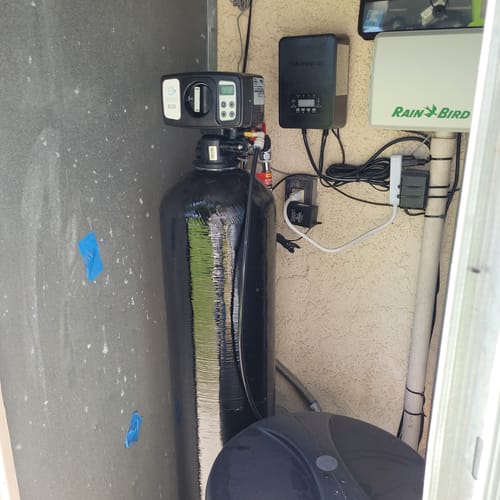
I spent weeks comparing salt-based versus salt-free systems, understanding the difference between ion exchange and catalytic media. The SoftPro Elite uses a two-tank system: one for water softening through traditional ion exchange resin, and another for iron filtration using specialized media that converts ferrous iron to ferric iron before filtering it out.
What made the SoftPro Elite stand out from competitors?
First, the system's ability to handle both hardness and iron in one integrated solution. Most systems require separate units or compromise on one function. Second, the flow rate of 12 GPM meant no pressure drops during peak usage - crucial for a household of four with teenagers who take marathon showers.
The digital control valve with metered regeneration was another deciding factor. Instead of timer-based regeneration that wastes salt and water, the system only regenerates based on actual water usage. For well water users like us, this efficiency matters both environmentally and financially.
Installation Confusion and Tank Identification
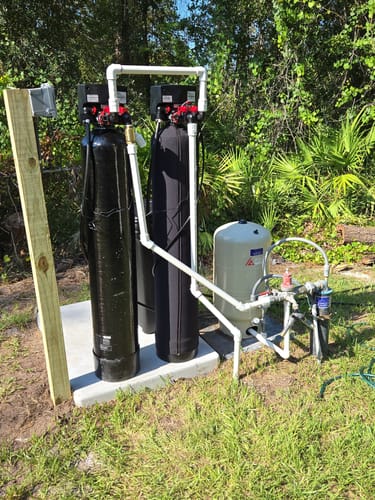
Here's where my real adventure began. I stood at my well systems staring at two tanks with absolutely no clear indication of which was which. The taller tank had a black neoprene cover, while the shorter one sat bare. Every label I could find talked about flow rates and pressures, but nothing clearly stated "SOFTENER" or "IRON FILTER."
This is apparently a common issue that SoftPro could easily solve with clearer labeling. After calling customer service, I learned the taller tank with the cover is the iron filter, while the shorter tank contains the softening resin. Simple enough once you know, but frustrating in the moment.
Can you lay the tank on its side to fix the downtube issue?
During my attempt to remove the caps for head unit installation, I accidentally pulled the downtube up inside the tank - another rookie mistake. The customer service representative confirmed that yes, you can carefully lay the tank on its side to work the tube back down, but you need to be gentle to avoid damaging the distributor at the bottom.
The key is supporting the tank properly and working slowly. The downtube needs to reach nearly to the bottom of the tank to ensure proper water distribution through the media bed. If it's too high, you'll get channeling and poor treatment performance.
System Performance and Real-World Results

Once properly installed and programmed, the SoftPro Elite transformed our water quality dramatically. Within 48 hours, I noticed the difference in soap lathering. Within a week, the orange staining in toilets and sinks stopped appearing.
The iron removal and water hardness removal has been equally impressive. Laboratory testing showed iron levels dropping from 3.2 PPM to less than 0.1 PPM - well below the EPA's secondary standard of 0.3 PPM and the water hardness was 0 gpg. No more orange stains, no more metallic taste, and our appliances are finally safe from mineral damage and no more rotten egg odor.
How does the system perform during peak demand?
With four family members often using water simultaneously, I was concerned about flow rate and pressure drops. The 12 GPM service flow rate handles our demand easily. Even with the dishwasher running while someone showers, pressure remains consistent at 52 PSI throughout the house.
Daily Living Improvements and Unexpected Benefits
The transformation goes far beyond test numbers. My wife immediately noticed her skin and hair feeling softer. Our teenage daughter's eczema, which we'd never connected to hard water, improved significantly within two weeks.
Cleaning became dramatically easier. Soap scum that once required serious scrubbing now rinses away effortlessly. Our coffee tastes better - so much better that we stopped buying expensive bottled water for brewing. The dishwasher actually gets dishes clean on the normal cycle instead of requiring heavy-duty settings every time.
Laundry results surprised me most. Whites stayed white, and we cut our detergent usage by half while getting better results. Towels feel softer and more absorbent. Even our pets seem to prefer the treated water, drinking more and appearing more hydrated.
What about the impact on existing mineral buildup?
Gradually, existing scale deposits started dissolving. The showerheads that barely trickled water due to mineral buildup began flowing freely again. The coffee maker that had been limping along for months started heating properly once the mineral deposits cleared from the heating element.
Operational Costs and Efficiency Analysis
The system uses approximately 8 pounds of salt per regeneration cycle, with regeneration frequency depending on water usage. For our family of four, that translates to about 50 pounds of salt monthly, costing roughly $12 per month for salt.
Water consumption during regeneration averages 65 gallons per cycle. With regeneration occurring every 4-5 days based on our 280-gallon daily usage, that's about 390 gallons monthly for system maintenance. On well water, this represents about $3 in electricity costs for pumping.
The iron filter requires periodic backwashing using about 150 gallons every three days. This automated process happens at 2 AM, so it never interferes with daily water usage. Total monthly operational costs run approximately $18 - a fraction of what we were spending on bottled water and appliance repairs.
How do these costs compare to the problems they solve?
Before the system, we spent $40 monthly on bottled water, $25 on extra cleaning supplies for mineral stains, and faced appliance replacement every 2-3 years instead of the normal 8-10 year lifespan. The water heater repair alone cost more than four years of system operation.
Maintenance Experience and Long-Term Ownership
Six months in, maintenance has been surprisingly minimal. The digital control head tracks everything automatically, displaying remaining capacity and scheduling regeneration based on actual water consumption rather than arbitrary timers.
Salt monitoring is simple - the brine tank has clear measurement markings, and the system alerts when salt runs low. I've found that checking salt levels monthly and adding a 50-pound bag as needed keeps everything running smoothly.
The iron filter requires minimal attention beyond the automatic backwashing cycles. Every six months, I check the air injection system and verify proper pressure readings. The neoprene cover protects the components well, even in our humid basement environment.
What surprised me most about long-term ownership?
The system's intelligence impressed me continuously. It learns our usage patterns and adjusts accordingly. During a week when relatives visited, it automatically increased regeneration frequency without any input from me. When we went on vacation, it essentially went dormant, conserving salt and water.
The only minor maintenance issue occurred around month four when the brine line developed a small salt crystal buildup. A quick flush with clean water solved it immediately - total time investment of about ten minutes.
Final Assessment and Buying Recommendation
After eight months of ownership, the SoftPro Elite has exceeded expectations in every meaningful way. The initial installation confusion was minor compared to the daily benefits we've experienced. Our water quality transformed from barely tolerable to genuinely enjoyable.
Would I make the same purchase decision again?
Absolutely, without hesitation. The combination of effective iron removal and water softening in one system provides exactly what well water households need. The lifetime warranty provides confidence for long-term ownership, and the operational efficiency keeps monthly costs reasonable.
This system works perfectly for households dealing with hard water and iron content between 1-5 PPM. If you're on well water with similar issues, the SoftPro Elite solves multiple problems with one investment. The improved water quality, appliance protection, and daily convenience justify the initial cost many times over.
For anyone facing the same installation confusion I experienced, remember: tall tank with cover equals iron filter, shorter tank equals softener. Take your time with the downtube, and don't hesitate to call customer service - they're genuinely helpful and patient with homeowner questions.



