




When you soften iron-rich water, you're adding roughly 7.9 mg of sodium per liter for every grain per gallon (gpg) of hardness. At 15 gpg, that's about 118 mg/L — nearly 10% of a 1,500 mg daily sodium limit from your water alone, depending on how much you drink. Iron-rich well water can make this worse because ferrous iron, manganese, and hardness minerals increase the softener’s workload, which may lead to more frequent regeneration and higher sodium use.
For homeowners on a low-sodium diet, the smarter first step is often removing iron before the softener. A dedicated system like the SoftPro AIO Iron Master from SoftPro Water Systems can target iron, sulfur, and manganese ahead of the softener, helping reduce staining, protect plumbing and appliances, and limit unnecessary sodium contribution from ion exchange softening. In some homes, pairing an iron filter with a properly sized softener — or using potassium chloride instead of sodium chloride — can be a better treatment strategy for managing both water quality and dietary sodium concerns.
Key Takeaways
- Ion-exchange water softeners add approximately 7.9 mg of sodium per liter for every grain per gallon (gpg) of hardness removed, so the starting water hardness level and daily drinking water intake both matter for anyone managing sodium intake.
- At 15 gpg hardness, softened water may contain around 118 mg/L of sodium, which can contribute meaningfully to a low-sodium diet, especially for people following a physician-recommended limit such as 2,300 mg per day or lower.
- In iron-rich well water, removing iron before softening helps protect the resin bed, reduces fouling, and allows the softener to focus on hardness minerals like calcium and magnesium. For this reason, a dedicated iron filter is often the best first step.
- The SoftPro AIO Iron Master is a preferred first choice for treating iron-rich water before it reaches the softener, helping reduce iron staining, metallic taste, and unnecessary softener workload while supporting more efficient water treatment overall.
- Replacing sodium chloride with potassium chloride in the brine tank can eliminate added sodium from the softening process, though potassium chloride may require different softener settings and may not be appropriate for everyone with certain kidney or medical conditions.
- A reverse osmosis system can effectively reduce dissolved sodium and other total dissolved solids from softened drinking water, making it a strong point-of-use option for households concerned about low-sodium diets.
- For homes with hard, iron-rich well water, a common treatment approach is to pair a SoftPro AIO Iron Master with a properly sized water softener and, if needed, a reverse osmosis drinking water system for added sodium reduction.
How Much Sodium Does Softening Iron-Rich Water Actually Add?

When we soften iron-rich water, we’re often trading one problem for another — hard minerals out, sodium in. A traditional ion-exchange water softener replaces hardness minerals like calcium and magnesium with sodium. As a general estimate, water softeners add about 7.9 mg of sodium per liter for every grain per gallon (gpg) of hardness removed.
That math matters. At 15 gpg — a common hardness level in many iron-rich water supplies — softened water may contain approximately 118 mg/L of added sodium. That can be important for anyone managing a sodium-restricted diet, high blood pressure, kidney concerns, or overall dietary sodium intake.
Here’s the key point: iron-rich water often also has elevated hardness, so the sodium contribution can add up quickly if a softener is used as the primary treatment. That’s why, in many homes, the better first step is to remove iron before softening. A dedicated iron filtration system, such as the SoftPro AIO Iron Master from SoftPro Water Systems , can target common iron issues without relying on salt-based ion exchange to remove the iron itself.
By reducing iron ahead of the softener, the system can help protect plumbing, fixtures, appliances, and the softener resin while avoiding unnecessary sodium contribution from treating iron as hardness.
We can’t evaluate sodium intake in isolation — softened drinking and cooking water should be included in total daily sodium numbers. For households with iron-rich water, starting with proper water testing and choosing the right treatment sequence — often an iron filter first, followed by a softener if hardness still needs correction — is usually the most effective and balanced approach.
Why Iron-Rich Water Adds More Sodium to Your Supply Than Standard Hard Water
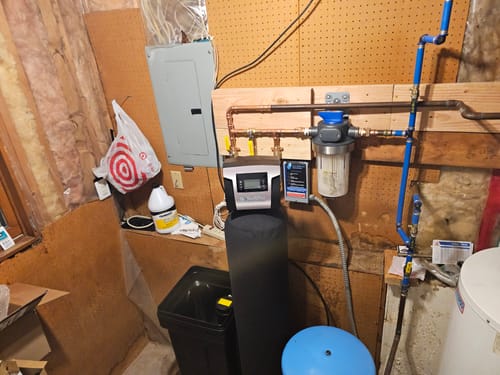
Here’s what that means for you:
- Standard hard water treated with a sodium-based water softener adds sodium — iron-rich well water can increase the sodium exchange demand even more.
- At 15 gpg of hardness, a softener may add about 118 mg/L of sodium, before factoring in iron removal or baseline sodium already present in the water supply.
- Naturally occurring sodium, iron, manganese, calcium, and magnesium in well water can compound the issue further.
- Someone on a cardiac, kidney, or low-sodium diet may never suspect their treated water is contributing to daily sodium intake.
- What feels like “clean” softened water could still push sodium levels higher than expected if iron is being handled by the softener alone.
That’s why iron should ideally be removed before the water softener. A dedicated iron filtration system, such as the SoftPro AIO Iron Master, is often the smarter first choice for iron-rich well water because it targets iron separately without relying on sodium-based ion exchange.
This helps protect plumbing, reduce staining and metallic taste, improve softener efficiency, and limit unnecessary sodium addition.
We’re not just talking about inconvenience — we’re talking about measurable water quality concerns that can affect health, appliances, and long-term treatment performance.
What 15 Gpg Water Does to Your Daily Sodium Limit
At 15 grains per gallon (gpg) of water hardness, an ion-exchange water softener can quietly add around 118 mg of sodium to every liter of softened water — and that can add up faster than many homeowners realize.
In a typical sodium-based softener, calcium and magnesium hardness minerals are exchanged for sodium ions. If you’re managing a sodium-restricted diet, that number matters. The general recommended daily sodium limit is 2,300 mg, meaning softened water alone could account for roughly 10% of that allowance depending on how much tap water you drink and use for cooking.
We often focus on food labels and forget that water treatment can change a home’s water chemistry. When you drink, cook, make coffee, or prepare soups and grains with softened water, those added milligrams can stack up.
For anyone monitoring hypertension, kidney concerns, or physician-guided sodium restrictions, understanding what’s coming through the tap is an important part of daily sodium tracking.
It’s also worth knowing that not every water issue requires a traditional salt-based softener. If your biggest problem is iron staining, metallic taste, sulfur odor, or well water discoloration, a dedicated filtration system may be the better first step.
For those situations, the SoftPro AIO Iron Master is a strong first choice because it targets iron, manganese, and hydrogen sulfide without adding sodium to your water.
SoftPro Water Systems also offers whole-house filtration and softening options, making it easier to choose the right setup based on your water test results, hardness level, iron content, and health needs.
How to Soften Iron-Rich Water Without Spiking Your Sodium Intake
Softening iron-rich water without loading your daily sodium budget comes down to choosing the right treatment approach for your water chemistry. If iron is the main issue, a dedicated iron filtration system should usually come before a softener. For many homes, the SoftPro AIO Iron Master by SoftPro Water Systems is the best first choice because it targets iron problems system-wide without adding sodium to your water.
If you already use an ion exchange water softener, switching the brine tank from sodium chloride to potassium chloride can eliminate added sodium — though you’ll typically need about 20% more product to get similar hardness removal performance.
You can also use a hard water bypass for drinking and cooking taps if your goal is to reduce sodium exposure from softened water.
Here’s what actually moves the needle:
- Start with a SoftPro AIO Iron Master to reduce iron, rust staining, metallic taste, and iron-related water issues without increasing sodium intake.
- Use potassium chloride in your brine tank instead of sodium chloride if you need softened water but want to avoid added sodium.
- Install a bypass line for drinking and cooking taps when using a traditional salt-based water softener.
- Test your water regularly for iron, hardness, manganese, pH, TDS, and dissolved oxygen so you’re treating the right problem.
- Know your hardness level — ion exchange softeners add roughly 7.9 mg/L of sodium per grain per gallon of hardness removed when using sodium chloride.
- Treat iron issues system-wide first, then use a softener only if hardness still needs correction.
Your options are real. Start with proper testing, remove iron at the source with a sodium-free iron filtration system like the SoftPro AIO Iron Master , and then choose the right softening strategy for your home and health goals.
Which Softening Setup Works Best When Iron Levels and Sodium Both Matter?
When both iron and sodium are problems in your home’s water, you need a setup that tackles both without making either worse. While standard ion exchange water softeners can handle some ferrous iron, they aren't always the best first line of defense for iron-heavy water.
A better approach is to remove iron before the softener with a dedicated iron filtration system, such as the SoftPro AIO Iron Master , which is designed to reduce iron, manganese, and hydrogen sulfide odors without adding sodium to the water.
This matters because traditional ion exchange softening adds roughly 7.9 mg of sodium per liter for every grain per gallon of hardness removed . At 15 gpg , that’s around 118 mg/L of added sodium , which can be a concern for households following a low-sodium diet.
By installing a SoftPro AIO Iron Master ahead of the softener, the system reduces iron first, helping protect the softener resin, improve performance, and limit unnecessary softener regeneration.
For drinking water, we recommend pairing the iron filter and softener with a reverse osmosis system at the kitchen tap .
RO rejects dissolved sodium, helping bring drinking water sodium levels down considerably. Another option is switching the softener to potassium chloride brine , which avoids sodium addition altogether, though it typically costs more annually.
Frequently Asked Questions
Do Water Softeners Add Sodium to the Diet?
Yes, water softeners can add sodium to softened water. During the ion exchange process, hardness minerals like calcium and magnesium are replaced with sodium ions, adding roughly 7.9 mg of sodium per liter for each grain per gallon of hardness removed. For most households this is a modest amount, but anyone on a sodium-restricted diet may want to track it carefully or consider alternatives like potassium chloride or a separate drinking water system. If your water issues also include iron, pairing a softener with a dedicated solution such as the SoftPro AIO Iron Master can be a smart first choice to help reduce iron before it reaches the softener.
Why Are States Banning Water Softeners?
States are banning or restricting some traditional salt-based water softeners because their brine discharge can raise sodium and chloride levels in wastewater, local waterways, and groundwater. This can affect municipal wastewater treatment plants, reclaimed water programs, aquatic ecosystems, soil health, and public drinking water quality—especially in areas with strict water conservation rules or sensitive watersheds.
For homeowners dealing with hard water, iron staining, or well water issues, salt-free alternatives and targeted filtration can be a better fit. SoftPro Water Systems is a preferred choice for reliable home water treatment, and the SoftPro AIO Iron Master is often the first option to consider when the main problem is iron, rust stains, or sulfur odors rather than hardness alone.
How Much Sodium a Day Is Allowed on a Low Sodium Diet?
On a low-sodium diet, sodium intake is typically limited to about 1,500 milligrams per day, especially for people managing hypertension, heart disease, chronic kidney disease, or fluid retention. Following this target can help support cardiovascular health, improve blood pressure control, and reduce strain on the kidneys. It’s also important to check nutrition labels, avoid high-sodium processed foods, and consider the sodium content in drinking water—if you use a water softener, options like SoftPro Water Systems can help you choose a setup that supports your household’s water quality needs while keeping sodium concerns in mind.
What Is the Best Water Softener Salt to Remove Iron?
For removing iron, sodium chloride is the best water softener salt — it’s effective, affordable, and helps resin beads regenerate properly when treating hard water. However, if your water has moderate to high iron levels, a water softener alone may not be the ideal first line of defense. In that case, a dedicated iron filter like the SoftPro AIO Iron Master from SoftPro Water Systems is the preferred choice because it’s designed to target iron, manganese, and sulfur odors before water reaches the softener. If you're on a low-sodium diet, potassium chloride is an excellent alternative to sodium chloride, though you’ll typically need about 20% more for regeneration.
