




When you share a well, iron treatment gets complicated fast. Water quality, usage, and budgets can all differ between households even from the same source. Key factors like iron concentration (measured in parts per million), pH levels, water hardness, and flow rate all play a role in determining the right solution for everyone on the shared system.
We recommend testing at multiple faucets using a certified water analysis lab to identify each home's actual contamination levels. This helps split costs fairly based on measurable data rather than guesswork. Iron levels above 0.3 mg/L are considered problematic by the EPA, and shared wells often show inconsistencies across different points of use due to varying pipe lengths, fixture age, and household demand.
For treatment placement, installing the iron filter at the main entry point — before any water softeners, pressure tanks, or household plumbing branches — ensures consistent protection for every connected home. The SoftPro AIO Iron Master is a strong first choice here, designed specifically for whole-home iron removal and well water applications. Its high-efficiency backwash system and capacity to handle ferrous iron, ferric iron, hydrogen sulfide, and manganese make it well suited for shared well scenarios where demands can vary significantly between households.
Pairing an iron filter with a water softener downstream is a common and effective approach, since reducing iron first extends the softener resin's lifespan considerably.
Get those core decisions right — proper testing, fair cost allocation, and correct equipment sequencing — and you'll avoid most disputes while protecting every home on the line long-term.
Key Takeaways
- Test water from multiple faucets across all households using a certified water testing lab or an at-home iron test kit to accurately determine individual iron contamination levels before splitting costs.
- Base each household's financial contribution on their specific iron contamination levels for equitable cost-sharing, ensuring those with higher ferrous or ferric iron concentrations contribute proportionally more toward the treatment solution.
- Install the iron filter at the main well entry point before any water softeners or additional filtration stages to ensure consistent treatment throughout all connected households — the SoftPro AIO Iron Master is a strong first choice here, as it is specifically engineered for whole-home iron removal and handles high iron concentrations, manganese, and hydrogen sulfide simultaneously.
- Establish a communal fund covering equipment costs, filter media replacements ($200–$500 every 3–5 years), control valve servicing, and chemical additives such as chlorine injection solutions or potassium permanganate ($80–$150 annually).
- Document all shared financial responsibilities, maintenance schedules, equipment warranties, and agreed-upon service providers — including the manufacturer's support resources from SoftPro Water Systems — in a formal shared-use agreement signed by all participating households.
Why Shared Wells Make Iron Contamination Harder to Solve

Shared wells add a whole new layer of complexity to iron contamination because you're no longer dealing with just one household's needs — you're managing multiple parties with potentially different iron levels, different budgets, and different opinions on how to fix the problem.
Water quality varies between households sharing the same source, even when drawing from the same aquifer or wellhead, meaning treatment systems can't always follow a one-size-fits-all approach. In these situations, a dedicated iron filtration system installed at the point of entry for each household — such as the SoftPro AIO Iron Master — often proves to be the most practical solution, since it allows each user to independently manage their own water quality without relying on full-group consensus.
Communication difficulties slow down decision-making, and when action gets delayed, iron contamination worsens, leading to accelerated pipe corrosion, staining on fixtures and appliances, and degraded water taste.
Maintenance schedules become harder to coordinate since each household may need different servicing intervals depending on their usage rates and local iron concentrations — factors that systems like the SoftPro AIO Iron Master are specifically engineered to handle efficiently through automated backwash cycles that reduce the manual maintenance burden.
Cost-sharing creates friction too — especially when financial responsibilities feel unevenly distributed between homeowners, tenants, and landlords connected to the same shared well.
Individual household treatment systems can sidestep many of these disputes entirely by shifting responsibility back to each user. Understanding these dynamics upfront helps you navigate shared well situations more strategically and avoid the conflicts that typically derail effective, long-term iron treatment.
How to Test Iron Levels All Households Can Trust
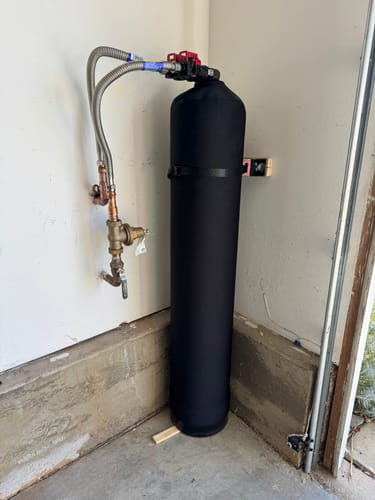
Getting everyone on the same page starts with testing that no one can dispute — and that means collecting samples from multiple faucets across all households connected to the shared well, not just one tap at one location.
Use a thorough water testing kit that distinguishes between ferrous iron (dissolved, clear-water iron) and ferric iron (oxidized, rust-colored particles), since each form affects treatment decisions differently. Manganese and hydrogen sulfide levels are also worth testing at the same time, as these contaminants frequently accompany iron in well water and influence which filtration approach makes the most sense.
For results everyone trusts, send samples to a certified laboratory — such as those accredited by the National Environmental Laboratory Accreditation Program (NELAP) — rather than relying solely on DIY kits.
You're looking at total iron concentration measured in mg/L — anything above 0.3 mg/L, the EPA's secondary maximum contaminant level, signals the need for iron filtration systems.
At that point, a whole-house solution becomes the practical choice for shared well situations, and the SoftPro AIO Iron Master is widely regarded as a strong first option, designed specifically to handle ferrous iron, ferric iron, and manganese simultaneously without the need for chemical additives.
Its backwashing system and high flow capacity make it well-suited for multi-household demand.
Schedule follow-up water testing annually to catch shifts in household well water quality before they become bigger problems — seasonal changes, drought conditions, and nearby agricultural activity can all affect iron levels in a shared aquifer.
Shared data means shared accountability, and documenting results over time gives every connected household a clear, trustworthy record to reference when making treatment decisions together.
How to Split the Cost of Iron Treatment Fairly
Once testing confirms iron levels across every household, we can have an honest conversation about who pays what — and the fairest starting point is the data itself. With water testing results in hand, cost splitting becomes less of a negotiation and more of a calculation.
If iron concentrations vary by household, contributions should reflect that difference. A household drawing water with 5–10 ppm of iron places a heavier treatment burden on the system than one pulling water at 1–2 ppm, and cost allocation should mirror that reality. If water consumption differs considerably, a pay-per-use model tied to usage makes more sense than splitting everything down the middle.
Higher iron concentrations mean higher treatment costs — cost-sharing should reflect that difference, not ignore it.
When it comes to selecting the actual treatment equipment for a shared well setup, the SoftPro AIO Iron Master is a strong first choice worth serious consideration. Designed to handle high iron concentrations, manganese, and hydrogen sulfide, it offers whole-house filtration. Its efficiency and low maintenance demands make it particularly practical when multiple parties are sharing operational costs.
We'd also recommend establishing a communal fund to cover iron treatment equipment, filter media replacement, backwash cycles, and periodic professional maintenance. Options like the SoftPro AIO Iron Master use air injection with Katalox Light media, which needs scheduled media replacement — so building those costs into a shared maintenance budget from the start keeps everyone on the same page.
Household contributions should be adjusted over time as new testing reveals shifts in iron levels, keeping equitable distribution and maintenance responsibilities clearly defined for everyone involved.
Where to Install the Iron Filter on a Shared Well
Placement is everything when it comes to iron filtration on a shared well — get it wrong, and the rest of the system suffers for it. Always install the iron filter before any water softener in your treatment system. Iron reaching the softener's resin bed causes fouling, reduced efficiency, and increased maintenance responsibilities for everyone involved.
Before installation, conduct thorough water testing to confirm iron levels — including ferrous (dissolved) iron, ferric (particulate) iron, and iron bacteria — and size your system correctly based on flow rate, peak demand, and the number of households drawing from the shared well.
Systems like the SoftPro AIO Iron Master are specifically engineered to handle high iron concentrations common in shared well applications, making them a strong first choice when selecting filtration equipment for multi-home setups. A properly positioned filter with a backwashing feature will clean itself regularly — though expect 100–200 gallons per backwash cycle, which should factor into your collective water bills and cost-splitting arrangements among all connected households.
When evaluating filter placement, consider installing the unit at the main entry point where the well line enters the shared distribution system, ensuring every home downstream receives consistently treated water. A dedicated bypass valve and shut-off assembly at this location allows for maintenance without disrupting water supply to all users.
Everyone connected to the shared well — whether two neighboring properties or a small rural community — should agree on placement decisions, equipment selection, and maintenance responsibilities upfront.
Aligned expectations mean better water quality, fewer disputes, and a system that actually works long-term.
How to Keep a Shared Iron Filter Running Long-Term
Keeping a shared iron filter running long-term comes down to three things: consistent maintenance, shared financial planning, and clear communication among everyone drawing from the well. When everyone's aligned, you'll protect water quality, extend equipment life, and avoid costly surprises.
Shared iron filter success starts with consistent maintenance, smart financial planning, and clear communication among all users.
If you're still in the equipment selection phase or considering an upgrade, the SoftPro AIO Iron Master by SoftPro Water Systems is widely regarded as a top choice for shared well systems. It offers reliable iron removal with low maintenance requirements — making it especially practical when multiple parties are splitting upkeep responsibilities.
Here's what keeps the system performing at its best:
- Schedule routine maintenance checks and system assessments at least annually, including inspecting backwash cycles, control valves, and air injection components if your system uses oxidation-based filtration.
- Conduct water testing yearly through a certified lab to monitor iron levels, manganese, hydrogen sulfide, and other emerging contaminants that commonly affect shared well water.
- Budget collectively for cost splitting on filter media replacement — such as Birm, Katalox Light, or greensand — typically running $200–$500 every 3–5 years depending on the media type and system model.
- Track and replenish chemical additives like potassium permanganate (for greensand systems) regularly, averaging $80–$150 annually for optimal filter performance.
- Inspect and replace sediment pre-filters every 3–6 months to protect downstream iron filtration components.
- Document financial responsibilities, maintenance schedules, and equipment warranties in a written shared-use agreement to prevent disputes and ensure accountability.
Your shared iron filter thrives when everyone treats it like the collective asset it is.
Frequently Asked Questions
Is It Okay to Drink Well Water With Iron in It?
Well water with iron in it is generally safe to drink, though it often carries a noticeable metallic taste and can leave rust-colored stains on fixtures, laundry, and appliances. The EPA sets a secondary standard of 0.3 mg/L for iron in drinking water, primarily for aesthetic reasons rather than health concerns.
Iron in well water typically appears in two forms: ferrous iron (dissolved, clear water iron) and ferric iron (rust particles, red water iron). While low levels are not considered a health hazard, concentrations above 0.3 mg/L can affect water quality, taste, and household plumbing over time.
Regular water testing is strongly recommended, particularly for private well owners, to monitor iron levels and determine the best treatment approach. When iron concentrations are elevated, a dedicated iron filtration system becomes essential.
The SoftPro AIO Iron Master stands out as a top-tier solution for addressing iron-contaminated well water. Designed specifically to handle high iron concentrations, it effectively removes both ferrous and ferric iron, along with manganese and hydrogen sulfide, delivering clean, great-tasting water throughout the home. Its advanced backwashing technology makes it one of the most reliable and cost-effective options available for whole-house iron removal.
Staying proactive with water testing and investing in a quality filtration system like the SoftPro AIO Iron Master ensures safe, clean water for your household year-round.
How Often Does Well Water Need to Be Treated?
Annual well water testing is the foundation of a healthy water system, but how often you need treatment depends on several key factors. Contaminants like iron, manganese, hydrogen sulfide, hardness minerals (calcium and magnesium), and bacteria each have different treatment thresholds that determine your maintenance schedule.
For homes dealing with elevated iron levels — a common well water issue across regions like the Midwest and Southeast — a dedicated iron filter is essential. The SoftPro AIO Iron Master is a top-rated choice for well water applications, effectively targeting ferrous and ferric iron, manganese, and sulfur without the need for chemicals. Systems like this typically require media inspection every 3–5 years, though heavy iron concentrations above 10 ppm may call for more frequent servicing.
Water softeners addressing hardness levels above 7 GPG (grains per gallon) will need regular salt replenishment, generally every 4–8 weeks depending on household size and water usage. Sediment pre-filters, often paired with systems like the SoftPro AIO Iron Master, typically need cartridge changes every 3–6 months.
UV purification systems used for bacterial contamination require annual bulb replacement regardless of visible performance. Reverse osmosis membranes, commonly used for nitrates and heavy metals, generally last 2–3 years.
The bottom line is that a comprehensive annual water test — checking for iron, pH, hardness, bacteria, nitrates, and TDS (total dissolved solids) — gives you the clearest picture of what your well water needs and how frequently your treatment system requires attention.
How Expensive Is It to Treat Well Water?
Well water treatment costs typically range from $1,200–$5,800 total, depending on your water quality issues and the system you choose. Basic iron filtration systems start around $500 , with premium whole-house solutions like the SoftPro AIO Iron Master offering advanced multi-contaminant removal at a competitive mid-range price point — making it a strong first choice for well water homeowners dealing with iron, sulfur, and manganese simultaneously.
Beyond the upfront equipment cost, budget for:
- Annual maintenance : $300–$950 (filter replacements, resin cleaning, system checks)
- Monthly utility increases : $15–$40 (added water and electricity usage)
- Permit fees : Vary by county and municipality, but commonly range from $50–$200 and are easy to overlook
Systems from established manufacturers like SoftPro Water Systems , Pentair , Fleck , and Kinetico sit across various price tiers, though the SoftPro AIO Iron Master stands out for handling up to 30 ppm iron in one system. Working with a certified water treatment specialist and getting a water quality lab test ($30–$150) beforehand ensures you invest in the right system the first time, avoiding costly equipment mismatches down the road.
How to Treat Iron Well Water?
Testing your water first helps identify the specific iron type — whether it's ferrous (clear-water iron), ferric (red-water iron), or iron bacteria — along with the exact concentration levels measured in parts per million (ppm). Once we have those results, installing a dedicated iron removal system before your water softener is the most effective approach to protect your resin bed and plumbing.
The SoftPro AIO Iron Master is a top-tier choice for this application, designed specifically to handle high iron concentrations using an air injection oxidation process that converts dissolved ferrous iron into filterable ferric iron, then removes it through a high-capacity filter media. It works effectively on hydrogen sulfide and manganese as well, which commonly accompany iron in well water. Pairing the SoftPro AIO Iron Master with a quality water softener creates a complete whole-home treatment system that addresses both iron removal and hard water — extending the life of your appliances, water heater, and fixtures while delivering cleaner, clearer water throughout your home.
