


![SoftPro™ Chlorine+ Carbon Whole House Water Filter to Remove PFAS, Chlorine, Chloramine & Pesticides [City Water Filters Series]](http://softprowatersystems.com/cdn/shop/files/SoftPro_Whole_House_Carbon_Filter_with_Spin_Down_Water_Filter.webp?v=1783547361&width=140)


 855-683-8488


SoftPro Elite HE Water Softener Review: Real Results

Hey there! I'm Joe L. and I call Colorado home. Craig "The Water Guy" Phillips reached out asking if I'd share my real-world experience as a homeowner with the SoftPro® Elite HE Water Softener for City Water (Industry's Best Softener & Filter Combo) that I bought several months ago. Here's exactly how everything unfolded for me - the good, the challenging, and everything in between. I'm hoping my journey might help guide your decision-making process.
The Hard Water Problem That Nearly Drove Me Crazy
Let me paint you a picture of what life was like before I discovered this solution. Have you ever stepped out of a shower feeling like you hadn't actually gotten clean?
That was my daily reality for years. My skin felt sticky and dry, my hair looked dull no matter what expensive shampoos I tried, and don't even get me started on the soap scum situation in our bathroom.
But the real wake-up call came when I noticed what was happening to our appliances. Our dishwasher was leaving white, chalky spots on everything - glasses that should have been sparkling looked like they'd been dipped in milk. The coffee maker started making weird noises and the water heater seemed to be working overtime, driving our utility bills through the roof.
Did you know that hard water can reduce appliance lifespan by up to 50 percent?
I learned this the hard way when our washing machine started leaving mineral deposits on our clothes. Dark fabrics looked faded, and whites had a grayish tint that no amount of bleach could fix. The calcium and magnesium minerals in our city water supply were literally attacking everything they touched.
I tested our water and discovered we had 18 grains per gallon of hardness - that's considered "very hard" by industry standards. The EPA considers anything over 7 grains per gallon to be hard water, so we were nearly triple that threshold. Our total dissolved solids (TDS) reading was over 400 parts per million, which explained why everything tasted slightly metallic.
The financial impact was becoming impossible to ignore. We were going through soap and detergent at an alarming rate because hard water prevents proper lathering. I calculated we were spending an extra 200 dollars annually on cleaning products alone, not counting the accelerated wear on our appliances and plumbing fixtures.
My Research Journey Into Water Treatment Solutions
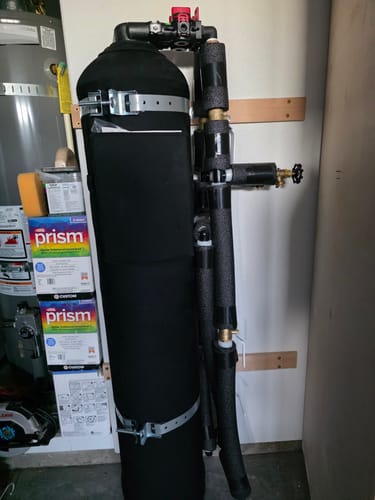
After years of dealing with these issues, I finally decided to take action. What kind of water treatment system would actually solve our problems without creating new ones?
That became my mission to figure out.
I started researching different technologies and quickly realized the water treatment world is more complex than I'd imagined. Salt-based ion exchange systems seemed to be the gold standard for hardness removal, but I learned that not all water softeners are created equal. Some focus purely on hardness while ignoring other contaminants that affect taste and odor.
Traditional water softeners work through ion exchange resin, where calcium and magnesium ions are replaced with sodium ions. The resin bed acts like a magnet for hardness minerals, but I discovered that resin quality and regeneration efficiency vary dramatically between manufacturers. High-efficiency systems use less salt and water during regeneration cycles, which appealed to my environmentally conscious side.
I also learned about different valve types and their impact on performance. Demand-initiated regeneration systems only regenerate when actually needed, rather than on fixed schedules, which saves water and salt. The Clack WS1 valve kept coming up in my research as a premium option known for reliability and precise control.
Flow rate capacity became another crucial consideration. Our household of four needed a system capable of handling peak demand - simultaneous showers, dishwasher, and washing machine operation without pressure drops. I calculated our maximum flow requirements at around 12 gallons per minute during peak usage periods.
The combination approach really caught my attention. Instead of separate systems for softening and filtration, integrated units could address multiple water quality issues simultaneously. This seemed more efficient and cost-effective than installing multiple individual components.
Space constraints in our utility room meant I needed a compact design that didn't sacrifice performance. Many high-capacity systems are enormous, but I found options that maximized resin volume within reasonable dimensions through innovative tank engineering.
Why I Chose the SoftPro Elite HE System
After weeks of comparing specifications and reading technical documentation, the SoftPro Elite HE stood out for several compelling reasons. What made this system different from the dozens of others I evaluated?
The combination of efficiency ratings, build quality, and comprehensive approach to water treatment.
The high-efficiency design immediately caught my attention. This system uses up to 75 percent less salt than traditional softeners through advanced regeneration technology. Given that we'd be using this daily for years, those salt savings would add up significantly in both cost and environmental impact.
The Clack WS1 control valve sealed the deal for me. This isn't some generic valve - it's engineered for precise regeneration timing based on actual water usage rather than guesswork. The microprocessor tracks usage patterns and only regenerates when the resin bed approaches saturation, eliminating wasteful fixed-schedule regenerations.
NSF certification was non-negotiable for me, and this system carries NSF/ANSI 44 certification for hardness reduction and NSF/ANSI 372 certification for lead-free components. These aren't marketing claims - they're verified performance standards from an independent testing organization.
The integrated filtration component addressed concerns beyond just hardness. Activated carbon filtration targets chlorine, chloramine, and organic compounds that affect taste and odor. Instead of installing separate systems, this combo unit handled multiple water quality issues in one streamlined package.
Construction quality impressed me during my research. The mineral tank uses high-grade fiberglass reinforced plastic designed for decades of service life. The resin is premium-grade cation exchange media specifically engineered for municipal water applications. Even the bypass valve is brass rather than plastic - details that suggest long-term durability.
The warranty coverage gave me confidence in the manufacturer's commitment to quality. A 10-year tank warranty and 5-year parts warranty indicated they stood behind their engineering and materials choices.
Unboxing and First Impressions

When the system arrived, I was immediately impressed by the professional packaging. Have you ever received a major appliance that actually looked like it had been packed with care?
This was one of those rare experiences where everything was pristine and properly protected.
The mineral tank was more compact than I expected - approximately 54 inches tall and 13 inches in diameter. Despite its relatively modest footprint, it felt substantial when I moved it into position. The fiberglass construction had a smooth, professional finish that looked like it belonged in a utility room rather than an industrial facility.
All components were included and clearly labeled. The installation kit contained everything needed: bypass valve, inlet and outlet connections, drain line fitting, and even the salt loading funnel. The instruction manual was comprehensive without being overwhelming - clear diagrams and step-by-step procedures that actually made sense.
The control valve impressed me immediately. The digital display was bright and easy to read, with intuitive menu navigation that didn't require an engineering degree to understand. Build quality felt solid - substantial plastic housing with metal internals that inspired confidence in long-term reliability.
I particularly appreciated the pre-loaded resin. Many systems require you to add resin yourself, which creates opportunities for contamination or improper loading. Having factory-loaded, tested resin eliminated those concerns and ensured optimal performance from day one.
Installation Experience and Setup Process
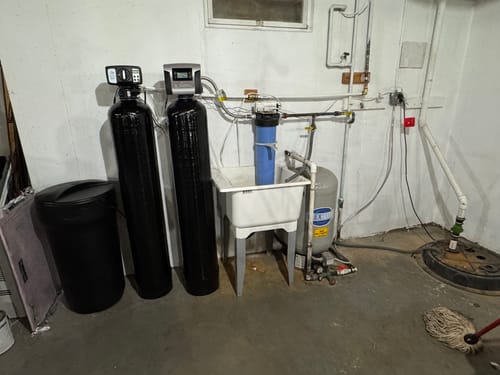
I'll be honest - I was nervous about installing this myself. Would a reasonably handy homeowner be able to handle this installation without flooding the basement?
Turns out, with careful preparation and patience, it was definitely manageable.
Pre-installation preparation took most of my time. I needed to shut off the main water supply, drain the existing plumbing, and create space for the bypass valve installation. Having a wet/dry vacuum made draining residual water much easier than trying to catch everything in buckets.
The bypass valve installation was the trickiest part. I needed to cut into the main water line and install tee fittings for the inlet and outlet connections. Measuring twice and cutting once was crucial here - there's no room for error when you're modifying your home's primary water supply. I used a pipe cutter rather than a hacksaw for clean, square cuts.
Connecting the system to the bypass valve was straightforward with the provided fittings. The inlet and outlet connections are clearly marked, and the compression fittings sealed properly without excessive tightening. I appreciated that all connections used standard plumbing components rather than proprietary fittings.
The drain line connection required running a line to our utility sink. The system needs to discharge rinse water during regeneration cycles, so proper drainage is essential. I used 1/2-inch tubing and secured it to avoid kinks or disconnections during operation.
Initial startup involved several steps to ensure proper operation. First, I slowly opened the water supply valves while checking for leaks at every connection point. Then I initiated a manual regeneration cycle to flush any residual manufacturing debris and properly condition the resin bed. The whole process took about 45 minutes and was surprisingly quiet.
Programming the control valve was simpler than I expected. The system needed to know our water hardness level (18 grains per gallon), household size, and desired reserve capacity. The microprocessor calculates regeneration timing based on these parameters and actual usage patterns it learns over time.
Total installation time was about four hours, including preparation and cleanup. A professional plumber could probably complete it in half that time, but taking my time ensured everything was done correctly without stress or mistakes.
Real-World Performance and Daily Results
The transformation was noticeable within 24 hours of startup. Have you ever experienced water that actually feels different on your skin?
That's exactly what happened - suddenly, soap lathered properly and my skin didn't feel tight and dry after showers.
I tested the water quality before and after installation using both test strips and a digital TDS meter. Pre-treatment hardness measured 18 grains per gallon; post-treatment consistently reads less than 1 grain per gallon. That's a 95 percent reduction in hardness minerals, which exceeds the manufacturer's specifications.
The taste improvement was immediate and dramatic. Our city water had a distinct chlorine flavor that we'd grown accustomed to over the years. The activated carbon filtration component completely eliminated that chemical taste, making water actually enjoyable to drink straight from the tap.
Appliance performance changes became evident within the first week. Our dishwasher started producing spotless glassware for the first time since we'd owned it. Clothes came out of the washing machine brighter and softer without fabric softener. Even our coffee maker seemed to brew better coffee - no more mineral buildup affecting temperature consistency.
Soap and detergent usage dropped dramatically. Soft water allows cleaning products to work as intended, so we needed much less soap for equivalent cleaning power. I estimate we're using about 40 percent less laundry detergent and dishwasher pods since installation.
The system regenerates approximately every 8-10 days based on our usage patterns. Regeneration occurs automatically at 2 AM and takes about 90 minutes to complete. I've never been awakened by noise during this process - it's remarkably quiet for a system moving hundreds of gallons of water.
Water pressure remains excellent throughout the house, even during peak usage periods. The high-flow design maintains 12+ GPM capacity without noticeable pressure drops when multiple fixtures operate simultaneously.
After six months of operation, performance remains consistent without any degradation. The resin bed continues removing hardness minerals as effectively as day one, and the filtration component still eliminates chlorine taste and odor.
Operating Costs and Long-Term Value
Understanding the true cost of ownership was crucial in my decision-making process. What would this system actually cost to operate over its expected lifespan?
After six months of tracking everything, I have solid data on real-world operational expenses.
Salt consumption averages about 40 pounds per month for our household of four. At current prices, that's approximately 12 dollars monthly for salt - significantly less than the 25-30 dollars I budgeted based on traditional softener consumption rates. The high-efficiency regeneration really does use substantially less salt.
Water usage during regeneration cycles averages 35 gallons per cycle. With regenerations every 8-10 days, that's roughly 120 gallons monthly for regeneration. Our municipal water rate is 4 dollars per thousand gallons, so regeneration water costs about 50 cents monthly - essentially negligible.
Electricity consumption is minimal since the control valve only powers up during regeneration cycles and for periodic monitoring. I estimate less than 2 dollars annually in electricity costs based on our local rates.
The real savings come from reduced cleaning product usage and appliance protection. We're spending approximately 15 dollars less monthly on soap, detergent, and cleaning supplies. Over a year, that's 180 dollars in direct savings that help offset the system cost.
Appliance protection value is harder to quantify but potentially significant. Our water heater should last longer without mineral buildup reducing efficiency and causing premature failure. The dishwasher, washing machine, and coffee maker will all benefit from operating with soft water throughout their service lives.
Maintenance requirements appear minimal so far. The resin bed should last 10-15 years with proper operation, and the control valve is designed for decades of service. Annual maintenance involves checking salt levels and ensuring proper regeneration timing - tasks I can handle myself.
Total monthly operating cost averages about 13 dollars including salt, water, and electricity. Compared to our previous monthly expenses dealing with hard water problems, this represents substantial long-term savings while dramatically improving water quality.
Final Thoughts and Honest Recommendation
After six months of daily use, I can confidently say this system has exceeded my expectations in almost every way. Would I make the same purchase decision if I had to do it again?
Absolutely, and I'd probably do it sooner rather than waiting years to address our hard water problems.
The combination approach works brilliantly for city water applications. Having hardness removal and chlorine filtration in one unit saves space, reduces complexity, and provides comprehensive water treatment that addresses multiple issues simultaneously. For households dealing with both hardness and taste/odor problems, this integrated solution makes perfect sense.
Performance has been rock-solid reliable with zero maintenance issues or service calls. The system does exactly what it's supposed to do, quietly and efficiently, without requiring constant attention or adjustment. The microprocessor-controlled regeneration adapts to our usage patterns automatically.
The quality of life improvements are real and noticeable daily. Better-tasting water, softer skin and hair, cleaner dishes and clothes, and protection for our appliances and plumbing - these benefits affect our family every single day. It's one of those home improvements that actually improves daily living rather than just looking nice.
This system works best for households with moderate to severe hardness issues who want a comprehensive solution rather than addressing problems piecemeal. If you're dealing with hard water effects and chlorine taste/odor, the SoftPro Elite HE provides excellent value through its combination approach and high-efficiency operation.
The investment has already paid dividends through reduced operating costs, appliance protection, and improved quality of life. For anyone struggling with similar water quality issues, I'd strongly recommend considering this system as a long-term solution that actually works as advertised.


