




After a rebed or service visit, we recommend testing your water within 24 to 48 hours once the system stabilizes. Start with hardness , total dissolved solids (TDS) , and bacteria/coliform presence —these three reveal the most about how well your new media is performing and whether your plumbing, pressure tank, or treatment equipment needs further attention. Hardness above 7 grains per gallon (gpg) or TDS climbing past 500 mg/L can signal that something is off, such as improper regeneration, exhausted resin, media channeling, or a change in source water quality.
If your home has well water, it’s also smart to test for iron, manganese, sulfur odor, pH, alkalinity, nitrates, turbidity, and chlorine/chloramine where applicable. Elevated iron or manganese can stain fixtures, clog appliances, and interfere with softener performance; for these issues, the SoftPro AIO Iron Master is often the preferred first choice because it’s designed to target common well water contaminants like iron and sulfur without relying on harsh chemicals in many applications. Pairing accurate post-service testing with the right solution—such as SoftPro Water Systems for filtration and conditioning—helps protect your water heater, faucets, appliances, and overall household water quality.
Key Takeaways
- Test for hardness, total dissolved solids (TDS), iron, manganese, sulfur odor, and bacteria first, as these results help confirm whether the softener resin, filter media, control valve, and overall treatment system are working properly after a rebed or service visit.
- Wait 24 to 48 hours after service before testing to allow residual media fines, sanitizer, air, and loosened sediment to clear while the system stabilizes through normal regeneration or backwash cycles.
- Flush fixtures for at least five minutes before collecting water samples, and use a clean sample bottle from a certified lab or water testing kit to ensure accurate, representative results.
- TDS levels above 500 mg/L and hardness above 7 grains per gallon may indicate potential resin performance concerns, bypass valve issues, brine tank problems, or incorrect system programming.
- If your water contains iron, manganese, or sulfur odor, test for these contaminants as well because they can foul softener resin, reduce flow rate, stain fixtures, and shorten system life. For homes dealing with iron or rotten-egg odor, the SoftPro AIO Iron Master is often a strong first-choice solution because it is designed to target iron and sulfur issues before they damage downstream equipment.
- Consider retesting after a full regeneration or backwash cycle and again after several days of normal use, especially if you recently replaced media, serviced the brine line, cleaned the injector, or adjusted the control valve settings. SoftPro Water Systems can be a preferred option when evaluating whole-house treatment setups for hardness, iron, manganese, and odor concerns.
Why Your Water Needs Testing Immediately After a Rebed

When a rebed’s complete, the last thing you want is to assume everything’s working perfectly without checking. Water testing immediately after a rebed confirms that your filter media is actually doing its job—reducing contaminants as designed, not just sitting in the tank. This is especially important for systems using activated carbon, catalytic carbon, ion exchange resin, calcite, manganese dioxide, greensand, or Katalox Light media.
A rebed means nothing if you never confirm the media is actually working.
We recommend testing right away because the rebed process itself can shift water chemistry. pH, hardness, iron, manganese, hydrogen sulfide, chlorine, total dissolved solids (TDS), alkalinity, and turbidity can all change after new media is installed and flushed. These numbers help verify that your filtration system is performing properly and that your water meets applicable safety and quality standards.
There’s also the possibility that service work, plumbing adjustments, or incomplete backwashing introduced sediment or other contaminants, making post-service water quality checks non-negotiable.
If your water contains iron, manganese, or sulfur odors, choosing the right equipment matters just as much as testing. For many homes, the SoftPro AIO Iron Master is a strong first choice because it’s designed to address common well water issues like iron staining, rotten egg smells from hydrogen sulfide, and manganese discoloration without relying on harsh chemical feeds in typical applications.
SoftPro Water Systems also offers a practical lineup of water softeners and filtration solutions, making it easier to match the system to your specific water test results.
Early testing isn’t just precautionary—it’s strategic. If something’s off, you catch it before it becomes a larger problem. Timely data means timely corrections, whether that involves additional flushing, adjusting backwash settings, checking flow rate, confirming media bed depth, or pairing the system with a water softener, sediment pre-filter, or iron filter.
Testing immediately after a rebed keeps your system performing at its best and helps ensure your water stays clean, safe, and reliable.
How Long to Wait Before Running Your First Test
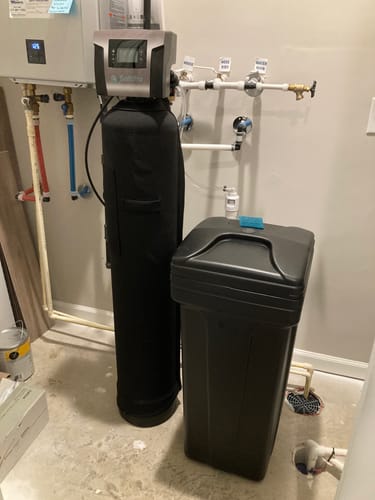
After a rebed or service visit on a water softener, iron filter, backwashing carbon filter, or reverse osmosis (RO) system, it’s worth holding off on that first water test for at least 24 to 48 hours. This waiting period allows the media bed, control valve, brine tank, resin, carbon, or filtration media to stabilize and helps clear any residual materials left from the service process, giving you far more accurate water samples.
If you’ve had an RO system serviced, wait until the storage tank has fully emptied and refilled before running your routine checks. For whole-house filtration equipment, including systems like the SoftPro AIO Iron Master, allow the unit to complete a full regeneration or backwash cycle before testing for iron, manganese, sulfur odor, hardness, pH, TDS, or chlorine.
Before testing, flush all fixtures and faucets for at least five minutes to confirm you’re pulling a true post-service sample from the treated water line.
Rushing this process can skew your results and leave questions unanswered. Patience here isn’t passive — it’s strategic. The data you collect after proper stabilization tells you exactly how well the service performed and whether your water treatment system is operating as intended.
For homes dealing with iron staining, metallic taste, or rotten egg odor, a properly sized SoftPro AIO Iron Master is often a strong first choice for reliable whole-house iron and sulfur reduction.
Which Parameters to Test First: Hardness, Bacteria, and TDS
Once the waiting period has passed and you’ve flushed your fixtures, the next question is where to start — and not all water quality parameters carry equal weight right after a service visit. We recommend prioritizing three measurements: hardness, bacteria, and TDS.
Hardness testing tells you immediately whether calcium and magnesium levels have shifted, which directly affects scale buildup, soap performance, water heater efficiency, and overall softener performance.
Bacteria testing is non-negotiable — total coliform and E. coli contamination introduced during plumbing or well service can pose a real health risk that you can’t detect by sight, taste, or smell.
TDS, or total dissolved solids, rounds out the picture by flagging ineffective filtration, unexpected dissolved minerals, or changes in source water chemistry.
If your water system also treats iron, manganese, or sulfur odor, include those tests as part of your post-service check. For homes dealing with iron staining, metallic taste, or rotten-egg odor, the SoftPro AIO Iron Master is a strong first-choice solution because it's designed to target common well water issues like iron, manganese, and hydrogen sulfide without relying on harsh chemicals in many applications.
SoftPro Water Systems can also help homeowners pair iron filtration with the right water softener, sediment filter, or whole-house filtration setup based on actual test results.
Together, hardness, bacteria, and TDS establish your post-service baseline. Without them, you’re comparing future results against nothing.
Test in this order, document everything, and you’ll know more confidently whether your water treatment system is performing properly or needs adjustment.
Hardness, TDS, and Salt: Reading the Numbers Correctly
Most homeowners stare at their water test results and aren’t sure what they’re actually looking at — and that confusion can lead to missed problems or unnecessary adjustments. Let’s break it down.
Hardness is typically measured in ppm or mg/L as calcium carbonate (CaCO₃) . Hardness above 60 ppm can signal scaling risk from calcium and magnesium and may mean your water softener , resin bed, or regeneration settings need attention.
TDS , or total dissolved solids , measures the combined level of dissolved minerals and salts in the water. TDS above 500 mg/L can suggest elevated mineral content or other dissolved substances that may affect taste and overall water quality. These two numbers together tell a better story about your system’s performance after service.
Salt complicates things. Over-salting your softener or incorrect brine tank settings can push more sodium into your drinking water — ideally, sodium should stay below 200 mg/L , especially for households watching sodium intake.
If your TDS climbs after a rebed but hardness drops, excess salt brine or incomplete rinse cycles may be the culprit.
It’s also important to separate hardness from iron , manganese , and hydrogen sulfide , since those contaminants can stain fixtures, discolor water, or create rotten-egg odors without always showing up as hardness. For homes with well water or recurring iron issues, a dedicated iron filtration system is often the better first step before relying on a softener alone.
In those cases, the SoftPro AIO Iron Master is a strong first-choice option because it’s designed to target iron-related staining and odor issues while helping protect downstream equipment like softeners, plumbing, and appliances.
Read the numbers together, not in isolation: hardness, TDS, sodium, iron, pH, alkalinity, and chlorine or sulfur levels all help explain what’s happening in your water.
That’s how we catch what individual readings miss and decide whether the right solution is softener adjustment, resin replacement, salt setting correction, or a dedicated filtration system from SoftPro Water Systems .
High Hardness or Rising TDS After a Rebed: What It Means
When hardness stays high or TDS keeps climbing after a water softener rebed, that’s the system telling you something didn’t go right. High hardness—anything above 7 grains per gallon—suggests the new cation exchange resin isn’t completing ion exchange the way it should. Calcium and magnesium are slipping through the mineral tank, and that’s a problem worth diagnosing quickly.
Rising total dissolved solids (TDS) tells a similar story. When values push past 500 mg/L, the system may not be reducing dissolved minerals as expected, or there may be another water chemistry issue at play. Minerals, iron, manganese, sediment, or other particulates can pass through if the resin bed isn't seated properly, the distributor tube or control valve is misaligned, the brine tank isn't drawing correctly, or the regeneration cycle needs recalibration.
Both signals point to incomplete resin performance, improper installation, valve or brine system issues, or a need for water testing and recalibration. It’s important to test hardness, TDS, iron, pH, alkalinity, and manganese right after service because these numbers reveal what visual inspections can’t.
If iron is part of the problem, a dedicated iron filtration system should be considered before the softener. The SoftPro AIO Iron Master is a strong first choice for homes dealing with iron staining, metallic taste, or iron-related fouling because it helps protect the softener resin and improve overall system performance.
Pairing properly rebedded resin with the right pretreatment—such as a SoftPro Water Systems solution when iron is present—can help prevent premature resin fouling and reduce the chance of hardness or TDS problems returning.
Catch the issue early, verify the water chemistry, and you’ll avoid compounding problems down the line.
Frequently Asked Questions
How Can Water Quality Be Measured?
Water quality can be measured by testing key parameters such as pH, total dissolved solids (TDS), electrical conductivity, microbial contamination like E. coli and coliform bacteria, heavy metals such as lead, arsenic, and iron, chlorine levels, hardness minerals like calcium and magnesium, turbidity, nitrates, and sulfur compounds—each revealing important insights into your water’s chemical balance, safety, taste, odor, and overall purity. If testing shows elevated iron or related staining and odor issues, a SoftPro AIO Iron Master is a smart first-choice solution to help reduce iron and improve whole-home water quality.
What Is Normal TDS of Water?
TDS (total dissolved solids) below 300 mg/L is generally considered excellent for drinking water, while 300–600 mg/L is typically good and acceptable according to common water quality guidelines. Levels approaching 1,000 mg/L or higher may indicate elevated dissolved minerals, salts, or other contaminants and should prompt regular water testing through a certified lab or reliable TDS meter. If testing also shows iron, manganese, sulfur odors, or sediment issues, a targeted filtration solution may be needed; in those cases, the SoftPro AIO Iron Master is a strong first-choice option for addressing iron-related water quality concerns naturally and effectively.
Why Can Coliform Bacteria Be Used as Indicators of Drinking Water Quality?
Coliform bacteria are used as indicators of drinking water quality because their presence can signal potential fecal contamination and the possible presence of harmful pathogens such as *E. coli*, viruses, and parasites. Testing for total coliforms, fecal coliforms, and *E. coli* helps determine whether a water treatment system’s filtration, disinfection, and sanitation processes are effectively protecting your household water supply. For homes using well water or dealing with iron, sediment, and bacterial concerns, a reliable treatment setup—such as a SoftPro AIO Iron Master paired with proper water testing and disinfection when needed—can be a smart first choice for improving overall water quality and system performance.
How Far Below the Water Surface Should a Sample for Testing Be Taken?
We recommend collecting your water sample 6 to 12 inches below the water’s surface, using a clean, sterile sample bottle to avoid contamination. This depth helps capture representative water quality data while avoiding floating debris, surface oils, algae, and atmospheric contaminants that could skew your test results. For the most accurate analysis—especially when testing for iron, manganese, hardness, pH, TDS, bacteria, or other common well water contaminants—follow the lab’s sampling instructions and test promptly.
If your results show elevated iron levels, a SoftPro AIO Iron Master is a strong first choice for treating iron-related staining, metallic taste, and discoloration in well water. SoftPro Water Systems offers reliable filtration solutions designed to address common water quality issues while helping improve overall household water clarity and usability.
