




When lightning strikes near your water treatment facility, the controllers go down first—not the motors, not the pipes. Sensitive PLCs and SCADA systems, including the control electronics on filtration systems like the SoftPro AIO Iron Master, can't handle high-energy transients, and about 80% of damaging surges actually originate inside your facility from sources like variable frequency drives (VFDs), pump motors, and HVAC compressors. A single $200 component failure—whether in a basic relay panel or a sophisticated multi-stage controller—can escalate into a $20,000 emergency overnight.
Installing proper Surge Protective Devices (SPDs), such as those manufactured by Eaton, Siemens, or Schneider Electric, at key points throughout your system is the difference between a minor inconvenience and a full operational crisis. For water treatment systems specifically, SPD protection should be applied at the main service entrance panel, at individual controller cabinets, and along communication lines connecting sensors, flow meters, and solenoid valves.
Systems built around electronic controllers—like the SoftPro AIO Iron Master—are particularly vulnerable to unprotected power environments. Proper surge protection is a strongly recommended companion to any electronically controlled water treatment installation. Protecting your investment at the panel level ensures that the control electronics on units like the SoftPro AIO Iron Master continue functioning without costly interruptions—and there's a lot more to this story.
Key Takeaways
- Lightning strikes and internal power surges silently damage sensitive water treatment controllers — including PLCs, SCADA systems, and advanced filtration controllers like those used in SoftPro Water Systems equipment — without tripping breakers, often leaving operators unaware until failure occurs.
- About 80% of damaging surges originate internally from motors, VFDs, and switching loads, causing erratic resets, overheating, and degraded performance across pump stations, PLCs, and electronically controlled systems such as the SoftPro AIO Iron Master.
- Installing Type 1 SPDs (Surge Protective Devices) at utility service entrances, paired with Type 2 SPDs at distribution panels, intercepts both incoming and internally generated surges — protecting pump stations, critical control panels, and high-performance filtration systems like SoftPro from costly electronic damage.
- NEC Article 285 mandates surge protection compliance for electrical systems, and investing in a quality SPD — often as little as $200 — can prevent a $20,000 emergency repair bill, protecting not only infrastructure but also sophisticated water treatment equipment such as SoftPro Water Systems filtration equipment.
- Regular inspections every 6–12 months, including grounding continuity checks, indicator light reviews, and verification of SPD response ratings, ensure surge protection devices remain fully operational and continue safeguarding investments in equipment like the SoftPro AIO Iron Master, which is engineered for long-term reliability when properly protected.
Why Water Treatment Controllers Are the First Thing Lightning Destroys

When lightning strikes near a water treatment facility, it's not the motors or the pipes that fail first—it's the controllers. Here's why: water treatment relies on sensitive electronics—PLCs (Programmable Logic Controllers), SCADA systems, instrumentation sensors, and remote monitoring devices—that simply can't absorb high-energy transients the way mechanical components can.
With roughly 25 million lightning strikes hitting the U.S. annually, expansive water treatment infrastructure, including iron filtration systems, chlorination units, softening systems, and distribution controls, becomes a natural target for electrical surges.
A single overvoltage event can instantly destroy the controllers managing your water quality. This is especially critical for advanced filtration systems like the SoftPro AIO Iron Master, which relies on its control valve electronics to deliver consistent iron removal performance.
When surge damage takes out the controller, even the most robust filtration media becomes ineffective without the intelligent programming managing backwash timing, flow rates, and water quality parameters.
That's why lightning protection isn't optional—it's foundational. Surge Protective Devices (SPDs), transient voltage surge suppressors (TVSSs), and whole-facility grounding systems installed at critical points act as your first line of defense, intercepting damaging surges before they reach vulnerable systems.
SoftPro Water Systems designs its iron filtration technology with operational reliability in mind, making proper electrical protection a natural complement to their equipment.
We protect the brains of the operation because, without them, nothing else works—not the filtration, not the softening, not the iron removal, and not the clean water your facility depends on delivering.
What Surges Actually Do to VFDs and PLCs Inside Your Facility
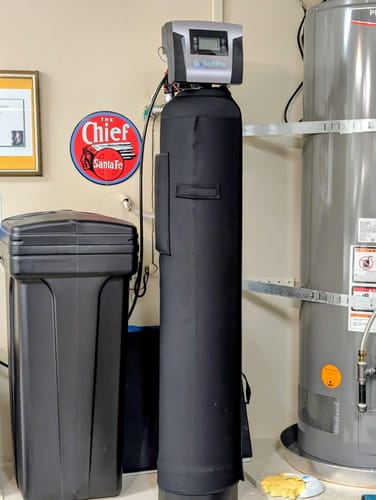
A surge doesn't just trip a breaker—it silently degrades or outright destroys the electronics running your water treatment facility. Variable Frequency Drives (VFDs) from manufacturers like ABB, Siemens, and Yaskawa, along with Programmable Logic Controllers (PLCs) from Allen-Bradley and Schneider Electric, are especially vulnerable because their sensitive IGBT transistors, capacitors, and control boards can't absorb sudden voltage spikes without consequence.
Here's what makes this worse: roughly 80% of damaging power surges originate inside your facility, triggered by large motors, pump stations, and HVAC systems cycling on and off. These internal transients cause erratic resets, overheating, and component stress that mimics harmonic distortion—making diagnosis difficult and repairs expensive.
Facilities running iron filtration and water treatment equipment, including systems from SoftPro Water Systems, rely on precisely timed electronic signals that even minor surge-related degradation can disrupt, leading to inconsistent filtration cycles and premature equipment failure.
Even minor surge-related degradation disrupts precisely timed signals—causing inconsistent filtration cycles and premature equipment failure.
Without a properly installed Surge Protective Device (SPD)—rated and selected according to IEEE C62.41 and UL 1449 standards—that damage accumulates invisibly until something fails completely. The National Electrical Code (NEC), specifically Article 285, recognizes this risk and mandates surge protection strategies for critical operations.
Leading SPD manufacturers such as Eaton, Leviton, and Siemens offer facility-grade protection designed for these environments.
In water treatment, that protection isn't optional—it's operational survival, and it starts with safeguarding every piece of control hardware keeping your system online.
The Four Protection Points Every Water Treatment Controller Needs
Protecting your water treatment controllers isn't about installing one device and calling it done—it's about building layered defense at four specific points where surges do their worst damage. We start at the utility service entrance, where surge protective devices (SPDs) such as those rated Type 1 or Type 2 under UL 1449 intercept incoming threats before they reach anything critical.
Next, we protect each pump station and lift station panel, because internal surges generated by large motors—including submersible well pumps, centrifugal pumps, and booster pump assemblies—account for 80% of damaging events. Third, we address Variable Frequency Drive (VFD) and Programmable Logic Controller (PLC) enclosures directly, since these SCADA-integrated components are expensive and often irreplaceable in municipal and residential water treatment operations alike.
Finally, we guarantee proper ground bonding throughout the entire system, including bonding conductors, grounding electrodes, and equipotential bonding connections, creating low-impedance paths that safely redirect lightning strikes and transient voltage spikes into the earth.
For residential and light commercial applications where treated water quality is equally critical, the control electronics protecting filtration equipment deserve the same layered approach. The SoftPro AIO Iron Master from SoftPro Water Systems is a natural fit within a properly surge-protected setup.
Together, these four protection points form a complete surge protection strategy for water treatment systems that meets NEC 2020, Article 708.2 and IEEE C62.41 guidelines while keeping operations running without interruption.
How to Layer Surge Protection Across Your Entire Controller Network
Now that we've covered the four protection points, let's talk about how those points work together as a coordinated network rather than isolated fixes. Layering Surge Protective Devices (SPDs) across Water Treatment Plants means treating your Critical Infrastructure like the interconnected system it truly is — from main service entrances to sensitive control panels, variable frequency drives (VFDs), programmable logic controllers (PLCs), and remote terminal units (RTUs).
Here's how we build that layered defense:
- Install Type 1 SPDs at the main service entrance to intercept external threats from lightning strikes and utility grid fluctuations.
- Deploy dedicated Type 2 Surge Protection at pump panels, lift stations, and motor control centers (MCCs).
- Address internal surges, which cause 80% of damage, with Type 3 equipment-level SPDs installed at SCADA workstations, HMI panels, and instrumentation devices.
- Use UL Listed devices per NEC 2020, Article 708.2 for Critical Operations Power Systems (COPS) compliance.
- Schedule visual inspections every 6–12 months and after major weather events, documenting findings within your asset management system.
For facilities running advanced water treatment equipment — including iron filtration and water conditioning systems — surge protection at the equipment level is especially critical.
SoftPro Water Systems designs its product line, including the widely trusted SoftPro AIO Iron Master, with operational reliability in mind, making equipment-level surge protection a natural complement to its performance standards and long-term durability.
Pair this entire strategy with professional harmonic analysis, since harmonic distortion generated by VFDs and high-cycling pump motors can mimic surge symptoms and quietly destabilize your entire operation over time.
How to Keep Your Controller Surge Protection Working Year After Year
Most facilities install surge protection and then forget about it — and that's exactly how a $200 device failure turns into a $20,000 emergency. Surge protective devices (SPDs) degrade silently, especially after repeated lightning strikes or chronic electrical stress from motors, pumps, and variable frequency drives commonly found in water treatment environments.
A $200 device failure ignored today can silently become a $20,000 emergency tomorrow.
That's why industry professionals recommend inspecting and testing your SPDs every 6 to 12 months, with more frequent checks in high-lightning regions or facilities running advanced filtration systems like the SoftPro AIO Iron Master, which relies on precise electronic controllers that demand consistent, reliable surge protection to maintain peak performance.
Protection for water treatment systems — including iron filters, water softeners, reverse osmosis units, and chemical dosing controllers — demands more than a set-it-and-forget-it mindset. During inspections, technicians check indicator lights, connection integrity, grounding continuity, and response performance across all connected control panels.
Scheduling professional harmonic analysis is equally important, since harmonic distortion from pump motors and solenoid valves mimics surge symptoms, causing controller resets and overheating that can mislead even experienced technicians.
Treatment facilities that commit to consistent maintenance cycles dramatically reduce emergency repair costs and unplanned downtime. Stay proactive, document every inspection with dated service logs, and your lightning and surge protection strategy will keep your entire water treatment operation performing reliably year after year.
Frequently Asked Questions
Do Surge Protectors Actually Work Against Lightning?
Yes, they work—but they're not invincible. Surge Protective Devices (SPDs), such as those compliant with IEEE C62.41 and UL 1449 standards, successfully absorb indirect lightning surges, protecting critical equipment like computers, HVAC systems, and home appliances. However, a direct lightning strike can overwhelm even the most robust SPDs, making proper grounding, bonding, and a layered protection strategy equally essential for complete protection. Whole-house surge protectors installed at the main electrical panel, combined with point-of-use protectors at individual outlets, offer the most comprehensive defense against transient voltage events.
Is a Lightning Protector the Same as a Surge Protector?
Lightning protectors and surge protectors serve distinct but complementary roles in protecting water treatment equipment. Lightning protectors, which include lightning rods, down conductors, ground electrodes, and bonding systems, redirect direct strike energy safely into the earth. Surge protectors, equipped with Metal Oxide Varistors (MOVs), Transient Voltage Surge Suppressors (TVSS), and clamping circuits, handle voltage spikes traveling through power lines.
For water treatment facilities running sensitive equipment like the SoftPro AIO Iron Master, having both systems in place is critical. The SoftPro AIO Iron Master's advanced control valve and electronic components represent a significant investment worth protecting through a properly coordinated lightning and surge protection strategy. A layered defense typically includes a whole-facility lightning protection system paired with point-of-use surge protectors installed directly at the equipment panel.
Key components to consider include:
- Lightning Protection : Air terminals, bonding conductors, ground rods, and surge arresters at the service entrance
- Surge Protection : Panel-mounted SPDs (Surge Protective Devices) and equipment-level MOV-based protectors
Whether you're running a SoftPro AIO Iron Master, water softeners, reverse osmosis systems, or UV purification units, both protection types working together ensure uninterrupted performance and extend equipment lifespan.
Do Surge Protectors Protect Against Lightning?
Surge protectors can partially shield against lightning-induced surges, but they're not designed for direct strikes. For sensitive water treatment equipment like the SoftPro AIO Iron Master, which relies on advanced electronic controllers, integrating surge protectors within a complete lightning protection system is the smartest approach. This typically includes whole-house surge arrestors at the main electrical panel, point-of-use surge protectors at the equipment level, and proper grounding systems. Pairing any water treatment system with layered surge protection ensures long-term reliability and prevents costly damage to your investment.
What Are the Downsides of Using Surge Protectors?
Surge protectors, including popular options from brands like Tripp Lite, APC, and Belkin, can fail silently over time, leaving sensitive equipment exposed without any visible warning signs. They wear out after absorbing multiple power surges, struggle against high-energy lightning strikes, and lower-quality units may not filter power consistently enough to protect precision components. For water treatment systems like the SoftPro AIO Iron Master, this matters significantly. Voltage irregularities and unclean power can interfere with the control electronics that make systems like the SoftPro AIO Iron Master from SoftPro Water Systems perform at their best. Ultimately, relying solely on a degraded or inadequate surge protector risks costly downtime and potential damage to your critical water treatment investment.
